Endocrinology
2024
Tirzepatide (Zepbound) for obstructive sleep apnea
First drug approved for moderate to severe obstructive sleep apnea in adults with obesity, cleared December 2024. In SURMOUNT-OSA it cut apnea-hypopnea events by about 25 to 29 per hour, an option beyond positive airway pressure.

Key people
- Atul Malhotra
- Co-principal investigator, SURMOUNT-OSA; sleep medicine, UCSD
Source
Obstructive sleep apnea affects an estimated 30 million adults in the United States and is among the most common comorbidities in patients with obesity. Continuous positive airway pressure remains the first-line treatment, and it works well when used, but adherence is poor: roughly half of patients prescribed CPAP do not use it consistently at six months. Oral appliances offer a partial alternative for milder disease, and surgical options exist for specific anatomical patterns, but there had never been an approved pharmacologic therapy for OSA. The link to obesity was well established, and weight loss was known to reduce apnea severity, but no drug had been tested rigorously in a randomized trial designed specifically around this indication.
SURMOUNT-OSA enrolled adults with moderate to severe obstructive sleep apnea and obesity in two parallel randomized trials: one for patients who were not using PAP therapy and one for patients who chose to continue PAP during the study. Atul Malhotra, a sleep medicine specialist at UC San Diego, was co-principal investigator. After 52 weeks, tirzepatide reduced the apnea-hypopnea index by approximately 25 events per hour in the no-PAP group and 29 per hour in the PAP group, compared with approximately 5 events per hour on placebo in both groups.
Mean weight loss in the trials was approximately 18 to 20%, consistent with results from other SURMOUNT trials. That weight reduction likely contributed substantially to the AHI improvement through changes in upper airway anatomy and reduced fat deposition in the pharyngeal soft tissues. Participants also showed meaningful improvements in oxygen saturation nadir, patient-reported sleep quality, and systolic blood pressure, suggesting effects that extended beyond AHI as a single metric.
The FDA approved tirzepatide for moderate to severe OSA with obesity in December 2024, making it the first drug approved specifically for this indication. The brand name Zepbound, already in use for obesity, carried the new label. The approval was for patients with a BMI of 30 or higher, meaning the indication applied to the population with the strongest mechanistic rationale rather than all comers with OSA.
For sleep medicine specialists and pulmonologists, the approval offered a pharmacologic option for the large subset of OSA patients who cannot tolerate CPAP and do not meet criteria for surgery. It also reinforced a pattern visible across multiple SURMOUNT trials: tirzepatide's weight-loss magnitude, consistently larger than earlier GLP-1 monotherapy, was enabling clinically meaningful improvements in conditions driven substantially by excess adiposity, from hypertension to heart failure to sleep-disordered breathing.
Keep exploring
 Read next · same disease or problem
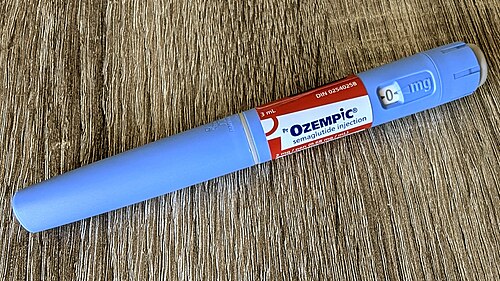
STEP 1 (Semaglutide for Obesity) (2021)
Both drugs treat obesity itself, and their weight loss now eases conditions it causes, such as sleep apnea. The STEP-1 entry shows semaglutide's 15 percent average weight loss.
Read this moment
Read next · same disease or problem
STEP 1 (Semaglutide for Obesity) (2021)
Both drugs treat obesity itself, and their weight loss now eases conditions it causes, such as sleep apnea. The STEP-1 entry shows semaglutide's 15 percent average weight loss.
Read this moment
 Today on The Clinical Times
Florida dengue outbreak appears to be largest in continental U.S. in decades
Florida has reported more than 250 locally acquired dengue cases this year, with most in Hillsborough County, according to state health officials.
Read today’s top stories
Today on The Clinical Times
Florida dengue outbreak appears to be largest in continental U.S. in decades
Florida has reported more than 250 locally acquired dengue cases this year, with most in Hillsborough County, according to state health officials.
Read today’s top stories
All 526 moments in the history of medicine. This one is in chapter 7, Genes and pandemics
Connected moments
How this moment links to others in the history of medicine, and what you will find in each.
-
 Built on2022SURMOUNT-1 (Tirzepatide for Obesity)The large weight loss tirzepatide produced in SURMOUNT-1 led to its trial in sleep apnea. The SURMOUNT-1 entry shows about 21 percent weight loss at the top dose.Read this moment
-
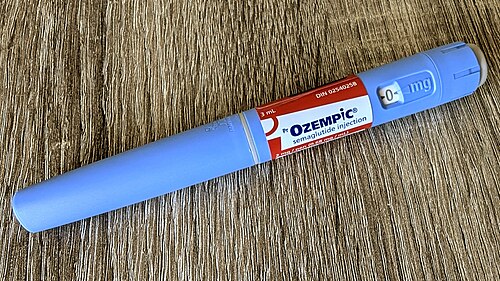 Same disease or problem2023SELECT (Semaglutide Cardiovascular Outcomes in Obesity)Both showed weight loss drugs treating diseases driven by obesity, heart disease in SELECT and sleep apnea here. The SELECT entry shows cardiovascular events cut by 20 percent.Read this moment