Endocrinology
2024
Resmetirom (Rezdiffra), first drug for MASH
First drug ever approved for metabolic dysfunction-associated steatohepatitis (formerly NASH) with moderate to advanced fibrosis. In MAESTRO-NASH the oral thyroid hormone receptor-beta agonist resolved steatohepatitis in about 26 to 30 percent of patients versus 10 percent on placebo.

Key people
- Stephen Harrison
- Principal investigator, MAESTRO-NASH; hepatologist
- Rohit Loomba
- Co-investigator; director, NAFLD Research Center, UCSD
- Rebecca Taub
- Madrigal Pharmaceuticals chief medical officer; designed resmetirom program
Source
By the early 2020s, metabolic dysfunction-associated steatohepatitis had become one of the most common reasons for liver transplant listing in the United States, and projections suggested it would overtake hepatitis C as the leading indication for transplant overall within a decade. Despite this trajectory, every drug that had entered late-stage NASH trials over the previous fifteen years had failed, either missing its histologic endpoint or running into unacceptable toxicity. Weight loss through lifestyle modification remained the only intervention with a meaningful track record, and it was rarely achieved or sustained at the magnitude needed to reverse fibrosis.
Resmetirom was developed as a selective thyroid hormone receptor-beta agonist, designed to activate lipid metabolism in hepatocytes without the cardiac and bone effects associated with systemic thyroid hormone excess. Madrigal Pharmaceuticals ran the MAESTRO-NASH trial, a randomized, placebo-controlled phase 3 study with histologic endpoints. Stephen Harrison was the trial's principal investigator and Rohit Loomba of the NAFLD Research Center at UC San Diego was a co-investigator. At 52 weeks, 26% of patients on the 80 mg dose and 30% on the 100 mg dose achieved resolution of steatohepatitis without fibrosis worsening, compared with 10% on placebo. Fibrosis improved by at least one stage in approximately 26% of treated patients versus 14% on placebo.
The FDA granted accelerated approval in March 2024 under the brand name Rezdiffra, specifically for MASH with moderate to advanced fibrosis (F2-F3). The accelerated pathway was based on the histologic endpoints as surrogate markers reasonably likely to predict clinical benefit; confirmatory outcomes data on cirrhosis and liver-related events were required under the approval conditions. This was the first drug ever approved for MASH, a disease with an estimated 16 to 20 million affected Americans.
The approval introduced a practical change in hepatology practice. Resmetirom is taken once daily by mouth, does not require injection, and fits into outpatient management alongside existing guidance on diet, exercise, and metabolic comorbidity control. It does not replace lifestyle modification; the two approaches appeared additive in trial subgroups. Patients with F4 disease were not included in the primary MAESTRO-NASH population, so cirrhotic patients remained without an approved pharmacologic option.
Resmetirom's entry into practice also raised questions about patient identification. Most patients with MASH have not had a liver biopsy, the gold standard for diagnosis and fibrosis staging. Non-invasive biomarker and imaging algorithms for identifying F2-F3 patients, which had been developing in parallel with drug trials, gained new clinical urgency as prescribers needed a way to identify the approved population without requiring widespread biopsy.
Keep exploring
 Read next · same disease or problem
Discovery of the hepatitis C virus (1989)
MASH was set to overtake hepatitis C as the leading reason for liver transplants. The hepatitis C entry shows the virus found in 1989 and the tests that followed.
Read this moment
Read next · same disease or problem
Discovery of the hepatitis C virus (1989)
MASH was set to overtake hepatitis C as the leading reason for liver transplants. The hepatitis C entry shows the virus found in 1989 and the tests that followed.
Read this moment
 Today on The Clinical Times
Florida dengue outbreak appears to be largest in continental U.S. in decades
Florida has reported more than 250 locally acquired dengue cases this year, with most in Hillsborough County, according to state health officials.
Read today’s top stories
Today on The Clinical Times
Florida dengue outbreak appears to be largest in continental U.S. in decades
Florida has reported more than 250 locally acquired dengue cases this year, with most in Hillsborough County, according to state health officials.
Read today’s top stories
All 526 moments in the history of medicine. This one is in chapter 7, Genes and pandemics
Connected moments
How this moment links to others in the history of medicine, and what you will find in each.
-
 Same disease or problem1963Starzl and the first liver transplantsMASH became one of the commonest reasons for liver transplant listing, the operation Starzl first attempted in 1963. The Starzl entry shows the early failures and how survival improved.Read this moment
-
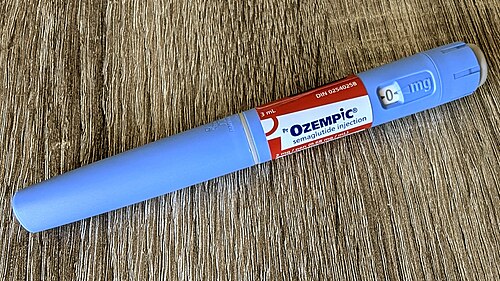 Same disease or problem2021STEP 1 (Semaglutide for Obesity)Weight loss was the only proven treatment for MASH before resmetirom, and semaglutide made large weight loss possible. The STEP-1 entry shows about 15 percent average weight loss.Read this moment
-
 Same disease or problem1988ACT UP's protest at the FDAResmetirom won accelerated approval on liver biopsy findings, a surrogate endpoint. The ACT UP entry shows the AIDS protests that preceded the FDA's accelerated approval pathway in 1992.Read this moment