Neurology & Psychiatry
2023
Lecanemab (CLARITY AD): anti-amyloid antibody for Alzheimer disease
First Alzheimer drug to gain traditional FDA approval on clinical benefit rather than a surrogate. Over 18 months it cut decline on the CDR-SB scale by 27% versus placebo and cleared amyloid, with ARIA-E brain swelling in 12.6% of patients.
Key people
- Christopher van Dyck
- Principal investigator, CLARITY AD trial, Yale
- Ivan Cheung
- Chairman and CEO, Eisai Inc.; oversaw lecanemab development and launch
- Lynn Kramer
- Eisai Chief Clinical Officer for Neurology
Source
The approval of aducanumab in June 2021 under FDA accelerated approval had fractured the Alzheimer field. The agency overrode its own advisory committee, which had voted against approval, accepting amyloid clearance as a surrogate endpoint without direct evidence of clinical benefit. Three of the committee members resigned in protest. The episode focused intense scrutiny on what evidentiary standard the next anti-amyloid antibody would need to meet. Lecanemab, a humanized IgG1 antibody with preferential binding to protofibrils, entered its phase 3 CLARITY AD trial with that context in full view.
CLARITY AD randomized 1,795 patients with early Alzheimer disease, confirmed by amyloid PET or CSF biomarker, to lecanemab 10 mg/kg intravenously every two weeks or placebo for 18 months. Christopher van Dyck at Yale led the trial as principal investigator. The primary endpoint was change on the Clinical Dementia Rating Sum of Boxes (CDR-SB), a clinician-rated measure of functional and cognitive status. Lecanemab slowed decline by 0.45 points relative to placebo, a 27% reduction. Amyloid burden on PET fell substantially in treated patients. The trial was published in the New England Journal of Medicine in January 2023.
The FDA granted traditional approval in July 2023, the first Alzheimer drug to clear that regulatory bar on a demonstrated clinical outcome rather than a surrogate. That distinction separated lecanemab from aducanumab and largely defused the advisory-committee controversy that had surrounded the earlier approval. ARIA-E, the swelling or effusion form of amyloid-related imaging abnormalities, occurred in 12.6% of lecanemab-treated patients, and the hemorrhage form was also more frequent than with placebo. Risk was highest in APOE4 homozygotes, a finding that introduced a genotyping question into the treatment decision for a disease that had not previously required it.
Ivan Cheung, chairman and chief executive of Eisai Inc., and Lynn Kramer, Eisai's chief clinical officer for neurology, had overseen the commercial development. Centers for Medicare and Medicaid Services coverage followed in July 2023 for patients enrolled in a qualifying registry, a condition that continued to gather real-world outcomes data as a condition of broad access. Lecanemab, sold as Leqembi, requires ongoing biweekly IV infusions indefinitely, which created logistical and cost burdens that limited uptake in the first year after approval. The question of what constitutes a clinically meaningful CDR-SB difference, and whether 0.45 points is perceptible to patients and families, was debated in the neurology literature through 2024.
Keep exploring
 Read next · same disease or problem
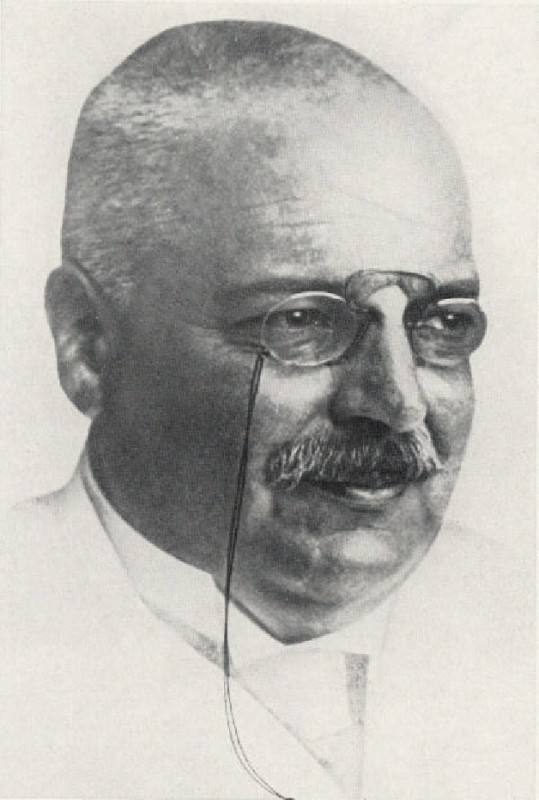
Alois Alzheimer's case of Auguste D. (1906)
Lecanemab clears the amyloid plaques that Alzheimer first saw in a patient's brain in 1906. His entry shows the woman with memory loss whose plaques and tangles gave the disease its name.
Read this moment
Read next · same disease or problem
Alois Alzheimer's case of Auguste D. (1906)
Lecanemab clears the amyloid plaques that Alzheimer first saw in a patient's brain in 1906. His entry shows the woman with memory loss whose plaques and tangles gave the disease its name.
Read this moment
 Today on The Clinical Times
Florida dengue outbreak appears to be largest in continental U.S. in decades
Florida has reported more than 250 locally acquired dengue cases this year, with most in Hillsborough County, according to state health officials.
Read today’s top stories
Today on The Clinical Times
Florida dengue outbreak appears to be largest in continental U.S. in decades
Florida has reported more than 250 locally acquired dengue cases this year, with most in Hillsborough County, according to state health officials.
Read today’s top stories
All 526 moments in the history of medicine. This one is in chapter 7, Genes and pandemics
Connected moments
How this moment links to others in the history of medicine, and what you will find in each.
-
 Same disease or problem2024Donanemab (Kisunla) for early Alzheimer diseaseDonanemab became the second anti-amyloid antibody approved a year later, with the option of stopping once amyloid clears. Its entry shows a similar slowing of decline and higher rates of brain swelling.Read this moment
-
 Same disease or problem1988ACT UP's protest at the FDALecanemab won approval on clinical benefit, while an earlier Alzheimer drug used the accelerated pathway that allows approval on a surrogate. The ACT UP entry shows the AIDS protests that preceded that pathway in 1992.Read this moment