Neurology & Psychiatry
2019
Esketamine (Spravato) for treatment-resistant depression
The FDA approved intranasal esketamine in March 2019 for treatment-resistant depression, the first antidepressant acting on the NMDA glutamate pathway rather than monoamines, with effects measurable within days.

Key people
- John Krystal
- Ketamine NMDA hypothesis researcher at Yale
- Carlos Zarate
- NIH investigator establishing ketamine's rapid antidepressant effect
- Dennis Charney
- Co-investigator in early ketamine depression studies at NIH
- Wayne Drevets
- Janssen researcher who led esketamine clinical development program
Source
By the late 2010s, the monoamine framework that had guided antidepressant development since the 1950s had run into a well-documented ceiling: patients who failed two or more adequate trials of standard antidepressants faced a grim prognosis, with each additional failed course reducing the probability of remission further. The entire approved antidepressant formulary at that point shared the same fundamental mechanism, targeting serotonin, norepinephrine, or dopamine reuptake or receptor binding. Evidence that ketamine could produce rapid, dramatic antidepressant effects via the NMDA glutamate receptor opened a genuinely different biological pathway and attracted sustained research interest beginning in the early 2000s.
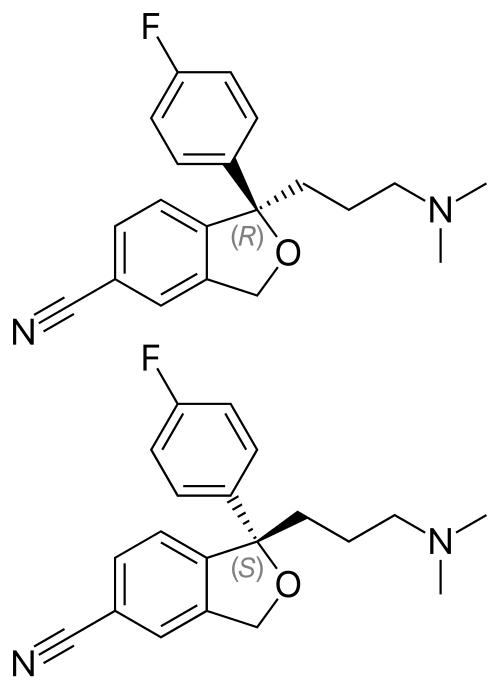
Carlos Zarate at the National Institute of Mental Health conducted early controlled studies demonstrating that a single sub-anesthetic IV infusion of racemic ketamine produced rapid antidepressant responses, sometimes within hours, in patients with treatment-resistant depression. John Krystal at Yale contributed foundational work on the NMDA receptor hypothesis and the pharmacology underlying ketamine's rapid action. Because racemic ketamine was a scheduled substance with established recreational misuse, Janssen Pharmaceuticals pursued the more potent S-enantiomer, esketamine, in an intranasal formulation that could be administered in a controlled clinical setting and would have a distinct regulatory identity.
The FDA approved intranasal esketamine (Spravato) on March 5, 2019, for adults who had failed at least two adequate antidepressant courses, making it the first antidepressant approval targeting the glutamate system rather than monoamines. The regulatory basis was the TRANSFORM trial series, which showed that patients receiving twice-weekly intranasal esketamine plus a new oral antidepressant had significantly greater reductions on the Montgomery-Asberg Depression Rating Scale than those receiving placebo plus oral drug, with most of that treatment difference already apparent at 24 hours after the first dose.
Each dose is self-administered under clinical supervision in a certified healthcare facility, with a mandatory two-hour observation period after dosing because of dissociative and cardiovascular effects. Patients cannot drive on dosing days. The requirement for a Risk Evaluation and Mitigation Strategy (REMS) program to limit distribution outside supervised settings was part of the original approval and distinguishes Spravato categorically from outpatient oral therapy.
Whether the acute antidepressant effect is durable over months is still debated in the literature, and the dissociative side-effect profile and clinic-based administration model limit which patients are practical candidates. Despite those constraints, the approval gave psychiatry a fast-acting option for severely treatment-resistant patients and for those at near-term suicide risk, who often cannot wait weeks for a conventional antidepressant to take effect. In August 2020 the FDA expanded the indication to depressive symptoms in adults with major depressive disorder and acute suicidal ideation or behavior, based on the ASPIRE I and ASPIRE II trials.
Keep exploring
 Read next · same disease or problem
Imipramine, the first tricyclic antidepressant (Kuhn) (1958)
Imipramine anchored the monoamine approach that shaped antidepressants from the 1950s, and esketamine was the first approved drug to leave it. The imipramine entry shows how Kuhn found the first tricyclic.
Read this moment
Read next · same disease or problem
Imipramine, the first tricyclic antidepressant (Kuhn) (1958)
Imipramine anchored the monoamine approach that shaped antidepressants from the 1950s, and esketamine was the first approved drug to leave it. The imipramine entry shows how Kuhn found the first tricyclic.
Read this moment
 Today on The Clinical Times
Florida dengue outbreak appears to be largest in continental U.S. in decades
Florida has reported more than 250 locally acquired dengue cases this year, with most in Hillsborough County, according to state health officials.
Read today’s top stories
Today on The Clinical Times
Florida dengue outbreak appears to be largest in continental U.S. in decades
Florida has reported more than 250 locally acquired dengue cases this year, with most in Hillsborough County, according to state health officials.
Read today’s top stories
All 526 moments in the history of medicine. This one is in chapter 7, Genes and pandemics
Connected moments
How this moment links to others in the history of medicine, and what you will find in each.
-
 Same disease or problem2006STAR*D sequenced antidepressant treatment studySTAR*D showed how remission fades with each failed antidepressant, the patients esketamine was approved for. The STAR*D entry shows the four-step study and its later reanalysis.Read this moment
- Same disease or problem2022The 988 Suicide and Crisis LifelineEsketamine's approval widened in 2020 to patients with acute suicidal thoughts, the crisis the 988 line was created to answer. The 988 entry shows nearly 5 million contacts in its first year.Read this moment
-
 Same disease or problem1949Cade's lithium for maniaBoth treat severe mood disorders and bear on suicide, lithium by lowering its risk and esketamine by treating acute suicidal thoughts. Cade's entry shows all ten manic patients improving on lithium.Read this moment