Neurology & Psychiatry
2018
DAWN: extended-window thrombectomy
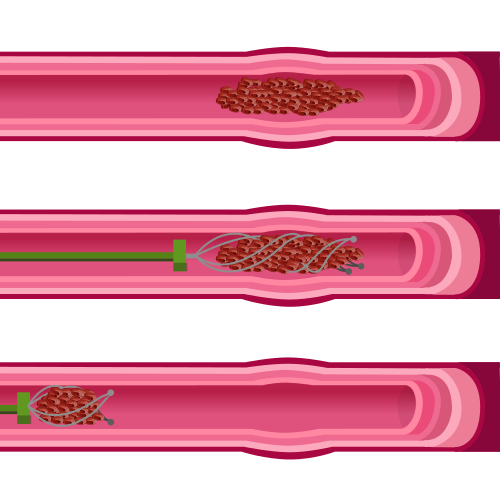
DAWN randomized 206 patients with large-vessel occlusion 6 to 24 hours from last-known-well; those selected by clinical-imaging mismatch had less disability at 90 days with thrombectomy, extending treatment well past the 6-hour window.
Key people
- Raul Nogueira
- Principal investigator of the DAWN trial
- Tudor Jovin
- Co-investigator; contributed to trial design and site coordination
- Gregory Albers
- Principal investigator of DEFUSE 3, the companion trial
- Marc Ribó
- European site co-investigator; contributed patient enrollment to DAWN
Source
Throughout the 2000s, attempts to extend mechanical thrombectomy beyond a narrow time window had failed in trial after trial. Each failure reinforced the belief that neurons lost to ischemia over hours could not be salvaged by late intervention. The underlying assumption was that time-from-onset and tissue viability were essentially synonymous. What that assumption missed was that collateral circulation varies enormously between patients, and some individuals retain viable penumbra many hours after a large-vessel occlusion. DAWN was designed to test whether selecting patients by clinical-imaging mismatch rather than by clock time could identify that salvageable group.
Raul Nogueira led the DAWN trial with Tudor Jovin as a key co-investigator, enrolling patients at multiple sites across the United States, Europe, and Australia. The trial enrolled 206 patients presenting with anterior large-vessel occlusion between 6 and 24 hours after last-known-well, selecting candidates whose infarct core on diffusion-weighted imaging or CT perfusion was disproportionately small relative to their neurological deficit. That mismatch implied penumbra that remained viable despite the elapsed time. The control arm received best medical management; the intervention arm received thrombectomy with the Trevo stent retriever.
The data safety monitoring board stopped the trial early after a prespecified interim analysis showed 49% of thrombectomy patients had achieved functional independence at 90 days, compared with 13% in the medical management group. That 36-percentage-point absolute difference was larger than the benefit seen in the 0-to-6-hour thrombectomy trials that had established the procedure just three years earlier. The early stopping meant the final enrollment was smaller than planned, but the magnitude of benefit left little statistical uncertainty.
DAWN's companion trial, DEFUSE 3, published at nearly the same time, confirmed the benefit in a 6-to-16-hour window using automated perfusion software to identify the mismatch, and was also stopped early for efficacy. Together, the two trials shifted stroke intervention from a time-based to an imaging-based selection model. The American Heart Association updated its stroke guidelines in early 2018 to incorporate both trials, and thrombectomy centers rapidly added late-window protocols. Patients found hours after symptom onset, or those who woke with deficits without a known onset time, became eligible for a procedure that had previously been unavailable to them.
Keep exploring
 Read next · built on
Endovascular thrombectomy trials (MR CLEAN and HERMES) (2015)
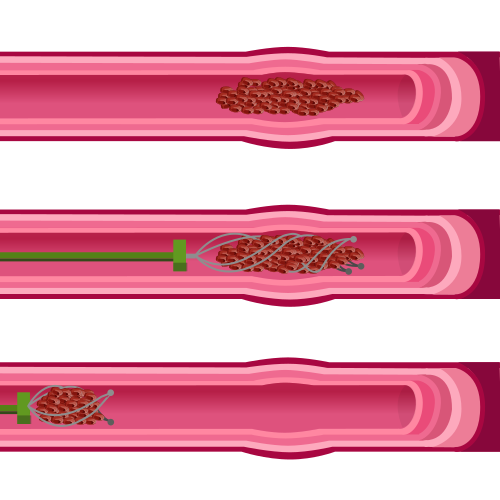
MR CLEAN and HERMES proved clot removal within six hours, and DAWN extended it to 24 hours. The MR CLEAN entry shows one patient helped for every 2.6 treated.
Read this moment
Read next · built on
Endovascular thrombectomy trials (MR CLEAN and HERMES) (2015)
MR CLEAN and HERMES proved clot removal within six hours, and DAWN extended it to 24 hours. The MR CLEAN entry shows one patient helped for every 2.6 treated.
Read this moment
 Today on The Clinical Times
Florida dengue outbreak appears to be largest in continental U.S. in decades
Florida has reported more than 250 locally acquired dengue cases this year, with most in Hillsborough County, according to state health officials.
Read today’s top stories
Today on The Clinical Times
Florida dengue outbreak appears to be largest in continental U.S. in decades
Florida has reported more than 250 locally acquired dengue cases this year, with most in Hillsborough County, according to state health officials.
Read today’s top stories
All 526 moments in the history of medicine. This one is in chapter 7, Genes and pandemics
Connected moments
How this moment links to others in the history of medicine, and what you will find in each.
-
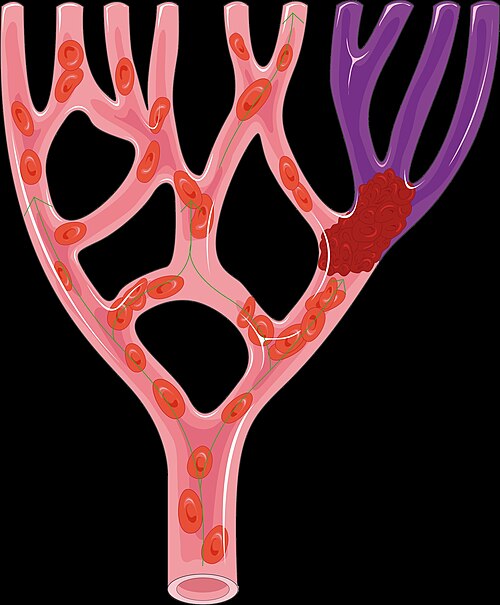 Same disease or problem1995NINDS rt-PA Stroke TrialNINDS tied stroke treatment to the clock, and DAWN showed brain scans could identify salvageable tissue many hours later. The NINDS entry shows t-PA helping when given within three hours.Read this moment
-
 Built on1971First clinical CT scanner (EMI head scanner)DAWN chose patients with brain scans such as CT perfusion, which showed how much brain could still be saved. The CT entry shows the first scan of a patient in 1971 and its effect on stroke care.Read this moment