Neurology & Psychiatry
2015
Endovascular thrombectomy trials (MR CLEAN and HERMES)
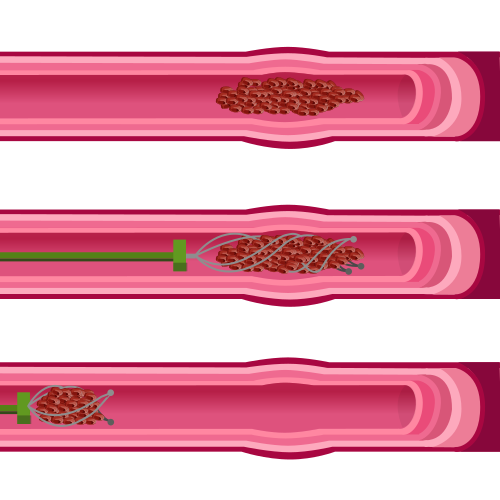
MR CLEAN was the first trial to prove mechanical clot removal beat medical care alone for large-vessel stroke; the 2016 HERMES analysis pooling five trials confirmed it: for every 2.6 patients treated, one had less disability at 90 days.
Key people
- Diederik Dippel
- Principal investigator of MR CLEAN
- Mayank Goyal
- Led the HERMES collaborative meta-analysis
- Jeffrey Saver
- HERMES and DAWN co-author
- Olvert Berkhemer
- First author of the MR CLEAN trial publication
- Tudor Jovin
- Senior author of the HERMES meta-analysis and of the DAWN trial report
Source
N Engl J Med. 2015 (MR CLEAN); Lancet. 2016 (HERMES) (opens in a new tab)
By the early 2010s, the leading trials of catheter-based stroke therapy had failed. IMS III, MR RESCUE, and SYNTHESIS were all stopped or reported negative results between 2012 and 2013, and the common conclusion was that catheter-based clot removal simply did not improve outcomes beyond intravenous tPA. Stroke neurologists and interventionalists continued to debate whether the problem was patient selection, imaging criteria, procedure timing, or device technology. MR CLEAN addressed selection directly by requiring vessel imaging to confirm the occlusion before randomization.
MR CLEAN, published in the New England Journal of Medicine in January 2015, was the first randomized controlled trial to show a definitive benefit. Diederik Dippel and colleagues at Erasmus University Medical Center in Rotterdam enrolled 500 patients with angiographically confirmed proximal large-vessel occlusion at 16 Dutch centers and randomized them to mechanical thrombectomy plus usual care or usual care alone. Functional independence at 90 days, defined as a modified Rankin Scale score of 0 to 2, was achieved by 32.6% of the intervention group versus 19.1% in the control group. Treatment had to be possible within 6 hours of symptom onset, and 89% of patients had already received intravenous alteplase.
Four trials running at the same time, ESCAPE, EXTEND-IA, SWIFT PRIME and REVASCAT, were halted early once the MR CLEAN data were known. Those trials had stricter imaging selection criteria, faster door-to-groin times, and mostly used second-generation stent retrievers, the Solitaire and Trevo devices, which had substantially higher recanalization rates than the older Merci coil retriever used in the earlier failed trials. The 2016 HERMES meta-analysis, with Mayank Goyal of the University of Calgary as first author and Tudor Jovin as senior author, pooled individual data on 1,287 patients from the five trials. Thrombectomy reduced disability at 90 days with a common odds ratio of 2.49, and the number needed to treat for one patient to improve by at least one level on the modified Rankin Scale was 2.6.
Within months of the MR CLEAN publication, centers across North America and Europe restructured protocols to provide around-the-clock interventional coverage. Stroke systems of care shifted toward regionalization, with spoke hospitals bypassing closer facilities to route large-vessel occlusion patients directly to thrombectomy-capable centers. The window for treatment later extended to 24 hours in selected patients based on the DAWN and DEFUSE 3 trials, which used perfusion imaging to identify salvageable penumbra.
Earlier trials had not required confirmed proximal occlusion on vascular imaging before randomization, meaning large proportions of enrolled patients had no retrievable clot. In MR CLEAN, retrievable stents were used in 190 of the 233 patients assigned to intra-arterial treatment, and the benefit held across the HERMES subgroups, including patients aged 80 or older and those not eligible for alteplase.
Keep exploring
 Read next · built on
NINDS rt-PA Stroke Trial (1995)
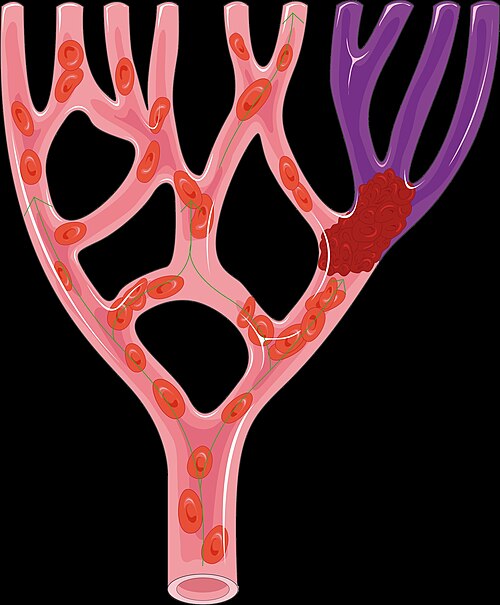
Most MR CLEAN patients had already received the clot dissolving drug that NINDS proved in 1995, and clot removal added to it. The NINDS entry shows t-PA cutting disability when given within three hours.
Read this moment
Read next · built on
NINDS rt-PA Stroke Trial (1995)
Most MR CLEAN patients had already received the clot dissolving drug that NINDS proved in 1995, and clot removal added to it. The NINDS entry shows t-PA cutting disability when given within three hours.
Read this moment
 Today on The Clinical Times
Florida dengue outbreak appears to be largest in continental U.S. in decades
Florida has reported more than 250 locally acquired dengue cases this year, with most in Hillsborough County, according to state health officials.
Read today’s top stories
Today on The Clinical Times
Florida dengue outbreak appears to be largest in continental U.S. in decades
Florida has reported more than 250 locally acquired dengue cases this year, with most in Hillsborough County, according to state health officials.
Read today’s top stories
All 526 moments in the history of medicine. This one is in chapter 7, Genes and pandemics
Connected moments
How this moment links to others in the history of medicine, and what you will find in each.
-
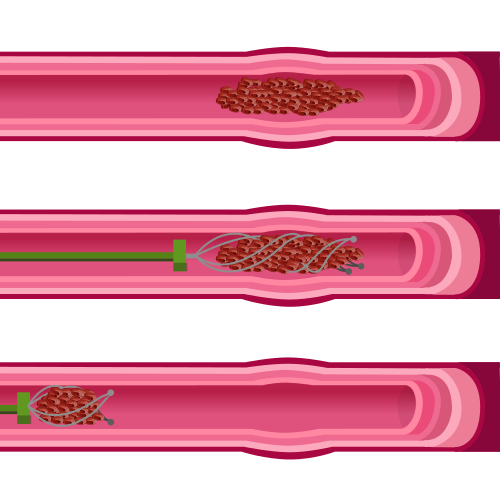 Led to2018DAWN: extended-window thrombectomyAfter MR CLEAN proved clot removal within six hours, DAWN used imaging to extend it up to 24 hours. The DAWN entry shows less disability in patients treated late.Read this moment
-
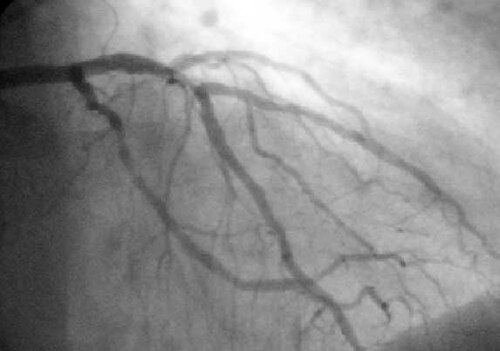 Same disease or problem2003Primary PCI versus thrombolysis for acute STEMI (Keeley meta-analysis of 23 trials)In the heart and then in the brain, opening a blocked vessel mechanically proved better than drugs alone. The Keeley entry shows primary angioplasty beating thrombolysis for heart attacks.Read this moment