Oncology
2020
NELSON lung cancer screening trial
A Dutch-Belgian trial of high-risk men found volume-based low-dose CT screening cut lung cancer deaths by 24% at 10 years versus no screening, with few unnecessary workups, backing the earlier NLST finding.
Key people
- Harry de Koning
- Principal investigator, Erasmus MC Rotterdam
- Mathias Prokop
- Lead radiologist for nodule volumetry protocol
- Carlijn van der Aalst
- Epidemiologist, NELSON trial co-investigator
Source
By the early 2000s, randomized evidence for lung cancer screening had been frustratingly elusive. Chest X-ray programs had failed to show a mortality benefit, and the 2011 National Lung Screening Trial (NLST) from the United States had just demonstrated that annual low-dose CT scanning cut lung cancer deaths by roughly 20% in high-risk smokers. European radiologists and epidemiologists had been running a parallel experiment since 2003, one that differed in two important ways: it used volumetric nodule measurement rather than diameter, and it extended screening intervals based on nodule growth rather than screening everyone annually.
NELSON enrolled 15,792 heavy smokers in the Netherlands and Belgium between 2003 and 2006, randomizing them to volume-based low-dose CT at increasing intervals or to no screening. Harry de Koning at Erasmus MC Rotterdam led the trial design, with Mathias Prokop directing the nodule volumetry protocol that became the study's methodological signature. Indeterminate nodules were rescanned at three months rather than being automatically referred for bronchoscopy or PET; growth rate determined next steps. This approach required CT scanners capable of reliable volumetric analysis and a radiologic infrastructure trained to interpret it.
After a median follow-up of 10 years, lung cancer mortality was 24% lower in screened men. Women in the trial, a smaller cohort, showed a 33% reduction, an unexpectedly large signal that drew attention because women had been underrepresented in NLST. False-positive referral rates in NELSON were substantially lower than those seen in NLST, addressing the argument that population-level CT screening would flood thoracic surgery services with unnecessary procedures. The results were published in the New England Journal of Medicine in January 2020.
The NELSON findings provided the European evidence base that the NLST had established for North America, and they arrived at a useful moment. The U.S. Preventive Services Task Force was reviewing its 2013 screening recommendation when the data became available. In 2021, the USPSTF expanded eligibility to adults aged 50 to 80 with a 20 pack-year smoking history, down from the previous threshold of 30 pack-years and 55 years of age. That change roughly doubled the eligible U.S. population. Whether European health systems would adopt volumetry-based algorithms at scale, rather than the simpler diameter-based rules used in many centers, remained an open question in implementation research after the trial closed.
Keep exploring
 Read next · built on
First clinical CT scanner (EMI head scanner) (1971)
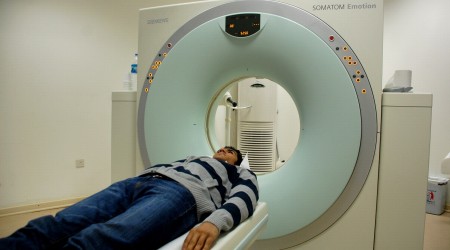
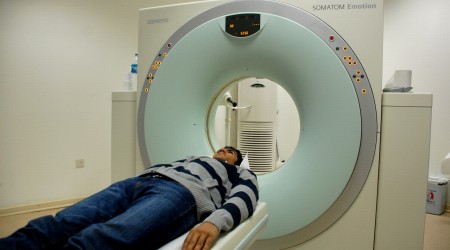
NELSON's screening relied on CT scanners able to measure nodule volume precisely. The CT entry shows the first scan of a patient in 1971.
Read this moment
Read next · built on
First clinical CT scanner (EMI head scanner) (1971)
NELSON's screening relied on CT scanners able to measure nodule volume precisely. The CT entry shows the first scan of a patient in 1971.
Read this moment
 Today on The Clinical Times
Florida dengue outbreak appears to be largest in continental U.S. in decades
Florida has reported more than 250 locally acquired dengue cases this year, with most in Hillsborough County, according to state health officials.
Read today’s top stories
Today on The Clinical Times
Florida dengue outbreak appears to be largest in continental U.S. in decades
Florida has reported more than 250 locally acquired dengue cases this year, with most in Hillsborough County, according to state health officials.
Read today’s top stories
All 526 moments in the history of medicine. This one is in chapter 7, Genes and pandemics
Connected moments
How this moment links to others in the history of medicine, and what you will find in each.
-
 Same disease or problem2011National Lung Screening Trial (NLST)NELSON confirmed in Europe what NLST had shown in the United States, with fewer false alarms. The NLST entry shows CT screening cutting lung cancer deaths by 20 percent in heavy smokers.Read this moment
-
 Same disease or problem1954British Doctors Study (Doll and Hill prospective cohort)NELSON screened heavy smokers, the group the British doctors study showed dying of lung cancer. That entry shows lifelong smokers dying about ten years early.Read this moment
- Same disease or problem1987The PSA test and prostate cancer screeningNELSON answered the fear that screening floods patients with needless procedures, the harm that dogged PSA testing. The PSA entry shows overdiagnosis outweighing a small benefit.Read this moment