Oncology
2018
Nobel Prize in Physiology or Medicine for cancer immune-checkpoint therapy
Allison's CTLA-4 and Honjo's PD-1 work showed that blocking the immune system's own brakes lets T cells attack tumors. The 2018 prize marked checkpoint blockade as a treatment class for melanoma, lung, and other cancers.

Key people
- James Allison
- Discovered CTLA-4 checkpoint blockade; shared 2018 Nobel Prize
- Tasuku Honjo
- Discovered PD-1; shared 2018 Nobel Prize
- Alan Korman
- Led the Medarex/BMS team that developed ipilimumab from Allison's discovery
- F. Stephen Hodi
- Lead investigator of the melanoma trial that supported ipilimumab approval
Source
Nobel Assembly, Karolinska Institutet, 2018 (opens in a new tab)
For most of the twentieth century, immunotherapy for cancer was a field full of promise and little delivery. Nonspecific immune stimulants, cytokines at toxic doses, and tumor-infiltrating lymphocyte transfers each produced occasional responses but no reliable benefit. The central obstacle, poorly understood at the time, was that tumors actively suppress the immune cells that infiltrate them, exploiting the same molecular brakes the immune system uses to prevent autoimmunity. The work that eventually won the 2018 Nobel Prize in Physiology or Medicine identified two of those brakes and showed that releasing them could turn T cells into effective tumor killers.
James Allison, working at UC Berkeley and later MD Anderson Cancer Center, spent the 1990s investigating CTLA-4, an inhibitory receptor expressed on T cells after activation. Other researchers viewed CTLA-4 as a signal to study; Allison saw it as a clinical target. His group showed in 1996 that injecting anti-CTLA-4 antibodies into tumor-bearing mice caused tumor regression, an observation that was initially met with skepticism by colleagues who had seen many promising murine immunotherapy results fail in humans. Independently, Tasuku Honjo at Kyoto University identified PD-1 in 1992 while studying programmed cell death and later demonstrated that the PD-1/PD-L1 axis is a major immune checkpoint, particularly within the tumor microenvironment.
Clinical translation of both mechanisms moved faster than most cancer drug programs. Ipilimumab, the anti-CTLA-4 antibody developed by Bristol Myers Squibb partly on the basis of Allison's work, received FDA approval for metastatic melanoma in 2011, the first agent ever to extend overall survival in that disease. Anti-PD-1 antibodies nivolumab and pembrolizumab followed in 2014, and by the time the Nobel was awarded in 2018, checkpoint inhibitors were approved for more than a dozen tumor types, including non-small cell lung cancer, renal cell carcinoma, bladder cancer, and head and neck squamous cell carcinoma.
The clinical argument for the prize was as compelling as the basic science. Five-year survival in metastatic melanoma rose from under 5% in the pre-ipilimumab era to roughly 20% with single-agent CTLA-4 blockade, and higher with PD-1 inhibitors or combination regimens. Some patients achieved durable remissions lasting years after discontinuing therapy, a pattern not seen with chemotherapy or targeted agents. The Nobel Committee awarded the prize just seven years after the first approval, unusually fast given how novel the mechanism was and how much clinical benefit had already been documented across multiple tumor types.
Autoimmune toxicity became the class's defining side-effect profile: colitis, pneumonitis, endocrinopathies, and hepatitis occur at rates that require systematic monitoring. Managing immune-related adverse events became a new subspecialty competency for oncologists, and protocols for steroid management and drug discontinuation are now standard at major cancer centers.
Keep exploring
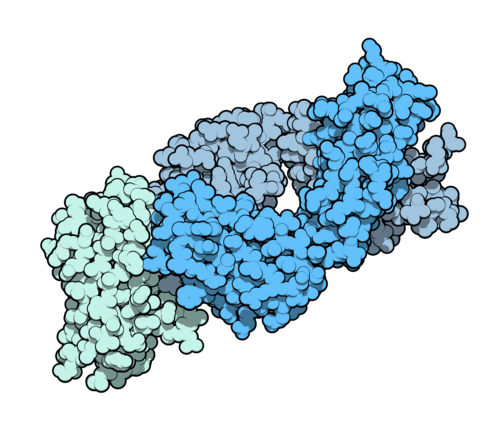 Read next · built on
Ipilimumab improves survival in metastatic melanoma (2010)
Ipilimumab, the first drug to extend survival in metastatic melanoma, came from Allison's CTLA-4 work. Its entry shows median survival rising and a lasting tail of long-term survivors.
Read this moment
Read next · built on
Ipilimumab improves survival in metastatic melanoma (2010)
Ipilimumab, the first drug to extend survival in metastatic melanoma, came from Allison's CTLA-4 work. Its entry shows median survival rising and a lasting tail of long-term survivors.
Read this moment
 Today on The Clinical Times
Florida dengue outbreak appears to be largest in continental U.S. in decades
Florida has reported more than 250 locally acquired dengue cases this year, with most in Hillsborough County, according to state health officials.
Read today’s top stories
Today on The Clinical Times
Florida dengue outbreak appears to be largest in continental U.S. in decades
Florida has reported more than 250 locally acquired dengue cases this year, with most in Hillsborough County, according to state health officials.
Read today’s top stories
All 526 moments in the history of medicine. This one is in chapter 7, Genes and pandemics
Connected moments
How this moment links to others in the history of medicine, and what you will find in each.
-
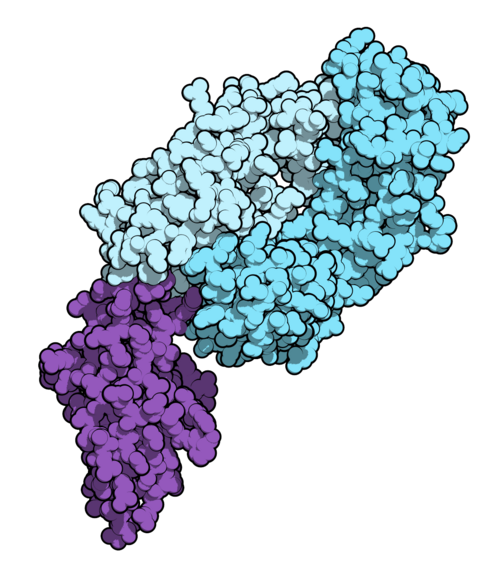 Built on2012Anti-PD-1 antibody activity across multiple solid tumorsHonjo's PD-1 discovery became the antibodies that worked across melanoma, lung and kidney cancer. The 2012 entry shows durable responses in a phase 1 trial.Read this moment
-
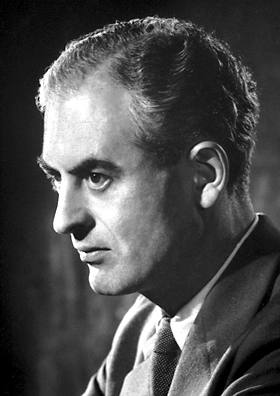 Same disease or problem1953Acquired immunological toleranceBoth concern how the immune system restrains itself, learning tolerance early in life and using brakes that tumors exploit. The tolerance entry shows Medawar's mice accepting foreign grafts.Read this moment
-
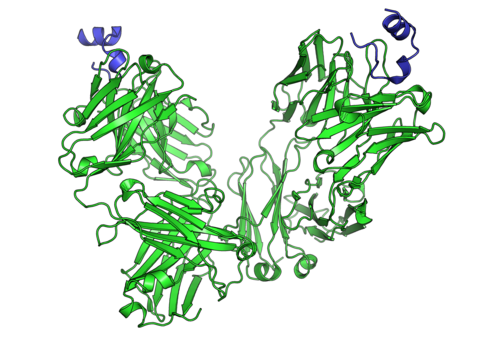 Same disease or problem2017Tisagenlecleucel (Kymriah): First FDA-Approved CAR-T Cell TherapyCheckpoint drugs free T cells to attack tumors, and CAR-T engineers T cells to find them. The Kymriah entry shows 81 percent remission in relapsed childhood leukemia.Read this moment