Oncology
2012
Anti-PD-1 antibody activity across multiple solid tumors
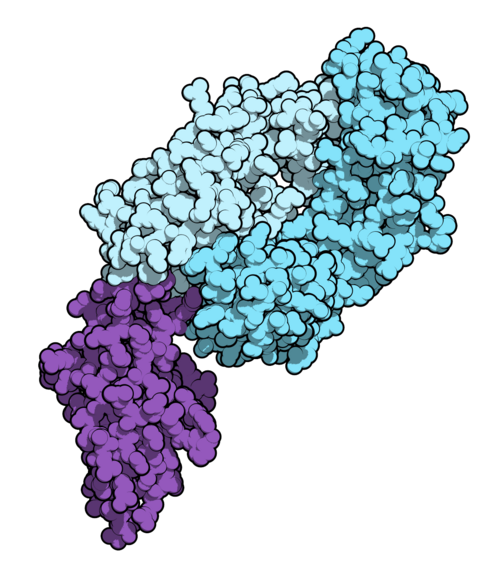
A phase 1 trial of anti-PD-1 (nivolumab) found durable responses in melanoma, lung, and kidney cancer, with rates near 18 to 28 percent. Of 31 responses in patients followed for a year or more, 20 lasted at least a year.
Key people
- Suzanne Topalian
- First author of the 2012 nivolumab phase 1 report.
- Tasuku Honjo
- Discovered PD-1; 2018 Nobel laureate in Physiology or Medicine.
- F. Stephen Hodi
- Second author of the 2012 phase 1 report.
- Mario Sznol
- Senior author of the 2012 phase 1 report.
Source
When ipilimumab was approved for melanoma in 2011, immune checkpoint blockade was still largely framed as a melanoma story. The thinking was reasonable: melanoma had a high mutational burden, a long history of occasional spontaneous regression, and a record of responding to interleukin-2. Whether the same approach would work in lung cancer, widely thought to be poorly immunogenic, or in kidney cancer, was an open question. The PD-1 pathway offered a different mechanism: a checkpoint that acts where T cells meet tumor cells, whereas CTLA-4 acts mainly during initial activation.
Tasuku Honjo at Kyoto University had discovered PD-1 in 1992, and subsequent work identified its ligands PD-L1 and PD-L2 as proteins expressed by tumors to suppress local immune responses. An anti-PD-1 antibody, BMS-936558, also called MDX-1106 and ONO-4538 and later named nivolumab, entered phase 1 testing. The dose-escalation trial enrolled 296 patients across five tumor types: advanced melanoma, non-small cell lung cancer, castration-resistant prostate cancer, renal cell carcinoma, and colorectal cancer.
Suzanne Topalian of Johns Hopkins was first author. Among 236 patients who could be evaluated, objective responses were recorded in 28% of melanoma patients (26 of 94), 27% of renal cell carcinoma patients (9 of 33) and 18% of non-small cell lung cancer patients (14 of 76). Of 31 responses in patients followed for a year or more, 20 lasted at least a year, which was unusual for a phase 1 trial. There were no responses in colorectal or prostate cancer; in 2015 a separate trial of pembrolizumab, another PD-1 antibody, found that colorectal and other cancers with mismatch-repair deficiency did respond.
The lung cancer result received particular attention. Adenocarcinoma and squamous cell lung cancer had resisted immunotherapy for years, and an 18% response rate in unselected patients was more than many had expected. Grade 3 or 4 drug-related adverse events occurred in 14% of patients, and three died of pulmonary toxicity. F. Stephen Hodi was second author and Mario Sznol senior author. The paper appeared in the New England Journal of Medicine in June 2012, in the same issue as a phase 1 report on an antibody against PD-L1.
Within a few years, nivolumab received approval in melanoma (2014), non-small cell lung cancer (2015), and renal cell carcinoma (2015), followed by many additional indications. PD-L1 expression testing and, later, tumor mutational burden became biomarkers used in selecting patients. Tasuku Honjo, whose group described PD-1 in 1992, shared the 2018 Nobel Prize in Physiology or Medicine with James Allison.
Keep exploring
 Read next · built on
Ipilimumab improves survival in metastatic melanoma (2010)
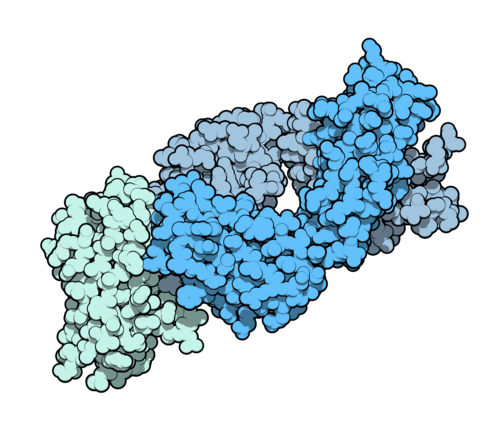
Ipilimumab had shown that blocking an immune checkpoint helps melanoma patients, and PD-1 antibodies tested the idea across other cancers. The ipilimumab entry shows the first drug to extend survival in metastatic melanoma.
Read this moment
Read next · built on
Ipilimumab improves survival in metastatic melanoma (2010)
Ipilimumab had shown that blocking an immune checkpoint helps melanoma patients, and PD-1 antibodies tested the idea across other cancers. The ipilimumab entry shows the first drug to extend survival in metastatic melanoma.
Read this moment
 Today on The Clinical Times
Florida dengue outbreak appears to be largest in continental U.S. in decades
Florida has reported more than 250 locally acquired dengue cases this year, with most in Hillsborough County, according to state health officials.
Read today’s top stories
Today on The Clinical Times
Florida dengue outbreak appears to be largest in continental U.S. in decades
Florida has reported more than 250 locally acquired dengue cases this year, with most in Hillsborough County, according to state health officials.
Read today’s top stories
All 526 moments in the history of medicine. This one is in chapter 7, Genes and pandemics
Connected moments
How this moment links to others in the history of medicine, and what you will find in each.
-
 Same person2018Nobel Prize in Physiology or Medicine for cancer immune-checkpoint therapyTasuku Honjo, who discovered PD-1 in 1992, shared the 2018 Nobel Prize for checkpoint blockade. The prize entry shows why releasing the immune system's brakes became a treatment class.Read this moment
-
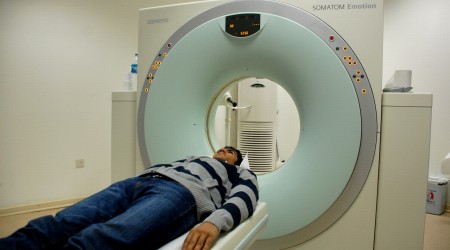 Same disease or problem2011National Lung Screening Trial (NLST)The anti-PD-1 lung cancer responses surprised many, and NLST tackled the same disease by finding it early. The NLST entry shows CT screening cutting lung cancer deaths by 20 percent.Read this moment
-
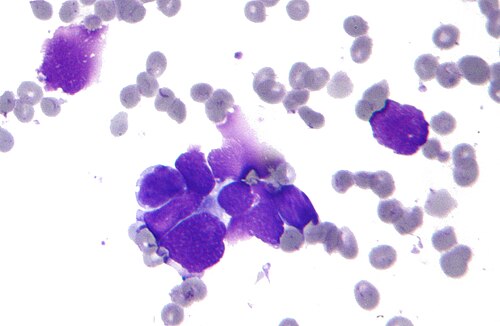 Same disease or problem2024Tarlatamab (Imdelltra) for small cell lung cancerBoth recruit a patient's T cells against lung cancer, PD-1 antibodies by lifting a brake and tarlatamab by linking T cells to tumor cells. The tarlatamab entry shows longer survival than chemotherapy in small cell lung cancer.Read this moment