Infectious Disease
2011
HPTN 052: Antiretroviral Therapy as HIV Prevention
A randomized trial in 1,763 serodiscordant couples found that starting antiretroviral therapy early cut HIV transmission by 96%, with one linked infection in the early-treatment group. The result moved policy toward treating everyone at diagnosis.
Key people
- Myron Cohen
- Principal investigator; led the HPTN 052 trial design and execution.
- Marybeth McCauley
- Protocol coordinator; managed multinational trial operations.
- Julio Montaner
- Modeled treatment-as-prevention concept that HPTN 052 confirmed empirically.
Source
In the years before HPTN 052, HIV treatment guidelines were largely written from the perspective of the infected individual. The central question was when to start antiretroviral therapy in a person with HIV, and the answer hinged on CD4 count thresholds and the risk of opportunistic infection. That treatment might simultaneously protect an uninfected sexual partner was a compelling hypothesis, but it lacked randomized evidence to move policy.
HPTN 052 was designed to test that hypothesis directly. The trial enrolled 1,763 serodiscordant couples across 13 sites in nine countries, including Malawi, Zimbabwe, India, Brazil, and the United States. The HIV-positive partner, with a CD4 count between 350 and 550 cells per cubic millimeter, was randomly assigned to start antiretroviral therapy immediately or to defer until the CD4 count fell below 250 or HIV-related symptoms developed. Myron Cohen at the University of North Carolina at Chapel Hill led the study, and Marybeth McCauley coordinated its multinational operations.
Over the follow-up period, only one linked HIV transmission occurred in the immediate-treatment group, compared with 27 in the deferred group, a 96% reduction. After reviewing the data in early 2011, the independent data and safety monitoring board recommended releasing the results early, and therapy was then offered to all the HIV-positive partners. The result was named Science magazine's Breakthrough of the Year in 2011.
The implications reached beyond the individual couple. Under treatment as prevention, expanding access to antiretroviral therapy became a population-level prevention strategy as well as a clinical priority. The concept, already theorized in models by Julio Montaner and colleagues, now had direct trial support. Guidelines on when to start treatment now had to weigh the risk to partners as well as the benefit to the patient.
In September 2015 the World Health Organization recommended starting antiretroviral therapy in everyone living with HIV at any CD4 count, a policy known as Treat All that was adopted widely in national guidelines. The final HPTN 052 analysis, published in 2016 after more than five years of follow-up, counted 3 linked infections in the early-therapy group and 43 in the delayed group, a 93% lower risk.
Keep exploring
 Read next · same person
Highly Active Antiretroviral Therapy (HAART) and the Vancouver protease-inhibitor combination era (1996)
Julio Montaner, who led a key Vancouver trial of triple therapy, had modeled treatment as prevention before HPTN 052 proved it. The HAART entry shows combinations that pushed HIV below detection.
Read this moment
Read next · same person
Highly Active Antiretroviral Therapy (HAART) and the Vancouver protease-inhibitor combination era (1996)
Julio Montaner, who led a key Vancouver trial of triple therapy, had modeled treatment as prevention before HPTN 052 proved it. The HAART entry shows combinations that pushed HIV below detection.
Read this moment
 Today on The Clinical Times
Florida dengue outbreak appears to be largest in continental U.S. in decades
Florida has reported more than 250 locally acquired dengue cases this year, with most in Hillsborough County, according to state health officials.
Read today’s top stories
Today on The Clinical Times
Florida dengue outbreak appears to be largest in continental U.S. in decades
Florida has reported more than 250 locally acquired dengue cases this year, with most in Hillsborough County, according to state health officials.
Read today’s top stories
All 526 moments in the history of medicine. This one is in chapter 7, Genes and pandemics
Connected moments
How this moment links to others in the history of medicine, and what you will find in each.
-
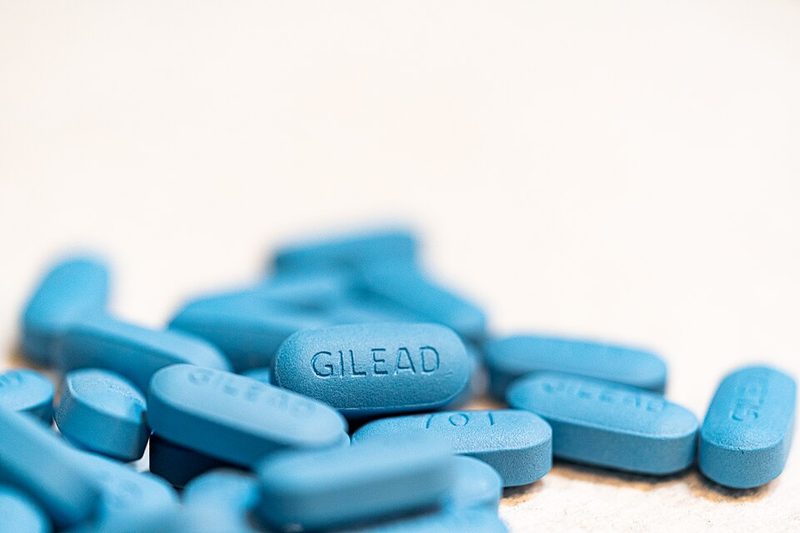 Same disease or problem2012Oral pre-exposure prophylaxis (PrEP) against HIVHPTN 052 treated the infected partner to protect the other, and PrEP gave the drugs to the uninfected person. The PrEP entry shows a daily pill cutting infection by 92 percent when taken.Read this moment
- Same disease or problem1994ACTG 076 perinatal HIV prevention trialBoth showed HIV drugs can stop the virus passing to another person, a baby in 1994 and a partner in 2011. ACTG 076 shows mother to child transmission cut by two thirds.Read this moment
-
 Same disease or problem2025Lenacapavir (Yeztugo), twice-yearly HIV preventionBoth used antiretroviral drugs to prevent new HIV infections, one by treating partners and one by protecting people at risk. The lenacapavir entry shows a twice-yearly shot preventing every infection among women in PURPOSE 1.Read this moment