Public Health
1984
Seat belt legislation and effectiveness evidence
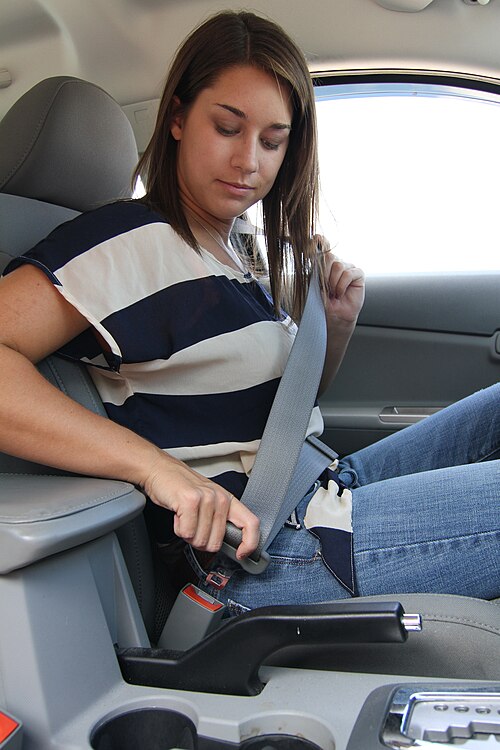
New York's 1984 mandate was the first U.S. seat belt use law. Belt use roughly doubled within months, and a later study found fewer hospital admissions and less severe injuries among vehicle occupants after the law.
Key people
- John States
- University of Rochester surgeon whose team measured the effect of the New York law on crash admissions
- Ralph Nader
- Consumer safety advocate whose work pressured federal auto safety regulation from the 1960s
- William Haddon Jr.
- First NHTSA administrator who framed injury as a preventable public health problem
Source
The engineering case for seat belts had been established for decades before any American state required their use. Crash biomechanics research from the 1950s onward had documented that restrained occupants sustained far fewer severe injuries than unrestrained ones in equivalent collisions. Through the 1970s, efforts to get Americans to buckle up relied mainly on awareness and education campaigns and achieved limited success.
New York enacted the country's first seat belt use law in 1984, and it was fully in force, with civil fines of $50, from January 1, 1985. Among drivers in crashes, reported belt use rose from 21 percent before the law to 47 percent after it, and a roadside survey in and around New York City found 63 percent use, against 16 percent before. That study, published in the Journal of Trauma in 1986, compared three months before the law with five months after it; among front-seat passengers use rose from 21 to 40 percent, too few cases to be statistically significant. The authors urged physicians to seek similar laws in every state.
John States and colleagues at the University of Rochester compared 18 months of crash admissions in Monroe County before the law with 18 months after it, linking police crash reports to hospital records. Belt use among hospitalized occupants rose from 11.2 percent to 53 percent, admissions fell 11.9 percent while rising 2.6 percent among motorcyclists, cyclists and pedestrians, and the average injury severity score for occupants fell from 16.01 to 14.55. The study was observational, and spine and abdominal injuries rose after the law even as other injuries fell. Seeing how much more effective the law was than education campaigns, safety advocates turned to passing laws in other states.
Enforcement varies by state: as of September 2023, 29 states did not have a primary enforcement law covering all adult seating positions. Primary enforcement laws, which allow officers to stop vehicles solely for belt non-compliance, produced higher observed belt use than secondary laws requiring another violation as a prerequisite. In 2022 observed belt use was 92 percent in states with primary enforcement and 90 percent in states with secondary laws or none.
According to the CDC, seat belts saved almost 15,000 lives in the United States in 2017. In the 1980s Mothers Against Drunk Driving, founded in 1980, helped pass nearly 250 state drunk driving laws in little more than a decade. William Haddon Jr., the first administrator of the National Highway Traffic Safety Administration, had earlier pushed road safety toward a public health approach, including his matrix of factors before, during and after a crash.
Keep exploring
 Read next · same disease or problem
Jacobson v. Massachusetts (1905)
Seat belt laws worked where education campaigns had not, raising the old question of how far a state may require health measures. Jacobson shows the Supreme Court upholding compulsory vaccination in 1905.
Read this moment
Read next · same disease or problem
Jacobson v. Massachusetts (1905)
Seat belt laws worked where education campaigns had not, raising the old question of how far a state may require health measures. Jacobson shows the Supreme Court upholding compulsory vaccination in 1905.
Read this moment
 Today on The Clinical Times
Florida dengue outbreak appears to be largest in continental U.S. in decades
Florida has reported more than 250 locally acquired dengue cases this year, with most in Hillsborough County, according to state health officials.
Read today’s top stories
Today on The Clinical Times
Florida dengue outbreak appears to be largest in continental U.S. in decades
Florida has reported more than 250 locally acquired dengue cases this year, with most in Hillsborough County, according to state health officials.
Read today’s top stories
All 526 moments in the history of medicine. This one is in chapter 6, Trials, scanners and rights
Connected moments
How this moment links to others in the history of medicine, and what you will find in each.
- Same disease or problem1966Accidental Death and Disability reportBoth treated road injury as a public health problem, the 1966 report counting 49,000 motor vehicle deaths a year. It shows injury called the neglected epidemic, and the poor emergency care of its day.Read this moment
-
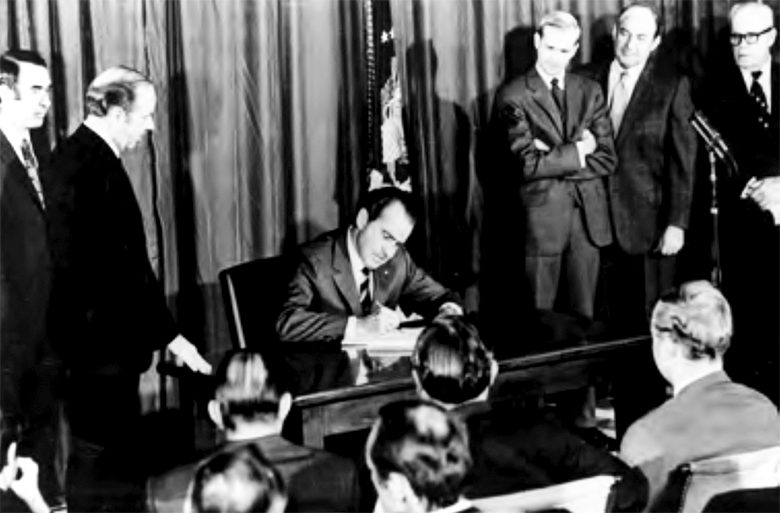 Same disease or problem1970The Occupational Safety and Health Act of 1970Both used law to cut deaths and injuries that education alone had not prevented, on the road and at work. The OSHA entry shows federal safety standards for most American workers.Read this moment