Surgery & Anesthesia
1983
Pulse oximetry enters routine clinical monitoring
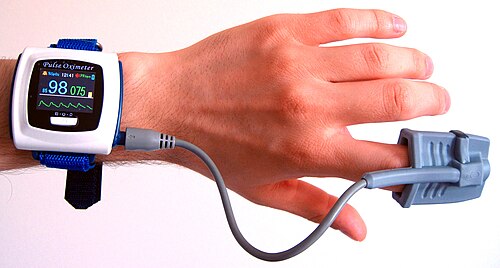
Takuo Aoyagi's 1974 principle reached operating rooms with Nellcor's N-100 finger oximeter, sold from 1982. Randomized trials in nearly 23,000 patients later showed that oximetry detects hypoxemia but found no evidence that it changes the outcome of anesthesia.
Key people
- Takuo Aoyagi
- Nihon Kohden engineer who derived the two-wavelength pulse oximetry principle in 1974
- William New
- Anesthesiologist who co-founded Nellcor and commercialized the first clinical oximeter
- Yoshiyuki Shimada
- Japanese anesthesiologist who conducted early clinical validation of pulse oximetry
Source
For most of the twentieth century, a patient's arterial oxygen saturation during surgery was a matter of clinical inference. Anesthesiologists watched for cyanosis, a late and unreliable sign of falling saturation. Arterial blood gases provided precise measurements but required needle puncture, laboratory processing, and several minutes of delay. In the interval between a sample draw and its result, a patient could sustain hypoxic brain injury without triggering any continuous alarm.
Takuo Aoyagi, an engineer at the Nihon Kohden company in Japan, presented the principle of pulse oximetry at a conference in Osaka on April 26, 1974. He recognized that the pulsatile component of the photoplethysmographic signal could isolate arterial blood from tissue background, and that the ratio of light absorption at red and infrared wavelengths in that pulsatile fraction correlated with oxyhemoglobin saturation. Turning the idea into a dependable clinical instrument took most of the next decade; an early fingertip device described in Osaka in 1980 was accurate but easily disturbed by finger movement.
Nellcor, of Hayward, California, began making and selling its N-100 finger oximeter for surgical use in 1982, after a prototype that used light-emitting diodes and a silicon photodiode in a small finger probe. Its co-founder William New, a Stanford anesthesiologist, had promoted the earlier Biox II ear oximeter in anesthesia and saw a larger market in the operating room. The N-100 sounded a tone whose pitch changed with the saturation, and Nellcor quickly took market share from Biox; its N-180 of 1987 updated the reading with every heartbeat.
Clinical impact arrived against a backdrop of simultaneous changes. Attributing any safety gains to the oximeter is complicated. Capnography was being adopted at the same time, anesthetic agents were improving, and professional training standards were tightening. In 1986 Harvard Medical School's Department of Anaesthesia published mandatory minimum monitoring standards for its nine teaching hospitals, saying no such standards had existed before, and aimed partly at rising malpractice costs. A 2014 Cochrane review of randomized trials in 22,992 patients found that oximetry detected hypoxemia but found no evidence that it changed the outcome of anesthesia.
Pulse oximeters spread well beyond the operating room. They became fixtures in emergency departments, intensive care units, post-anesthesia care units, and eventually general wards. Home oximeters became widely available to outpatients managing chronic lung disease or heart failure. During the COVID-19 pandemic the cheap finger oximeter became as common as a thermometer, and the pandemic also exposed problems with the technology's accuracy that researchers are still working to fix.
Keep exploring
 Read next · same disease or problem
National Halothane Study (1966)
Both tackled safety under anesthesia, and both faced the hard task of proving what actually changes outcomes. The halothane entry shows 800,000 anesthetics pooled to test whether a new drug damaged the liver.
Read this moment
Read next · same disease or problem
National Halothane Study (1966)
Both tackled safety under anesthesia, and both faced the hard task of proving what actually changes outcomes. The halothane entry shows 800,000 anesthetics pooled to test whether a new drug damaged the liver.
Read this moment
 Today on The Clinical Times
Florida dengue outbreak appears to be largest in continental U.S. in decades
Florida has reported more than 250 locally acquired dengue cases this year, with most in Hillsborough County, according to state health officials.
Read today’s top stories
Today on The Clinical Times
Florida dengue outbreak appears to be largest in continental U.S. in decades
Florida has reported more than 250 locally acquired dengue cases this year, with most in Hillsborough County, according to state health officials.
Read today’s top stories
All 526 moments in the history of medicine. This one is in chapter 6, Trials, scanners and rights
Connected moments
How this moment links to others in the history of medicine, and what you will find in each.
-
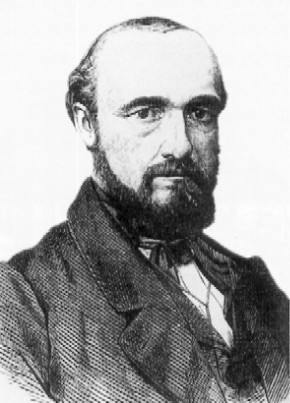 Same disease or problem1868Wunderlich's clinical thermometryThe finger oximeter became as common as the thermometer, another cheap device for measuring a vital sign. Wunderlich's entry shows a million readings setting normal temperature and making the thermometer routine.Read this moment
-
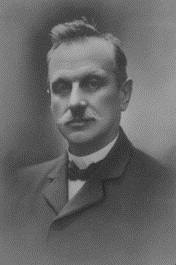 Same disease or problem1896Riva-Rocci's cuff sphygmomanometerBoth gave doctors a quick, painless way to measure a vital sign without a needle, oxygen saturation in one case and blood pressure in the other. The Riva-Rocci entry shows the inflatable cuff that became the standard.Read this moment