Surgery & Anesthesia
1968
Coronary Artery Bypass Grafting (CABG)
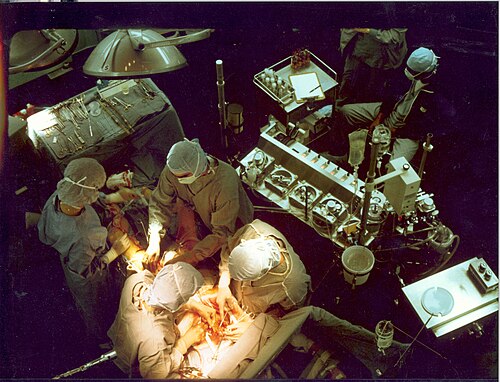
Favaloro turned coronary bypass into a reproducible operation with operative mortality under 5% by 1970. It became one of the most performed surgeries worldwide and relieved angina in advanced coronary disease.
Key people
- René Favaloro
- Argentine cardiac surgeon who standardized the saphenous vein coronary bypass.
- Mason Sones
- Cleveland Clinic cardiologist whose coronary angiography technique enabled bypass planning.
- Arthur Vineberg
- Canadian surgeon whose earlier indirect revascularization work preceded Favaloro's direct approach.
Source
Through the 1950s and early 1960s, surgeons trying to treat obstructive coronary artery disease worked largely at the margins. The Vineberg procedure, which involved implanting the internal mammary artery directly into the myocardium, produced angiographic evidence of new collateral vessels in some patients but inconsistent clinical benefit. Endarterectomy of severely diseased coronary segments was technically demanding and had limited applicability. What the field lacked was a direct, reproducible means of restoring perfusion downstream from a critical stenosis.
René Favaloro, an Argentine surgeon who had joined the Cleveland Clinic in 1962, began working on the problem in the catheterization laboratory and the operating room alongside Mason Sones, whose technique of selective coronary angiography had made it possible for the first time to map the anatomy of coronary disease precisely. Sones's angiograms showed exactly where occlusions sat; Favaloro reasoned that a segment of autologous saphenous vein, sewn from the ascending aorta to a coronary artery distal to the blockage, could restore flow as directly as any plumbing repair. His initial series appeared in Annals of Thoracic Surgery in 1968.
The early results were striking. Patients with refractory angina, some of whom had been disabled by exertional chest pain, obtained relief that no medical regimen had produced. Favaloro's operative mortality in the initial series fell below 5 percent by 1970, a figure low enough to make the risk-benefit calculation favorable in patients with advanced, symptomatic disease. The technique was reproducible, teachable, and scalable, and within a few years cardiac surgery programs across the United States and Europe were training surgeons to perform it.
Large randomized trials followed over the next decade. The Veterans Administration Cooperative Study began publishing results in 1977, and the Coronary Artery Surgery Study (CASS) followed in the early 1980s, both comparing bypass surgery to medical therapy in defined patient populations. Those trials found that patients with left main disease, three-vessel disease with reduced ventricular function, and certain two-vessel anatomies lived longer after surgery. Other subgroups gained angina relief from bypass but no survival advantage. Those distinctions shaped the referral criteria that cardiologists and surgeons still apply.
Internal mammary artery grafts gradually supplanted saphenous vein as the preferred conduit after studies showed substantially better long-term patency, with the left internal mammary to the left anterior descending artery becoming the standard anchor of most bypass procedures. CABG became one of the most performed cardiac operations in the world. Favaloro returned to Argentina in 1971 to build a cardiac surgery program in Buenos Aires, where he worked until his death in 2000.
Keep exploring
 Read next · same disease or problem
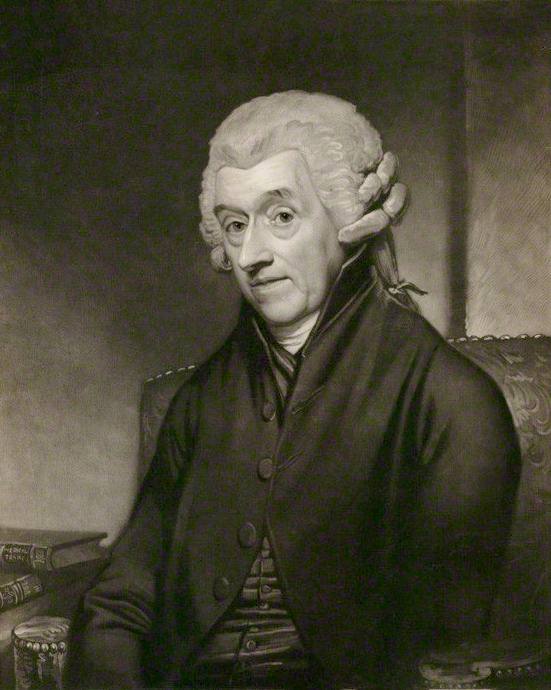
Heberden's account of angina pectoris (1768)
Bypass relieved the refractory angina that Heberden first described two centuries earlier. His entry shows the 1768 account of chest pain brought on by walking and eased by standing still.
Read this moment
Read next · same disease or problem
Heberden's account of angina pectoris (1768)
Bypass relieved the refractory angina that Heberden first described two centuries earlier. His entry shows the 1768 account of chest pain brought on by walking and eased by standing still.
Read this moment
 Today on The Clinical Times
Florida dengue outbreak appears to be largest in continental U.S. in decades
Florida has reported more than 250 locally acquired dengue cases this year, with most in Hillsborough County, according to state health officials.
Read today’s top stories
Today on The Clinical Times
Florida dengue outbreak appears to be largest in continental U.S. in decades
Florida has reported more than 250 locally acquired dengue cases this year, with most in Hillsborough County, according to state health officials.
Read today’s top stories
All 526 moments in the history of medicine. This one is in chapter 6, Trials, scanners and rights
Connected moments
How this moment links to others in the history of medicine, and what you will find in each.
- Same disease or problem1977Grüntzig's coronary balloon angioplastyBypass routes blood around a blocked coronary artery, and angioplasty opens the blockage from inside. Grüntzig's entry shows a balloon catheter widening an artery in an awake patient, an alternative to bypass surgery.Read this moment
-
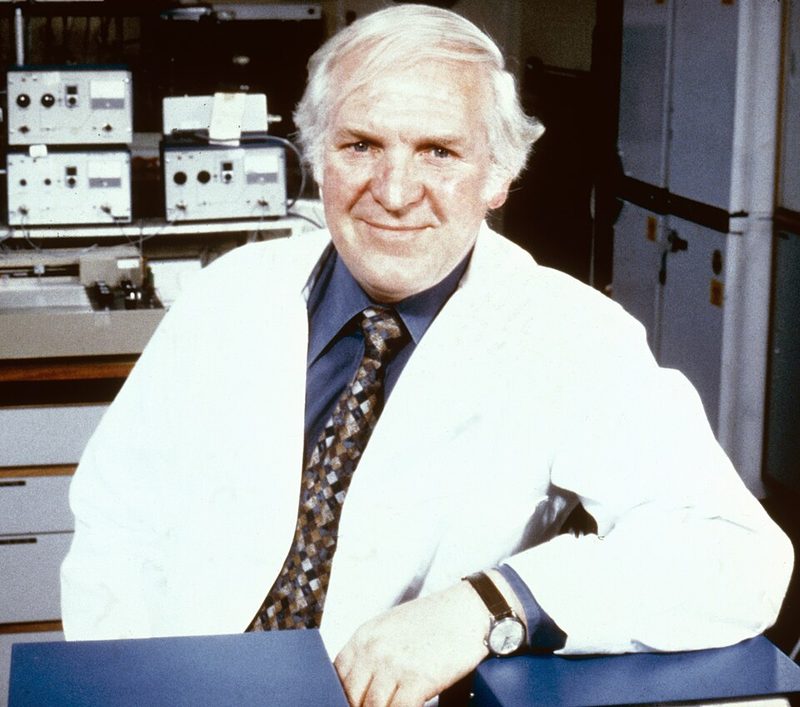 Same disease or problem1964Propranolol and the beta blockersBoth tackled angina, propranolol by cutting the heart's oxygen demand and bypass by restoring blood supply. The propranolol entry shows James Black's reasoning and the drug's later use in hypertension and after heart attacks.Read this moment