Critical & Organ Care
1980
Exogenous surfactant therapy for neonatal respiratory distress syndrome (Fujiwara)
Fujiwara instilled a modified bovine surfactant into the trachea of 10 preterm infants with hyaline membrane disease; oxygenation improved and eight survived, including five of the six under 1500 g. Surfactant replacement became standard after the FDA approved the first preparation, Exosurf, in 1990.
Key people
- Tetsuro Fujiwara
- Japanese neonatologist who conducted the first clinical surfactant trial
- Mary Ellen Avery
- Physician who identified surfactant deficiency as the cause of hyaline membrane disease in 1959
- Graham Liggins
- New Zealand obstetrician who demonstrated antenatal corticosteroids accelerate fetal lung maturity
Source
Hyaline membrane disease, the pathological term for what clinicians now call neonatal respiratory distress syndrome, was the leading cause of death in premature infants through the 1960s and 1970s. The underlying problem had been identified by Mary Ellen Avery and Jere Mead in 1959: lungs of affected infants lacked sufficient surfactant, the complex mixture of phospholipids and proteins that reduces alveolar surface tension and prevents alveolar collapse at end-expiration. Without it, each breath required enormous effort to reinflate collapsed alveoli, and infants fatigued quickly. Treatment was supportive, primarily supplemental oxygen and, later, mechanical ventilation, with no way to address the underlying deficiency.
Tetsuro Fujiwara at Iwate Medical University in Morioka, Japan, spent years working out whether exogenous surfactant could be delivered safely into the trachea of living infants. The preparation, known as Surfactant-TA, was a modified extract of minced cow lung containing surfactant proteins B and C, supplemented with synthetic lipids. Animal experiments preceded the human work, providing both the biological rationale and safety data necessary to proceed.
In 1980, Fujiwara's team published results in the Lancet from ten very preterm infants with hyaline membrane disease who received intratracheal surfactant. Oxygenation improved, inspired oxygen and peak ventilator pressure could be reduced, many of the X-ray abnormalities resolved, and acidosis and low blood pressure were reversed. Eight of the ten infants survived, including five of the six who weighed under 1500 grams at birth; the two deaths were from unrelated causes. In nine infants a patent ductus arteriosus appeared after recovery and required further ventilation.
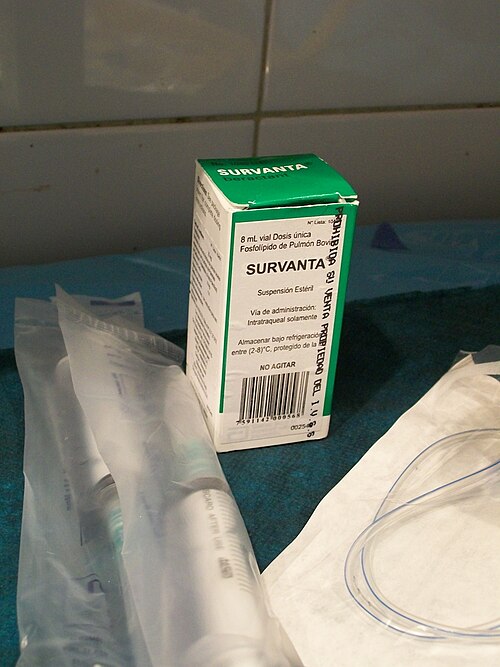
The Lancet publication attracted immediate interest from neonatologists in Europe and North America, who began designing controlled trials to confirm the findings and establish optimal dosing and timing. Trials through the mid-1980s compared natural surfactant extracts against synthetic preparations, prophylactic versus rescue administration, and single versus multiple doses. The FDA approved the first commercial preparation, the protein-free synthetic surfactant Exosurf Neonatal, on August 2, 1990, and the calf-lung surfactant beractant (Survanta) on July 1, 1991.
Surfactant replacement therapy, used alongside antenatal corticosteroids introduced by Graham Liggins and Ross Howie in the 1970s, and continuous positive airway pressure for spontaneously breathing infants, substantially reduced RDS mortality through the 1990s. For infants with RDS weighing under 1500 grams, survival rose from about 5 percent in the 1960s to over 90 percent today. Later comparisons found that natural surfactants worked better and caused fewer complications than the first synthetic ones.
Keep exploring
 Read next · same disease or problem
Antenatal corticosteroids for fetal lung maturation (Liggins and Howie trial) (1972)
Surfactant therapy and antenatal steroids worked together against respiratory distress in premature babies. The Liggins entry shows steroids given before birth cutting the syndrome from 26 to 9 percent.
Read this moment
Read next · same disease or problem
Antenatal corticosteroids for fetal lung maturation (Liggins and Howie trial) (1972)
Surfactant therapy and antenatal steroids worked together against respiratory distress in premature babies. The Liggins entry shows steroids given before birth cutting the syndrome from 26 to 9 percent.
Read this moment
 Today on The Clinical Times
Florida dengue outbreak appears to be largest in continental U.S. in decades
Florida has reported more than 250 locally acquired dengue cases this year, with most in Hillsborough County, according to state health officials.
Read today’s top stories
Today on The Clinical Times
Florida dengue outbreak appears to be largest in continental U.S. in decades
Florida has reported more than 250 locally acquired dengue cases this year, with most in Hillsborough County, according to state health officials.
Read today’s top stories
All 526 moments in the history of medicine. This one is in chapter 6, Trials, scanners and rights
Connected moments
How this moment links to others in the history of medicine, and what you will find in each.
-
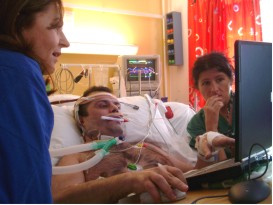 Same disease or problem1975Extracorporeal membrane oxygenation (ECMO) for neonatal respiratory failure (Bartlett)Both rescued newborns whose lungs were failing, surfactant by helping the lungs work and ECMO by letting them rest. The ECMO entry shows a newborn kept alive on an external circuit for days.Read this moment
-
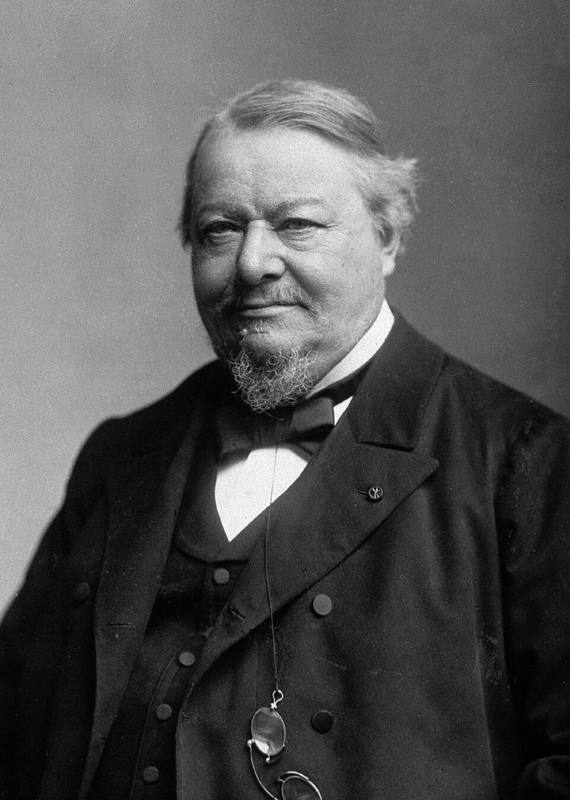 Same disease or problem1880Tarnier's incubator for premature infantsA century apart, both tackled what kills premature babies, cold in 1880 and immature lungs in 1980. Tarnier's entry shows a poultry incubator adapted to keep premature infants warm in Paris.Read this moment