Critical & Organ Care
1989
First Successful Living-Donor Liver Transplant
Russell Strong's team in Brisbane transplanted part of a mother's liver into her infant son in 1989, the first successful living-donor liver transplant. Both lived; the technique opened a donor source independent of deceased organs.
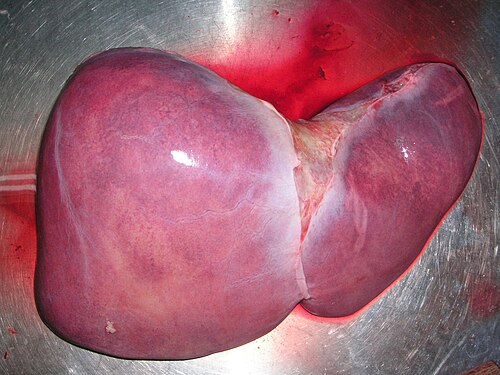
Key people
- Russell Strong
- Brisbane surgeon who performed the first successful living-donor liver transplant
- Christoph Broelsch
- Chicago transplant surgeon who extended living-donor liver techniques in the United States
- Koichi Tanaka
- Kyoto surgeon who developed adult-to-adult living-donor liver transplantation in Japan
Source
Thomas Starzl had attempted the first liver transplant in a child in Denver on March 1, 1963, a three-year-old with biliary atresia who died of bleeding during the operation; through the 1980s the procedure remained limited by organ supply. For adults, the waiting list was a serious bottleneck; for infants and small children, it was often fatal. Cadaveric livers from size-matched pediatric donors were rare, and the smaller the recipient, the longer the wait. Biliary atresia, the most common cause of pediatric liver failure requiring transplantation, progressed relentlessly, and many children deteriorated or died before a suitable organ became available.
Russell Strong, a transplant surgeon at Princess Alexandra Hospital in Brisbane, Australia, had been working on the concept of partial liver transplantation to address the pediatric size mismatch. The liver's well-documented capacity for regeneration meant that a donor could, in principle, give a portion of the organ and recover normal hepatic function within weeks. In 1989 Strong's team performed the procedure: a mother donated part of her liver to her infant son, who had biliary atresia. Both mother and child survived, and the team reported the case in the New England Journal of Medicine in May 1990.
The surgical principles that made the operation possible were not new in isolation. Partial hepatectomy was a standard oncological procedure, and the anatomy of segmental liver resection had been formalized through the work of Henri Bismuth and Claude Couinaud in France. What Strong's team achieved was the combination of partial resection, living donation and successful transplantation into a child. The procedure required careful dissection of the graft, preservation of its blood vessels and bile duct, and anesthetic and intensive care for both a healthy adult donor and a critically ill infant.
Strong's report attracted immediate attention from transplant centers that had been struggling with the pediatric organ shortage. Other centers moved quickly: Japan's first living-donor liver transplant, for a child with biliary atresia, was performed by Naofumi Nagasue at Shimane University on November 13, 1989, and Korea and China followed in 1994 and 1995. Christoph Broelsch at the University of Chicago, who had contributed substantially to reduced-size cadaveric liver transplantation, extended living-donor work to infant recipients in the United States. Japanese surgeons including Koichi Tanaka in Kyoto developed expertise that would eventually expand to adult-to-adult living-donor transplantation, where larger segments including the right lobe are transferred.
The expansion to adult recipients brought new ethical and surgical complexity. Donating the right lobe of the liver carries substantially more risk to the donor than the left lateral segment donated from adult to infant. In Japan, reports in May 2003 of donor deaths after adult-to-adult transplants using an extended right lobe led to a decline in adult living-donor transplants from 2004. Regulatory frameworks developed over the following decade to formalize donor evaluation and outcomes reporting. Living donors remain the main source of livers in countries with little deceased donation: Japan performs 350 to 400 living-donor liver transplants a year against about 100 from deceased donors.
Keep exploring
 Read next · built on
Starzl and the first liver transplants (1963)
Starzl first attempted a liver transplant in a child with biliary atresia in 1963, the same disease Strong's patient had. The Starzl entry shows how every early patient died before the operation became a clinical service.
Read this moment
Read next · built on
Starzl and the first liver transplants (1963)
Starzl first attempted a liver transplant in a child with biliary atresia in 1963, the same disease Strong's patient had. The Starzl entry shows how every early patient died before the operation became a clinical service.
Read this moment
 Today on The Clinical Times
Florida dengue outbreak appears to be largest in continental U.S. in decades
Florida has reported more than 250 locally acquired dengue cases this year, with most in Hillsborough County, according to state health officials.
Read today’s top stories
Today on The Clinical Times
Florida dengue outbreak appears to be largest in continental U.S. in decades
Florida has reported more than 250 locally acquired dengue cases this year, with most in Hillsborough County, according to state health officials.
Read today’s top stories
All 526 moments in the history of medicine. This one is in chapter 6, Trials, scanners and rights
Connected moments
How this moment links to others in the history of medicine, and what you will find in each.
-
 Same disease or problem1954First Successful Kidney TransplantBoth relied on a healthy living relative giving an organ, a twin's kidney in 1954 and part of a mother's liver in 1989. The kidney entry shows how the Herrick twins' operation opened transplantation.Read this moment
-
 Same disease or problem2024First gene-edited pig kidney transplanted into a living personBoth sought a way around the shortage of deceased donor organs, living donors in 1989 and gene-edited pigs in 2024. The pig kidney entry shows the first such transplant into a living patient.Read this moment
-
 Same disease or problem1984The National Organ Transplant ActOrgan supply limited liver transplants through the 1980s, the problem the 1984 law tried to manage with a national waiting list. The NOTA entry shows the ban on organ sales and the national matching network.Read this moment