Critical & Organ Care
1968
Harvard Criteria for Brain Death
The first formal clinical criteria for death by neurological function. It gave physicians a way to declare death in patients on ventilators and set the basis for later brain-death law and organ procurement.
Key people
- Henry Beecher
- Harvard anesthesiologist who chaired the ad hoc committee defining irreversible coma.
- Joseph Murray
- Transplant surgeon whose organ procurement needs helped motivate the criteria.
- Robert Schwab
- Neurologist on the Harvard committee who contributed EEG expertise to the criteria.
Source
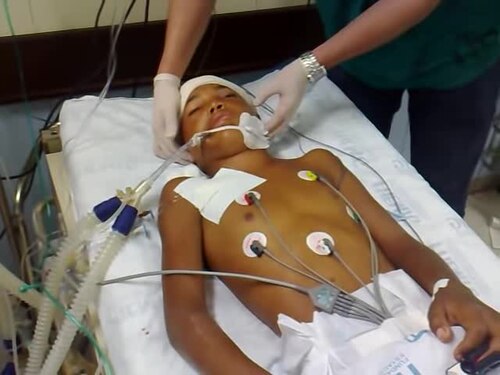
By the mid-1960s, the widespread adoption of mechanical ventilation in intensive care units had created a clinical situation that medicine's existing legal and ethical frameworks could not resolve. Patients who had sustained catastrophic brain injuries, with complete and permanent cessation of all brain function, could be maintained indefinitely on ventilators with intact circulation and warm skin. The traditional definition of death, cessation of heartbeat and respiration, no longer captured the biological reality of these cases, and clinicians faced the uncomfortable position of either continuing futile treatment or acting without any formal framework for declaring death.
Henry Beecher, an anesthesiologist at Harvard Medical School, had been thinking about this problem both clinically and ethically for several years. In 1967 he convened an ad hoc committee of physicians, lawyers, theologians, and a historian of science to produce a workable definition. The committee's report was published in JAMA in August 1968. The criteria they specified required unreceptivity and unresponsivity, no spontaneous movement or spontaneous breathing, absence of reflexes including pupillary and corneal responses, and a flat electroencephalogram, all confirmed on two examinations at least 24 hours apart after excluding hypothermia and central nervous system depressant drugs.
The committee was candid about one of its motivations. The report noted explicitly that patients meeting these criteria were a burden on other patients and on hospital resources, and that their organs might be used to help others if death could be declared. Joseph Murray, the transplant surgeon who had performed the first successful kidney transplant in 1954, was among the committee's members, and the need for a legally defensible moment of death before organ retrieval was part of the practical context the criteria were designed to address.
Reception was not uniform. Some neurologists and intensivists debated whether a 24-hour observation period was necessary in all cases, and whether EEG confirmation added to the clinical examination or was redundant. The criteria also applied only to total brain failure, not to the separate and more contentious question of patients in persistent vegetative states, which the Harvard criteria did not address. Nonetheless, the framework was adopted rapidly: most U.S. states enacted statutes incorporating neurological death over the following decade.
The Uniform Determination of Death Act of 1981 codified brain death alongside cardiopulmonary death in American law, and the criteria have been revised multiple times since 1968 in practice guidelines from the American Academy of Neurology, most recently in 2023. The core requirement of an irreversible, complete loss of all brain function, including the brainstem, confirmed by a structured clinical examination with specified preconditions excluded, remains in place.
Keep exploring
 Read next · built on
Copenhagen Polio Epidemic and Intensive Care (1952)
Ventilators in intensive care kept patients' hearts beating after all brain function was lost, the dilemma the Harvard committee faced. The Copenhagen entry shows how ventilating polio patients by hand gave rise to intensive care.
Read this moment
Read next · built on
Copenhagen Polio Epidemic and Intensive Care (1952)
Ventilators in intensive care kept patients' hearts beating after all brain function was lost, the dilemma the Harvard committee faced. The Copenhagen entry shows how ventilating polio patients by hand gave rise to intensive care.
Read this moment
 Today on The Clinical Times
Florida dengue outbreak appears to be largest in continental U.S. in decades
Florida has reported more than 250 locally acquired dengue cases this year, with most in Hillsborough County, according to state health officials.
Read today’s top stories
Today on The Clinical Times
Florida dengue outbreak appears to be largest in continental U.S. in decades
Florida has reported more than 250 locally acquired dengue cases this year, with most in Hillsborough County, according to state health officials.
Read today’s top stories
All 526 moments in the history of medicine. This one is in chapter 6, Trials, scanners and rights
Connected moments
How this moment links to others in the history of medicine, and what you will find in each.
-
 Same person1954First Successful Kidney TransplantJoseph Murray, who performed the first successful kidney transplant, sat on the Harvard committee. His entry shows how the Herrick twins' operation opened the clinical field of transplantation.Read this moment
- Same disease or problem1976In re QuinlanThe Harvard criteria left out patients in a persistent vegetative state, and Quinlan was exactly such a case. Her entry shows a court allowing her respirator to be withdrawn with an ethics committee's agreement.Read this moment
- Same disease or problem1968The Uniform Anatomical Gift ActIn the same year, brain death criteria and a model donation law both prepared the ground for taking organs after death. The gift act entry shows how any adult could donate organs by a signed document.Read this moment