Reproductive Health
1978
Birth of Louise Brown: First Baby Conceived by In Vitro Fertilization
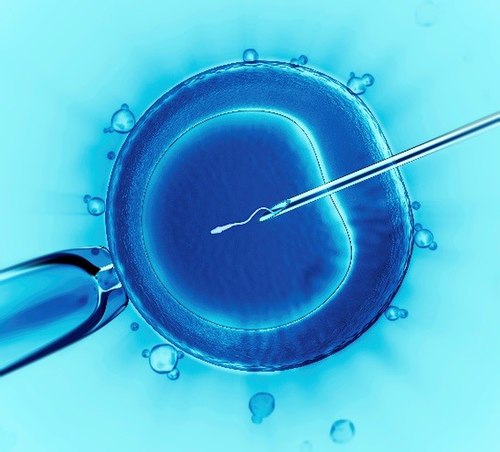
First human born from in vitro fertilization, after years of failed attempts. About four million people had been born after IVF by 2010, when Edwards received the Nobel Prize in Physiology or Medicine.
Key people
- Robert Edwards
- Physiologist who developed the fertilization and culture technique
- Patrick Steptoe
- Gynecologist who performed laparoscopic egg retrieval
- Lesley Brown
- Mother of the first IVF-conceived child
- Jean Purdy
- Nurse and embryologist who co-developed IVF culture methods with Edwards
Source
When Lesley and John Brown came to the clinic in 1977, they had been trying for a child for nine years. Lesley Brown had blocked fallopian tubes, and failed operations on them in 1970 were followed by their removal in August 1977; her only path to pregnancy was an egg fertilized outside her body and returned to her uterus. That idea had been pursued for years by Patrick Steptoe, a gynecologist at Oldham and District General Hospital, and Robert Edwards, a physiologist at Cambridge.
Edwards had spent the 1960s working out how to mature human oocytes in culture and establishing the conditions under which fertilization could occur in vitro. Steptoe contributed the laparoscopic technique to retrieve eggs without open surgery. About a hundred attempts in the early 1970s produced only short-lived pregnancies, and the first pregnancy that took hold, in 1976, was ectopic and had to be ended. They concluded that the hormones given to ripen eggs were disturbing implantation, changed the protocol, and began timing egg collection from each woman's own hormone levels.
Lesley Brown's egg was retrieved on November 10, 1977. The embryo was returned to her uterus at the 8-cell stage two and a half days later; late in the pregnancy she developed pre-eclampsia. Louise Joy Brown was born by caesarean section in Oldham on July 25, 1978, at 38 weeks and 5 days, weighing 2,700 grams. Steptoe and Edwards reported the birth in a short letter to the Lancet on August 12, 1978.
The work had been debated for years, a debate Edwards himself started: some religious leaders, ethicists and scientists demanded that it stop, while others supported it. The Medical Research Council had declined to fund the project, and a private donation kept it going. Edwards and Steptoe then founded Bourn Hall Clinic in Cambridge, the first IVF center, which recorded 1,000 births by 1986. Edwards received the Nobel Prize in Physiology or Medicine in 2010; Steptoe, who died in 1988, was not eligible for consideration.
Embryo freezing, preimplantation genetic testing and intracytoplasmic sperm injection did not exist in 1978; they were added in the following decades, while ovarian stimulation protocols were reworked at Bourn Hall. By 2010, about four million people had been born after IVF. Louise Brown and other early IVF children have since had children of their own.
Keep exploring
 Read next · same disease or problem
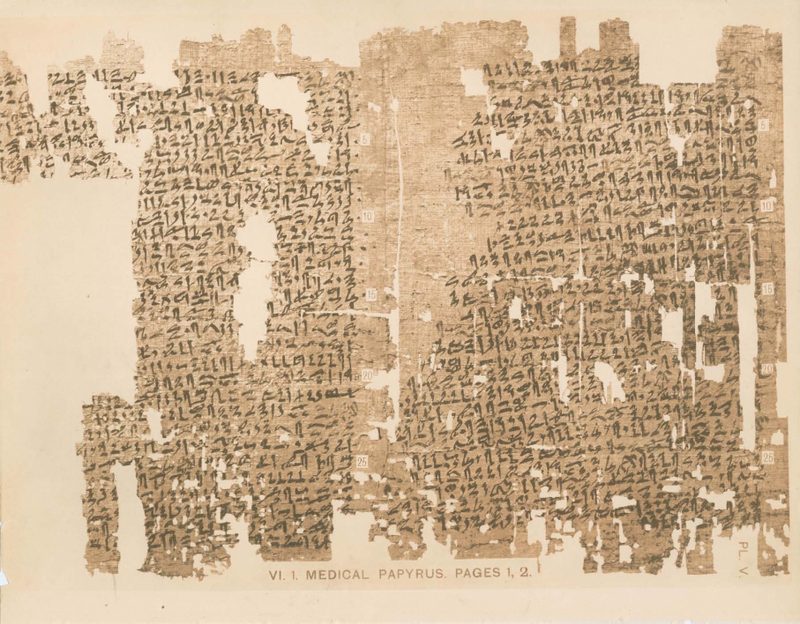
The Kahun Gynaecological Papyrus (c. 1825 BCE)
Almost four thousand years apart, both sought answers for women who could not conceive. The Kahun entry shows the oldest known text on gynecology, with cases on fertility, pregnancy and contraception.
Read this moment
Read next · same disease or problem
The Kahun Gynaecological Papyrus (c. 1825 BCE)
Almost four thousand years apart, both sought answers for women who could not conceive. The Kahun entry shows the oldest known text on gynecology, with cases on fertility, pregnancy and contraception.
Read this moment
 Today on The Clinical Times
Florida dengue outbreak appears to be largest in continental U.S. in decades
Florida has reported more than 250 locally acquired dengue cases this year, with most in Hillsborough County, according to state health officials.
Read today’s top stories
Today on The Clinical Times
Florida dengue outbreak appears to be largest in continental U.S. in decades
Florida has reported more than 250 locally acquired dengue cases this year, with most in Hillsborough County, according to state health officials.
Read today’s top stories
All 526 moments in the history of medicine. This one is in chapter 6, Trials, scanners and rights
Connected moments
How this moment links to others in the history of medicine, and what you will find in each.
-
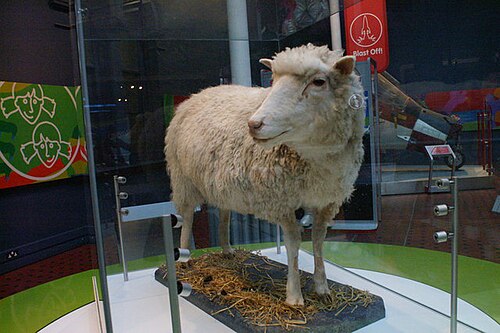 Same disease or problem1997Dolly the Cloned SheepBoth created life from cells handled outside the body, and both set off public arguments over where that should stop. The Dolly entry shows a sheep cloned from an adult cell.Read this moment
-
 Same disease or problem1960Enovid: First FDA-Approved Oral Contraceptive PillBoth used hormones to control human fertility, the pill to prevent pregnancy and IVF to help it begin. The Enovid entry shows how the first oral contraceptive reached women in 1960.Read this moment