Genetics & Molecular
1977
Sanger DNA Sequencing (dideoxy chain-termination method)
Sanger's group used dideoxynucleotides to stop DNA synthesis at each base and read the sequence. Refined and automated, it was the sequencing method of the Human Genome Project, and clinical labs still use it to confirm individual variants.
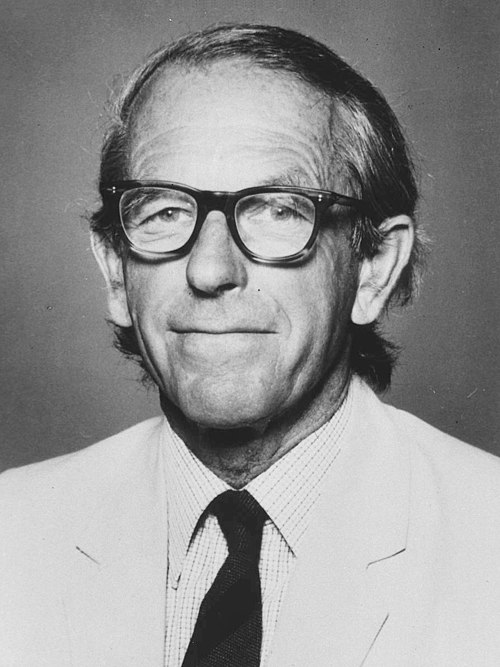
Key people
- Frederick Sanger
- British biochemist who developed dideoxy sequencing; two-time Nobel laureate (1958, 1980).
- Allan Maxam
- Co-developer with Gilbert of the alternative chemical DNA sequencing method, published in parallel.
- Walter Gilbert
- Harvard biologist; received a quarter of the 1980 Nobel Prize in Chemistry, alongside Sanger, for DNA sequencing.
- Leroy Hood
- Caltech biologist who co-developed the automated fluorescent Sanger sequencer in the 1980s.
Source
Frederick Sanger had already determined the amino acid sequence of insulin in 1955, work that earned him his first Nobel Prize in Chemistry in 1958. By the mid-1970s, at the Medical Research Council Laboratory of Molecular Biology in Cambridge, he was working on a harder problem: reading the sequence of nucleotides in DNA itself. The challenge was producing fragments of defined lengths that each terminated at a known base, so their size on a gel would directly encode sequence information.
Sanger's solution, published in PNAS in December 1977, used dideoxynucleotides. These modified bases lack the 3'-hydroxyl group needed to extend the growing strand, so when a dideoxynucleotide is incorporated, synthesis stops. By running four separate reactions, each with a different dideoxy terminator, and then separating the resulting nested fragments by size on a polyacrylamide gel, the sequence could be read directly from the banding pattern. Earlier that year, in February, Allan Maxam and Walter Gilbert at Harvard had published a chemical cleavage method that reached the same goal by a different route. Sanger reported that the new method was faster and more accurate than his earlier plus-and-minus technique, and demonstrated it on the DNA of bacteriophage phiX174.
The work earned Sanger a quarter of the 1980 Nobel Prize in Chemistry, making him the first person to win two Nobel Prizes in chemistry; only Barry Sharpless, in 2022, has matched that, and John Bardeen won two in physics. Gilbert received another quarter, and the other half went to Paul Berg of Stanford for his work on recombinant DNA. Sanger's first prize, in 1958, had been for the structure of proteins, especially insulin.
Within a decade, Sanger sequencing had been adapted for fluorescent dye labeling, described by Leroy Hood and colleagues in 1986, which replaced the radioactive labels of the original protocol and allowed automated reading. Applied Biosystems commercialized automated Sanger sequencers in the 1980s. The Human Genome Project, carried out from 1990 to 2003, used Sanger sequencing after improving it through many technical changes; it published a draft sequence in 2001, and in 2003 produced a sequence covering over 90 percent of the genome.
Next-generation sequencing technologies that appeared from the mid-2000s onward offer far higher throughput at lower cost per base, displacing Sanger sequencing for large-scale discovery work. Clinical genetic laboratories continue to use Sanger sequencing to confirm individual variants identified by panel or exome testing, because its per-base accuracy and the interpretive clarity of a single clean trace remain difficult to match when a specific nucleotide position is the question.
Keep exploring
 Read next · same person
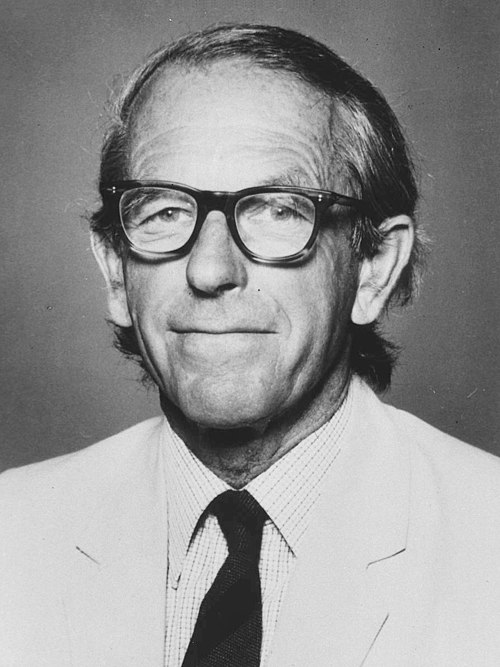
Sanger's Sequencing of Insulin (1955)
Frederick Sanger had already read the sequence of insulin before he turned to DNA, winning a Nobel Prize for each. The insulin entry shows the first full sequence of any protein.
Read this moment
Read next · same person
Sanger's Sequencing of Insulin (1955)
Frederick Sanger had already read the sequence of insulin before he turned to DNA, winning a Nobel Prize for each. The insulin entry shows the first full sequence of any protein.
Read this moment
 Today on The Clinical Times
Florida dengue outbreak appears to be largest in continental U.S. in decades
Florida has reported more than 250 locally acquired dengue cases this year, with most in Hillsborough County, according to state health officials.
Read today’s top stories
Today on The Clinical Times
Florida dengue outbreak appears to be largest in continental U.S. in decades
Florida has reported more than 250 locally acquired dengue cases this year, with most in Hillsborough County, according to state health officials.
Read today’s top stories
All 526 moments in the history of medicine. This one is in chapter 6, Trials, scanners and rights
Connected moments
How this moment links to others in the history of medicine, and what you will find in each.
-
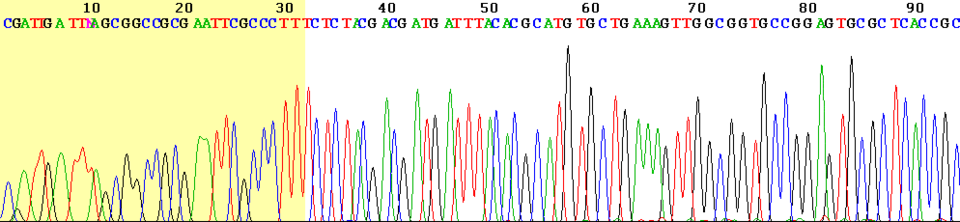 Led to2001Human Genome Project: First Draft Human Genome SequenceRefined and automated, Sanger's method was the one the Human Genome Project used. The first draft entry shows the reference sequence released free to clinicians and researchers.Read this moment
-
 Same disease or problem2022First complete human genome sequence (T2T-CHM13)Reading the full human genome was the goal from Sanger's first DNA sequence to the gapless sequence of 2022. The T2T entry shows the last 8 percent filled in, adding 1,956 predicted genes.Read this moment