Reproductive Health
1972
Antenatal corticosteroids for fetal lung maturation (Liggins and Howie trial)
In the first 282 mothers facing preterm delivery, betamethasone cut respiratory distress syndrome from 25.8% to 9.0%, and early neonatal death after spontaneous preterm labor fell from 15.0% to 3.2%. A single course later became standard care for threatened preterm birth.

Key people
- Graham Liggins
- New Zealand obstetrician who designed and led the betamethasone RCT.
- Ross Howie
- Auckland neonatologist, co-investigator and co-author of the 1972 Pediatrics report.
Source
In the late 1960s, babies born well before term often died within days, and the first ventilators for newborns were only beginning to come into use. Respiratory distress syndrome, caused by too little surfactant from the immature type II pneumocytes, accounted for the majority of these deaths. At National Women's Hospital in Auckland the only neonatologist able to ventilate a baby was Ross Howie, and preventing the lung disease itself required acting before delivery. The first hint that this was possible came from animal experiments published from 1969, which showed that glucocorticoids could speed up the functional maturation of the fetal lung.
Graham Liggins, an obstetrician at the same hospital, had come across the effect by chance while studying what triggers labor in sheep. A lamb born early after glucocorticoid infusion was alive and breathing, and in a 1969 paper he suggested that surfactant had appeared sooner in its lungs. From 1969 he and Howie ran a randomized, placebo-controlled trial, giving mothers who faced delivery before 37 weeks intramuscular betamethasone or placebo. The first report, on 282 mothers, appeared in Pediatrics in 1972 after the Lancet had rejected it as lacking general interest. Recruitment went on until February 1974 and reached 1,142 women.
Respiratory distress syndrome fell from 25.8 percent in the placebo group to 9.0 percent in the betamethasone group. Among the 213 mothers in spontaneous preterm labor, early neonatal death dropped from 15.0 percent to 3.2 percent. The fall in respiratory distress was confined to babies born before 32 weeks whose mothers had been treated at least 24 hours before delivery: 11.8 percent of them had the syndrome, against 69.6 percent of comparable controls. Benefit was greatest in babies born one to seven days after treatment. The authors saw a possible rise in fetal deaths among treated mothers with severe pre-eclampsia and asked for more trials before any new routine began.
Despite those numbers, adoption was slow. Most eligible women in Australia and New Zealand were receiving the treatment during the 1980s, but in the early 1990s the estimated rate in both the UK and the US was still only 10 to 20 percent. Part of the reason was worry about the long-term safety of exposing a fetus to drugs with effects as wide as those of corticosteroids. The UK Cochrane Centre, opened in 1992, chose a meta-analysis of seven antenatal steroid trials for its logo. Practice changed after a 1994 NIH consensus statement concluded that antenatal corticosteroids were indicated, with few exceptions, for women at risk of premature delivery.
WHO now recommends antenatal corticosteroids for women at risk of imminent preterm birth at 24 to 34 weeks, and dexamethasone is on the WHO Model List of Essential Medicines. After 1994 the pendulum swung toward overuse, and case reports appeared of harm, including infant deaths, after many repeat courses. Liggins was knighted in 1991 and died in Auckland in 2010. In a 30-year follow-up published in 2005, Stuart Dalziel studied 534 people born in the trial and found no differences from the placebo group in body size, blood pressure, lung function or cognitive function.
Keep exploring
 Read next · same disease or problem
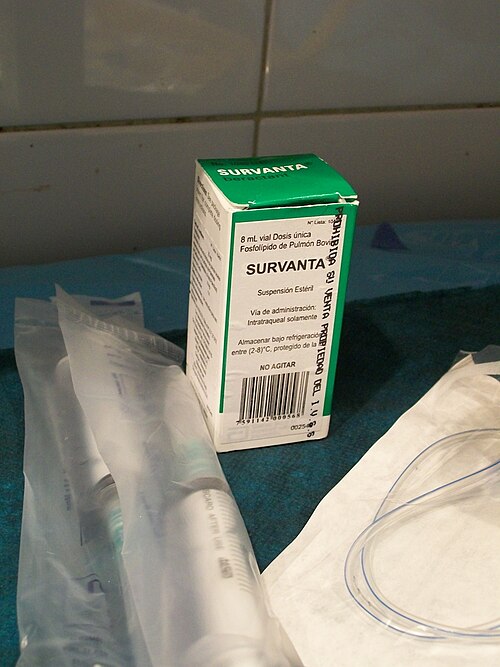
Exogenous surfactant therapy for neonatal respiratory distress syndrome (Fujiwara) (1980)
Both fought respiratory distress in premature babies, steroids by speeding surfactant before birth and surfactant therapy by supplying it after. The surfactant entry shows Fujiwara's first infants and how the two treatments cut deaths together.
Read this moment
Read next · same disease or problem
Exogenous surfactant therapy for neonatal respiratory distress syndrome (Fujiwara) (1980)
Both fought respiratory distress in premature babies, steroids by speeding surfactant before birth and surfactant therapy by supplying it after. The surfactant entry shows Fujiwara's first infants and how the two treatments cut deaths together.
Read this moment
 Today on The Clinical Times
Florida dengue outbreak appears to be largest in continental U.S. in decades
Florida has reported more than 250 locally acquired dengue cases this year, with most in Hillsborough County, according to state health officials.
Read today’s top stories
Today on The Clinical Times
Florida dengue outbreak appears to be largest in continental U.S. in decades
Florida has reported more than 250 locally acquired dengue cases this year, with most in Hillsborough County, according to state health officials.
Read today’s top stories
All 526 moments in the history of medicine. This one is in chapter 6, Trials, scanners and rights
Connected moments
How this moment links to others in the history of medicine, and what you will find in each.
-
 Same disease or problem1993Founding of the Cochrane CollaborationAntenatal steroids were proven yet little used for years, and the Cochrane logo reproduces the meta-analysis of their trials. The Cochrane entry shows how systematic reviews became routine input for guidelines worldwide.Read this moment
-
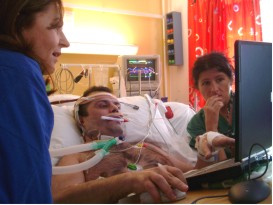 Same disease or problem1975Extracorporeal membrane oxygenation (ECMO) for neonatal respiratory failure (Bartlett)Both sought to save newborns whose lungs could not yet do their job. The ECMO entry shows a newborn kept alive on an external heart-lung circuit for days until her lungs recovered.Read this moment