Research Methods & Ethics
1976
Large simple trials and trial overviews (Peto and colleagues)
Peto and colleagues' 1976-77 papers taught doctors to design long trials and analyze them with the logrank test; in the 1980s the Oxford group argued for large, simple trials and overviews. The Oxford ISIS trials, recruiting from 1981, put the megatrial approach into practice on heart attack treatment.
Key people
- Richard Peto
- Oxford statistician; first author of the 1976-77 trial guide and co-author of the 1984 case for large, simple trials.
- Rory Collins
- Peto's collaborator; led the ISIS trial series from their Oxford Clinical Trial Service Unit.
- Malcolm Pike
- Statistician and second author, with Peto, of the 1976-77 trial design papers.
- Peter Sleight
- Oxford cardiologist who helped design and run the ISIS acute MI trials.
Source
Br J Cancer 1976-1977; ISIS programme from 1981 (opens in a new tab)
The Medical Research Council had backed collaborative trials in leukemia and other cancers for years, and a group of statisticians wanted to pass on the expertise those trials had built up. Richard Peto led ten British and American statisticians, among them Malcolm Pike, Peter Armitage and David Cox, in writing a two-part guide for doctors with no statistical training. Part I, in the British Journal of Cancer in December 1976, covered design. Part II, in January 1977, gave full instructions for analysis with life tables and the logrank test, including a worked example. The authors called it the first simple account of such analysis for non-statistical physicians; the test itself was older, and the guide cited Peto and Pike's 1973 paper on it.
The case for very large trials came in 1984, in a paper by Salim Yusuf, Rory Collins and Peto titled 'Why do we need some large, simple randomized trials?' A large simple trial would collect only the information necessary to answer the primary question: randomize patients, record the outcome of interest, and avoid the elaborate sub-protocols and extensive data collection that made conventional trials slow and expensive to run. In 1987 the group wrote that moderate effects on serious outcomes needed trials much larger than was then standard.
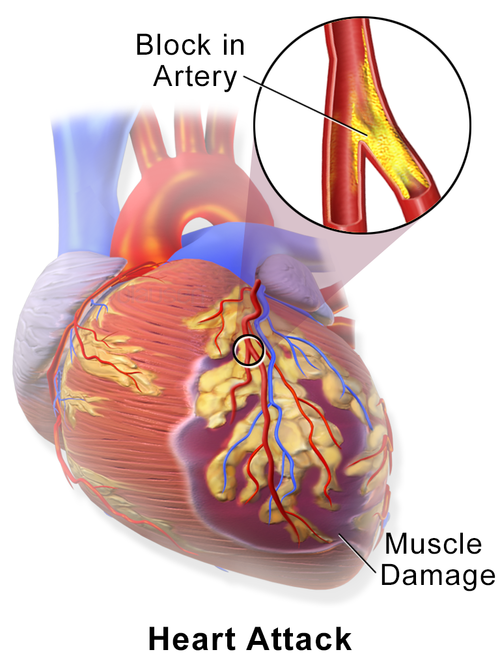
The ISIS trials, which began recruiting in mid-1981, tested this approach in acute myocardial infarction. ISIS-1 randomized 16,027 patients in 245 coronary care units to intravenous atenolol or none and found 15 percent fewer vascular deaths in the first week, with wide confidence limits. ISIS-2, published in the Lancet in 1988, enrolled 17,187 patients in 417 hospitals; aspirin alone reduced the odds of vascular death at five weeks by 23 percent, streptokinase alone by 25 percent and the two together by 42 percent. The two drugs' effects appeared to be additive.
The group also championed the systematic overview: in 1985 Yusuf, Peto and colleagues pooled some 65 randomized trials of beta-blockers in myocardial infarction, and in 1987 Collins, Gray, Godwin and Peto argued that conclusions should rest on all relevant randomized trials, not one or a few. The 1985 overview concluded that about a year of beta-blockade after discharge could cut mortality by about 25 percent. The Cochrane Collaboration, founded in 1993, extended systematic reviews across medicine.
Later ISIS trials were larger still: ISIS-3 compared three clot-dissolving drugs, and aspirin with or without heparin, in 41,299 patients, and ISIS-4 tested captopril, oral mononitrate and intravenous magnesium in 58,050. ISIS-3 pooled its heparin results with those of the Italian GISSI-2 trial, which had tested the same question.
Keep exploring
 Read next · led to
ISIS-2 (Second International Study of Infarct Survival) (1988)
ISIS-2 put the large simple trial into practice, enrolling 17,187 heart attack patients in 417 hospitals. Its entry shows aspirin and streptokinase each cutting vascular deaths, and together by about 40 percent.
Read this moment
Read next · led to
ISIS-2 (Second International Study of Infarct Survival) (1988)
ISIS-2 put the large simple trial into practice, enrolling 17,187 heart attack patients in 417 hospitals. Its entry shows aspirin and streptokinase each cutting vascular deaths, and together by about 40 percent.
Read this moment
 Today on The Clinical Times
Florida dengue outbreak appears to be largest in continental U.S. in decades
Florida has reported more than 250 locally acquired dengue cases this year, with most in Hillsborough County, according to state health officials.
Read today’s top stories
Today on The Clinical Times
Florida dengue outbreak appears to be largest in continental U.S. in decades
Florida has reported more than 250 locally acquired dengue cases this year, with most in Hillsborough County, according to state health officials.
Read today’s top stories
All 526 moments in the history of medicine. This one is in chapter 6, Trials, scanners and rights
Connected moments
How this moment links to others in the history of medicine, and what you will find in each.
-
 Led to1994Antiplatelet Trialists' Collaboration OverviewThe Oxford group argued that conclusions should rest on all relevant trials, and this overview pooled 145 of them. It shows prolonged antiplatelet therapy cutting vascular events by about a quarter.Read this moment
-
 Same person2005Early Breast Cancer Trialists' Collaborative Group (EBCTCG) overview of adjuvant tamoxifenRichard Peto, who led the 1976 guide to trial design, was the statistical architect of the breast cancer overview. It shows five years of tamoxifen cutting the yearly death rate by 31 percent.Read this moment
-
 Same disease or problem1993Founding of the Cochrane CollaborationThe Cochrane Collaboration extended across medicine the overviews of all randomized trials that Peto's group championed. Its entry shows systematic reviews becoming routine input for guidelines worldwide.Read this moment