Endocrinology
1971
Schally and Guillemin: Hypothalamic Releasing Hormones
Schally's group identified GnRH as a single decapeptide driving both LH and FSH release, proving the hypothalamus governs the pituitary by chemical signals. The work seeded GnRH agonists and antagonists used in fertility and cancer care.
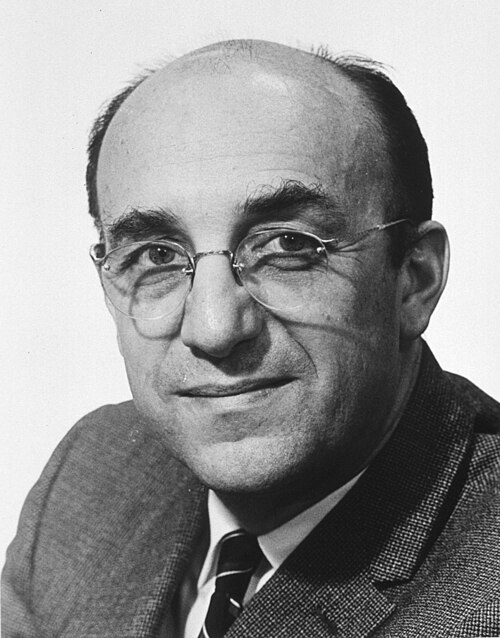
Key people
- Andrew Schally
- Endocrinologist who isolated and sequenced GnRH, sharing the 1977 Nobel Prize.
- Roger Guillemin
- Neuroendocrinologist whose competing lab independently characterized hypothalamic releasing hormones.
- Rosalyn Yalow
- Nobel co-laureate in 1977 for radioimmunoassay work enabling hormone measurement.
- Geoffrey Harris
- British physiologist who first proposed the portal-vessel hypothesis of hypothalamic control.
Source
For most of the twentieth century, the dominant model of neuroendocrine control was anatomical: nerve fibers from the hypothalamus descended to the posterior pituitary and released hormones directly into the circulation. The anterior pituitary, which controls thyroid, adrenal, gonadal, and growth functions, had no such direct neural supply. Geoffrey Harris had proposed in the 1940s that the hypothalamus must govern anterior pituitary secretion through blood-borne chemical signals traveling down the portal vessels, but the chemical identities of those signals remained unknown well into the 1960s.
Andrew Schally at Tulane University and Roger Guillemin at the Salk Institute became rivals in one of the more contentious races in modern endocrinology. Both groups spent most of a decade processing hypothalamic tissue from slaughterhouse animals on an industrial scale: Schally's team worked primarily with porcine hypothalami, Guillemin's with ovine tissue, each processing hundreds of thousands of glands to isolate nanogram quantities of active peptide. In 1969 both groups independently characterized thyrotropin-releasing hormone as a simple tripeptide. GnRH followed in 1971, when Schally's team published the structure in Science: a decapeptide capable of stimulating both LH and FSH release from the anterior pituitary.
The significance was conceptual as much as biochemical. The brain's control of reproduction, metabolism, and stress response operated through discrete molecular messengers, not through poorly defined neural diffusion. Each releasing hormone was a specific chemical with a characterizable structure that could in principle be synthesized and modified. Schally and Guillemin shared the 1977 Nobel Prize in Physiology or Medicine with Rosalyn Yalow, whose radioimmunoassay technique had made it possible to measure the vanishingly small quantities of hormone involved.
The therapeutic applications followed directly from the peptide's structure. Schally's laboratory synthesized GnRH analogs with modified amino acid sequences that bound the receptor with far greater affinity than the native hormone. Continuous exposure to a GnRH agonist, paradoxically, suppresses pituitary gonadotropin output through receptor downregulation, an effect exploited to achieve medical castration in hormone-sensitive prostate cancer, to suppress estrogen in endometriosis and uterine fibroids, and to halt precocious puberty. Leuprolide, the first GnRH agonist approved in the United States, entered the market in 1985 and became one of the most widely used cancer drugs in the country.
GnRH antagonists, developed in subsequent decades, achieve the same gonadotropin suppression without the transient testosterone flare that agonist initiation causes in prostate cancer patients. Drugs such as degarelix and relugolix are now preferred in men with symptomatic metastatic disease for exactly that reason. Both agonist and antagonist classes trace back to Schally's decapeptide sequence and the structural modifications his laboratory began testing in the 1970s.
Keep exploring
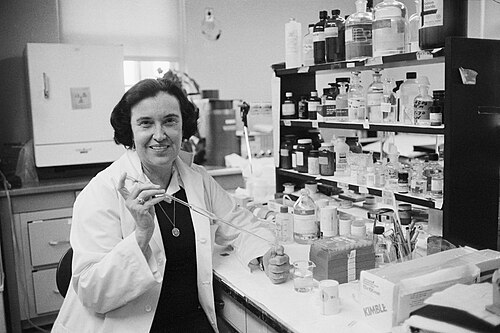 Read next · built on
Radioimmunoassay (RIA) (1960)
Yalow's radioimmunoassay made it possible to measure the tiny quantities of hormone Schally and Guillemin were chasing. The RIA entry shows how antibodies and radioactive tracers measured insulin in minute amounts.
Read this moment
Read next · built on
Radioimmunoassay (RIA) (1960)
Yalow's radioimmunoassay made it possible to measure the tiny quantities of hormone Schally and Guillemin were chasing. The RIA entry shows how antibodies and radioactive tracers measured insulin in minute amounts.
Read this moment
 Today on The Clinical Times
Florida dengue outbreak appears to be largest in continental U.S. in decades
Florida has reported more than 250 locally acquired dengue cases this year, with most in Hillsborough County, according to state health officials.
Read today’s top stories
Today on The Clinical Times
Florida dengue outbreak appears to be largest in continental U.S. in decades
Florida has reported more than 250 locally acquired dengue cases this year, with most in Hillsborough County, according to state health officials.
Read today’s top stories
All 526 moments in the history of medicine. This one is in chapter 6, Trials, scanners and rights
Connected moments
How this moment links to others in the history of medicine, and what you will find in each.
-
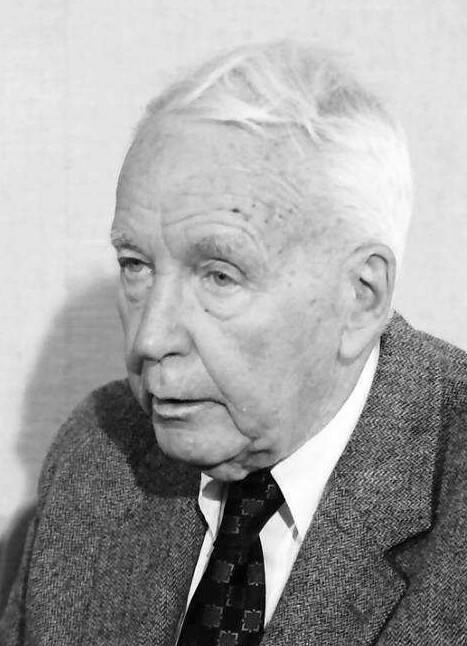 Same disease or problem1941Huggins and hormonal treatment of prostate cancerHuggins treated prostate cancer by castration in 1941, and drugs built on Schally's hormone later achieved the same result medically. Huggins's entry shows eight men whose cancer retreated once testosterone was removed.Read this moment
-
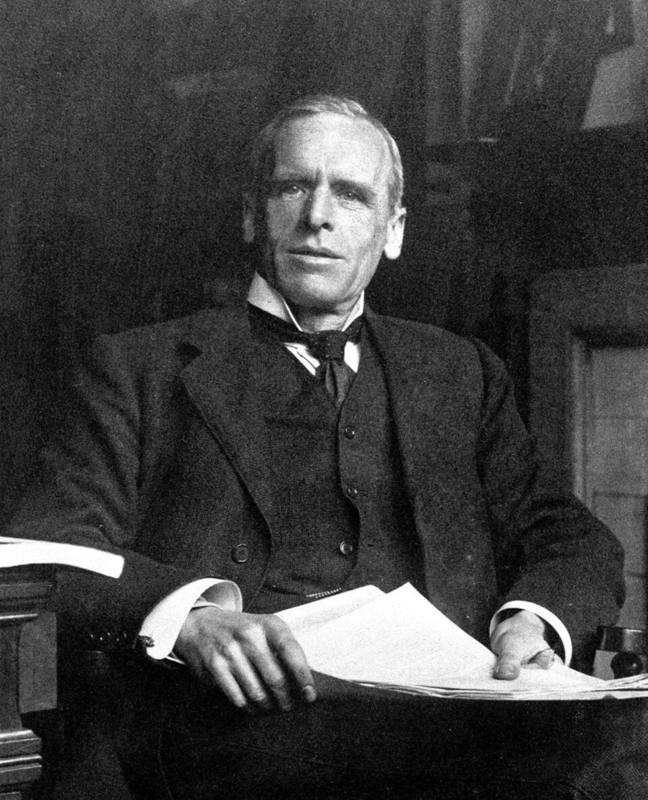 Same disease or problem1902Bayliss and Starling's discovery of secretinBoth showed organs being controlled by chemical messengers carried in the blood. The secretin entry shows the 1902 experiment behind the first hormone, and the word hormone itself.Read this moment