Endocrinology
1994
Discovery of Leptin
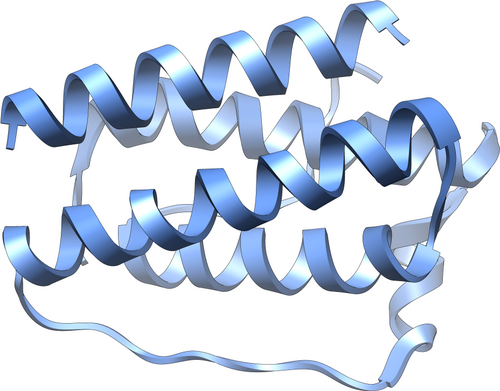
Friedman's lab cloned the ob gene and showed fat tissue makes a hormone, leptin, that reports fat stores to the brain. It made adipose tissue an endocrine organ and recast obesity as a problem of body-weight regulation.
Key people
- Jeffrey Friedman
- Rockefeller University molecular geneticist who cloned the ob gene
- Douglas Coleman
- Jackson Laboratory researcher whose parabiosis work predicted leptin's existence
- Rudolph Leibel
- Columbia University obesity researcher, collaborator in ob gene mapping
- Stephen O'Rahilly
- Cambridge clinician who identified ob gene mutations in severely obese humans
Source
For decades, the ob/ob mouse sat in Jackson Laboratory cages eating without restraint, growing to three or four times normal weight, and offering no explanation for why. Beginning in the late 1960s, Douglas Coleman joined the circulations of pairs of mice. Normal mice attached to diabetes (db) mutants stopped eating and starved, and obese (ob) mice attached to normal partners ate less, which suggested that ob mice lacked a circulating satiety factor while db mice could not respond to it. What that signal was, nobody could determine with the tools then available.
Jeffrey Friedman, who joined Rockefeller University in 1986 and worked early on with Rudy Leibel, spent eight years tracking the ob gene by positional cloning, a laborious strategy that required mapping the gene's location before its sequence was known. In 1994 they identified the gene and showed it encoded a 167-amino-acid protein secreted by adipose tissue. Because the protein made animals slim down, Friedman named it leptin, from leptos, the Greek word for thin. It acted on the brain to suppress food intake, and ob/ob mice made no functional leptin; a receptor was identified in late 1995.
The finding recast adipose tissue as an endocrine organ, not merely a passive energy depot. In 1997 Sadaf Farooqi and Stephen O'Rahilly in Cambridge identified rare people with mutations in the leptin gene, who had severe early-onset obesity and constant hunger. They proved extremely sensitive to leptin replacement: one boy, morbidly obese at three, was at the 75th percentile for weight by seven after daily injections.
The therapeutic optimism that followed was quickly tempered by an unexpected finding. Most obese individuals have elevated leptin levels, not low ones; their brains had become resistant to the signal, in a manner analogous to insulin resistance in type 2 diabetes. Leptin replacement did not produce meaningful weight loss in common obesity, and researchers turned to the question of why obese people resist their own leptin.
Leptin also proved useful in lipodystrophy, in which patients lack fat tissue and make too little of the hormone. Researchers traced leptin's downstream targets through the hypothalamic arcuate nucleus, identifying the melanocortin system, the MC4 receptor, and a web of appetite-regulating neuropeptides that had been invisible before 1994. Those circuits became targets for anti-obesity drug development.
Keep exploring
 Read next · same disease or problem
STEP 1 (Semaglutide for Obesity) (2021)
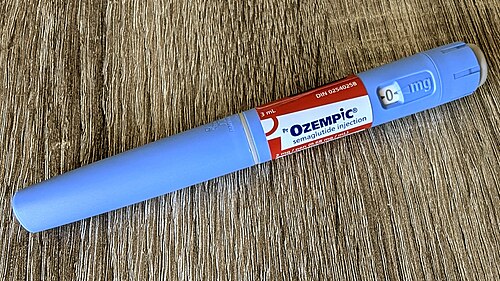
Leptin recast obesity as a problem of body weight regulation but failed as a treatment, while semaglutide later produced large weight loss. The STEP-1 entry shows about 15 percent mean weight loss in adults without diabetes.
Read this moment
Read next · same disease or problem
STEP 1 (Semaglutide for Obesity) (2021)
Leptin recast obesity as a problem of body weight regulation but failed as a treatment, while semaglutide later produced large weight loss. The STEP-1 entry shows about 15 percent mean weight loss in adults without diabetes.
Read this moment
 Today on The Clinical Times
Florida dengue outbreak appears to be largest in continental U.S. in decades
Florida has reported more than 250 locally acquired dengue cases this year, with most in Hillsborough County, according to state health officials.
Read today’s top stories
Today on The Clinical Times
Florida dengue outbreak appears to be largest in continental U.S. in decades
Florida has reported more than 250 locally acquired dengue cases this year, with most in Hillsborough County, according to state health officials.
Read today’s top stories
All 526 moments in the history of medicine. This one is in chapter 6, Trials, scanners and rights
Connected moments
How this moment links to others in the history of medicine, and what you will find in each.
-
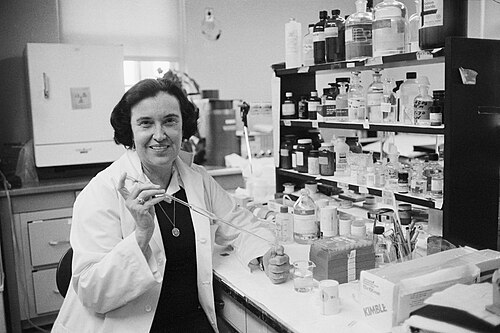 Same disease or problem1960Radioimmunoassay (RIA)Most obese people proved resistant to their own leptin, much as RIA revealed type 2 diabetics who make insulin but respond poorly to it. The RIA entry shows how that insulin resistance was first measured.Read this moment
-
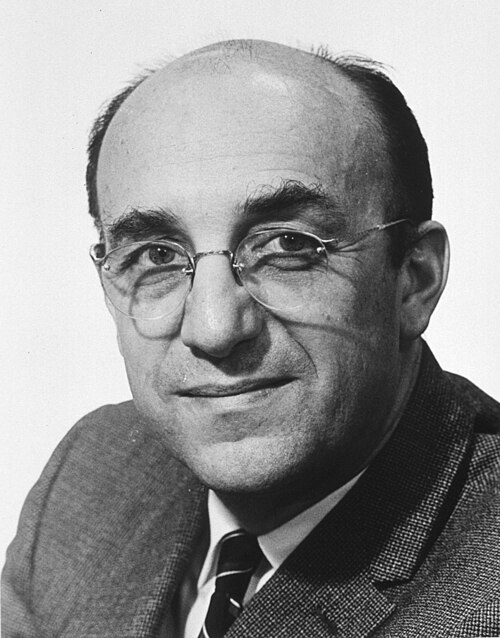 Same disease or problem1971Schally and Guillemin: Hypothalamic Releasing HormonesBoth found hormones working through the hypothalamus, leptin reporting fat stores to it and releasing hormones sent from it. The Schally entry shows how those brain signals were isolated and later made into drugs.Read this moment