Endocrinology
1960
Radioimmunoassay (RIA)
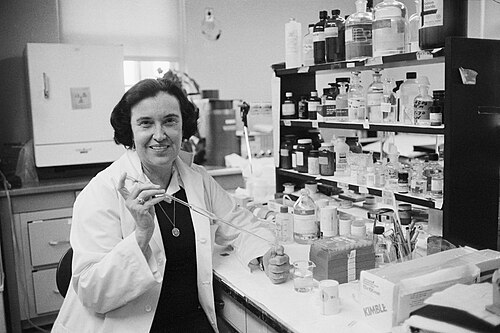
Yalow and Berson used antibody binding and radioactive tracers to measure plasma insulin in amounts below one microunit, far below earlier methods. The technique extended to most hormones and won Yalow a share of the 1977 Nobel Prize.
Key people
- Rosalyn Yalow
- Medical physicist who co-developed RIA; Nobel laureate 1977
- Solomon Berson
- Physician who co-developed RIA with Yalow at the Bronx VA
- Baruch Blumberg
- Discovered the Australia antigen (hepatitis B surface antigen) by gel diffusion in 1963; RIA later became a standard test for it. Nobel 1976.
Source
Through the 1950s, measuring hormone concentrations in blood was a laborious and insensitive undertaking. Bioassays required injecting plasma fractions into experimental animals and observing physiological responses, a process that needed substantial hormone quantities, took days, and could not be automated. Insulin bioassays, which measured effects on glucose in rats or in rat muscle or fat, were of doubtful specificity, because plasma contains substances that block or mimic insulin. Rosalyn Yalow, a medical physicist, and Solomon Berson, an internist, had worked together at the Bronx Veterans Administration Hospital since 1950. The assay grew out of a different question: I. Arthur Mirsky had proposed that adult-onset diabetes might come from abnormally fast breakdown of insulin, and Yalow and Berson tested the idea by following insulin labeled with radioactive iodine.
Their first discovery was itself controversial. In 1956 they reported that labeled insulin disappeared more slowly from the blood of patients who had been given animal insulin, because it was bound by antibodies the patients had made against it. Immunologists of the time did not accept that a molecule as small as insulin could provoke antibodies. Science rejected the paper, and the Journal of Clinical Investigation accepted it only after the authors removed "insulin antibody" from the title. Yalow and Berson persisted, and by 1959 they had turned the finding into radioimmunoassay: labeled (radioactive) antigen and unlabeled antigen from an unknown sample compete for a fixed quantity of antibody, and the ratio of bound to free labeled antigen reveals the concentration of unlabeled antigen in the sample.
Their full paper on plasma insulin, published in the Journal of Clinical Investigation in 1960, described an assay sensitive to less than one microunit of insulin, enough to measure insulin in 10 to 20 microliters of plasma. Samples sat with antibody for four days in a refrigerator. The first clinical findings were unexpected: fasting insulin in patients with early adult-onset (now type 2) diabetes was similar to that of nondiabetic subjects, and after oral glucose their total insulin output was 26 percent higher, though delayed. Yalow and Berson concluded that the diabetics' tissues did not respond normally to their own insulin.
Other investigators soon saw that the same principle applied to any hormone for which an antibody could be raised. Within a decade RIA had been adapted to measure thyroid-stimulating hormone, cortisol, aldosterone, human growth hormone, parathyroid hormone, and dozens of other analytes. It also extended to non-hormonal molecules of clinical interest, including digoxin and hepatitis B surface antigen, the Australia antigen that Baruch Blumberg had found in 1963 by gel diffusion. By 1977 RIA was the method of choice for screening donated blood for it in American blood banks.
Yalow shared the Nobel Prize in Physiology or Medicine in 1977 for the development of RIA. Berson had died on April 11, 1972, and was therefore ineligible, since the prize is not awarded posthumously. Yalow consistently credited Berson, and at her request the laboratory they had shared at the Bronx VA was named the Solomon A. Berson Research Laboratory, so that his name would stay on her papers. In routine clinical laboratories the technique has since been largely replaced by enzyme-linked immunosorbent assays and automated chemiluminescent immunoassays, which avoid the handling of radioactive materials.
Keep exploring
 Read next · built on
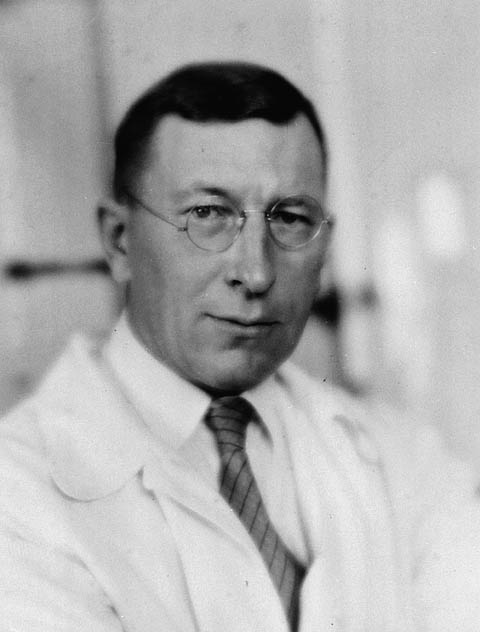
Discovery of Insulin (1922)
RIA grew from the finding that patients treated with animal insulin made antibodies against it. The insulin entry shows how Banting and Best's extract turned type 1 diabetes from a death sentence into a treatable condition.
Read this moment
Read next · built on
Discovery of Insulin (1922)
RIA grew from the finding that patients treated with animal insulin made antibodies against it. The insulin entry shows how Banting and Best's extract turned type 1 diabetes from a death sentence into a treatable condition.
Read this moment
 Today on The Clinical Times
Florida dengue outbreak appears to be largest in continental U.S. in decades
Florida has reported more than 250 locally acquired dengue cases this year, with most in Hillsborough County, according to state health officials.
Read today’s top stories
Today on The Clinical Times
Florida dengue outbreak appears to be largest in continental U.S. in decades
Florida has reported more than 250 locally acquired dengue cases this year, with most in Hillsborough County, according to state health officials.
Read today’s top stories
All 526 moments in the history of medicine. This one is in chapter 6, Trials, scanners and rights
Connected moments
How this moment links to others in the history of medicine, and what you will find in each.
-
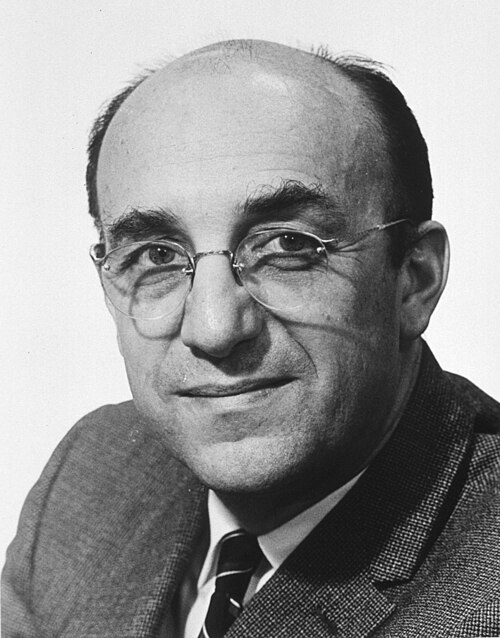 Led to1971Schally and Guillemin: Hypothalamic Releasing HormonesYalow's radioimmunoassay made it possible to measure the tiny amounts of hypothalamic hormone that Schally and Guillemin chased. Their entry shows how they isolated those releasing hormones and shared the 1977 Nobel Prize with Yalow.Read this moment
-
 Same person1965Discovery of the hepatitis B virus (Australia antigen)By 1977 RIA was the blood banks' method of choice for detecting Blumberg's Australia antigen. Blumberg's entry shows how that antigen proved to be the hepatitis B surface protein and made donor screening possible.Read this moment
-
 Same disease or problem1998UK Prospective Diabetes Study (UKPDS 33)RIA's first surprise was that people with early type 2 diabetes made insulin but responded poorly to it. The UKPDS shows how tight glucose control and metformin changed outcomes in type 2 diabetes decades later.Read this moment