Oncology
1971
Health Insurance Plan (HIP) of Greater New York mammography trial
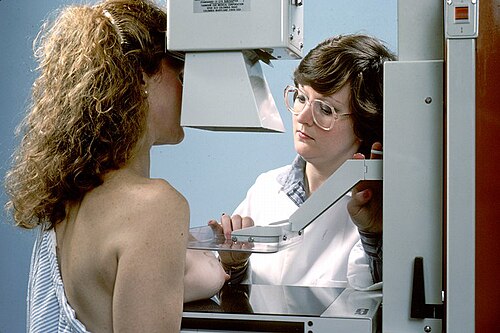
First randomized trial of breast screening. About 60,700 women aged 40 to 64 were assigned to annual mammography plus clinical exam or usual care; the screened group had roughly 30% fewer breast cancer deaths, mostly in those over 50.
Key people
- Philip Strax
- Radiologist who designed and directed the HIP breast screening program.
- Sam Shapiro
- Biostatistician who led the analytical design and outcome assessment for the HIP trial.
- Louis Venet
- Surgeon and co-investigator in the HIP mammography screening program.
Source
By the mid-1960s, breast cancer was the leading cause of cancer death in American women, yet there was no evidence that finding tumors earlier actually reduced mortality. Observational studies had produced encouraging signals, but lead-time and length-time bias made them impossible to interpret. What was needed was a randomized trial with death, not detection, as the primary outcome.
Philip Strax, a radiologist whose own wife had died of breast cancer, approached the Health Insurance Plan of Greater New York with a proposal for exactly that trial. Working with surgeon Louis Venet and biostatistician Sam Shapiro, Strax recruited roughly 30,100 women aged 40 to 64 and offered them annual mammography combined with clinical breast examination; a matched group of about 30,600 women received usual care with no additional screening. The study launched in 1963, and Strax, Shapiro, and Venet published their principal mortality results in JAMA in 1971.
After roughly seven years of follow-up, breast cancer mortality in the screened group was approximately 30 percent lower than in controls, with the reduction concentrated in women over 50. The finding was not subtle enough to attribute to chance, and it answered the core methodological objection: this was a randomized trial with mortality as the endpoint, not a case series of stage distributions. Earlier detection, in at least some women, was translating into fewer deaths.
Criticism of the trial was substantive and persisted for decades. The intervention combined mammography and physical examination, so the independent contribution of mammography alone could not be isolated. The equipment used was far inferior to later technology, and compliance was incomplete. A sizable proportion of women in the control group eventually obtained mammography on their own, diluting the between-group difference. These limitations left the HIP results suggestive but not conclusive, and they shaped the design of subsequent Swedish and British trials.
Despite those caveats, the HIP data provided the primary evidence base for the earliest U.S. recommendations to offer routine mammography screening. The American Cancer Society began recommending screening mammography in the 1970s partly on the strength of this trial. Later Scandinavian trials confirmed mortality reductions in older women, though guidelines still disagree on the size of the benefit and the right age to start screening.
Keep exploring
 Read next · same disease or problem
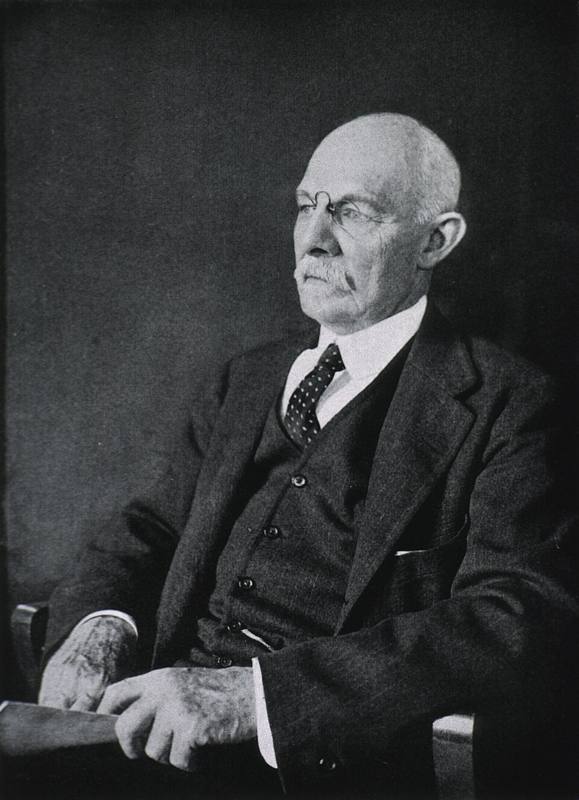
Halsted's radical mastectomy (1894)
Both fought breast cancer, Halsted by radical surgery and the HIP trial by finding tumors earlier. Halsted's entry shows the operation that stayed standard for decades until trials found smaller ones worked as well.
Read this moment
Read next · same disease or problem
Halsted's radical mastectomy (1894)
Both fought breast cancer, Halsted by radical surgery and the HIP trial by finding tumors earlier. Halsted's entry shows the operation that stayed standard for decades until trials found smaller ones worked as well.
Read this moment
 Today on The Clinical Times
Florida dengue outbreak appears to be largest in continental U.S. in decades
Florida has reported more than 250 locally acquired dengue cases this year, with most in Hillsborough County, according to state health officials.
Read today’s top stories
Today on The Clinical Times
Florida dengue outbreak appears to be largest in continental U.S. in decades
Florida has reported more than 250 locally acquired dengue cases this year, with most in Hillsborough County, according to state health officials.
Read today’s top stories
All 526 moments in the history of medicine. This one is in chapter 6, Trials, scanners and rights
Connected moments
How this moment links to others in the history of medicine, and what you will find in each.
-
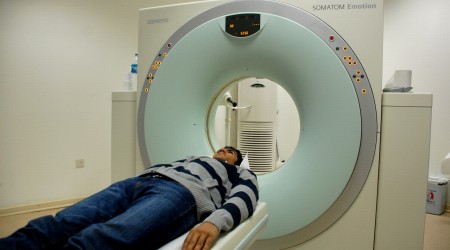 Same disease or problem2011National Lung Screening Trial (NLST)Both were randomized screening trials that judged success by deaths prevented, not cancers found. The NLST shows low-dose CT scans cutting lung cancer deaths by 20 percent in heavy smokers.Read this moment
- Same disease or problem1987The PSA test and prostate cancer screeningBoth asked whether screening healthy people for cancer saves lives. The PSA entry shows the other side of the story, where trials found a small benefit at the cost of much overdiagnosis.Read this moment