Oncology
1970
MOPP combination chemotherapy for Hodgkin's disease
First proof that cycling several cytotoxic drugs at full doses could cure a widespread human cancer. The NCI series reached an 81% complete remission rate with about half of patients alive and disease-free at 10 years.

Key people
- Vincent DeVita
- NCI oncologist who designed and led the MOPP trials in Hodgkin's disease.
- Emil Frei III
- NCI leader who supported combination chemotherapy research as division director.
- George Canellos
- NCI collaborator on the early Hodgkin's combination chemotherapy program.
- Emil Freireich
- NCI oncologist whose earlier ALL combination chemotherapy work informed the MOPP approach.
Source
In the early 1960s, advanced Hodgkin's disease was a death sentence. Radiation therapy could cure localized disease, but patients presenting with stage III or IV involvement had no treatment that reliably produced lasting remission. Single-agent chemotherapy with nitrogen mustard or vinblastine generated responses, sometimes impressive ones, but the tumor almost always returned. The oncology community had not yet established whether curing a disseminated human malignancy with drugs alone was biologically possible.
What changed this was a new way of thinking about drug resistance. If a cancer could develop resistance to one drug, exposing a residual clone to a second agent with a different mechanism might kill it before it could repopulate. Vincent DeVita and colleagues at the National Cancer Institute reasoned that combining agents with non-overlapping toxicity profiles would allow each drug to be given near its full therapeutic dose, maximizing cell kill while avoiding cumulative organ-specific injury. They assembled four drugs, mechlorethamine, vincristine (Oncovin), procarbazine, and prednisone, into the MOPP regimen and began treating patients with advanced Hodgkin's disease in 1964.
The 1970 report in Annals of Internal Medicine summarized the NCI series: 81 percent of patients with advanced disease achieved complete remission, and approximately half remained disease-free at ten years. Those figures represented an entirely different order of magnitude from anything prior single-agent therapy had achieved. Patients who had been expected to die within one to two years were alive and well a decade later. The results received wide attention but also some skepticism, in part because the NCI series was not a randomized controlled trial, and the patient selection criteria were scrutinized carefully.
MOPP also had serious long-term toxicity. Male patients had high rates of permanent azoospermia, and both sexes faced an elevated risk of treatment-related myelodysplastic syndrome and acute leukemia in the years following therapy, estimated at several percent over ten years. These complications, along with the emergence of ABVD (doxorubicin, bleomycin, vinblastine, dacarbazine) as an equally effective regimen with a more favorable toxicity profile, led to ABVD largely replacing MOPP as first-line therapy for advanced Hodgkin's disease by the 1990s.
The conceptual contribution of MOPP extended beyond Hodgkin's disease. The demonstration that cycling multiple cytotoxic agents at full therapeutic doses could cure a disseminated human malignancy became the template for curative regimens in acute leukemia, testicular cancer, and other hematologic malignancies. Emil Frei III and Emil Freireich had earlier demonstrated combination chemotherapy in acute lymphoblastic leukemia at the NCI. MOPP confirmed the same principle in a solid lymphoma, and rational combination design became a standard approach across cancer treatment.
Keep exploring
 Read next · built on
Nitrogen Mustard Chemotherapy (1946)
The M in MOPP is mechlorethamine, the nitrogen mustard first used against lymphoma. The 1946 entry shows a relative of mustard gas shrinking tumors, and the marrow damage that still limits chemotherapy.
Read this moment
Read next · built on
Nitrogen Mustard Chemotherapy (1946)
The M in MOPP is mechlorethamine, the nitrogen mustard first used against lymphoma. The 1946 entry shows a relative of mustard gas shrinking tumors, and the marrow damage that still limits chemotherapy.
Read this moment
 Today on The Clinical Times
Florida dengue outbreak appears to be largest in continental U.S. in decades
Florida has reported more than 250 locally acquired dengue cases this year, with most in Hillsborough County, according to state health officials.
Read today’s top stories
Today on The Clinical Times
Florida dengue outbreak appears to be largest in continental U.S. in decades
Florida has reported more than 250 locally acquired dengue cases this year, with most in Hillsborough County, according to state health officials.
Read today’s top stories
All 526 moments in the history of medicine. This one is in chapter 6, Trials, scanners and rights
Connected moments
How this moment links to others in the history of medicine, and what you will find in each.
-
 Same disease or problem1956Methotrexate for metastatic choriocarcinomaBoth came from the National Cancer Institute and are each credited as a first drug cure of a cancer that had spread. The methotrexate entry shows Li persisting with a treatment he was told was too dangerous.Read this moment
-
 Same disease or problem1979Total Therapy / combination treatment curing childhood ALLBoth proved that combining several cancer drugs could cure disease once thought fatal. Total Therapy shows how St Jude raised childhood leukemia survival from near zero to about half.Read this moment
-
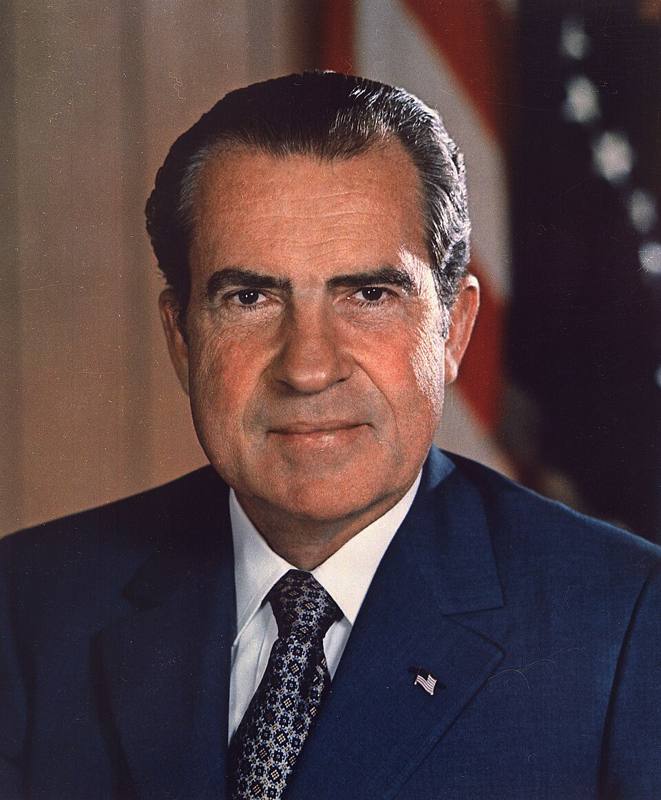 Same person1971The National Cancer ActVincent DeVita, who led the MOPP work, credited the 1971 act with spreading cancer care once found only in large cities. The act's entry shows how cancer centers and a direct presidential budget reshaped cancer research.Read this moment