Critical & Organ Care
1960
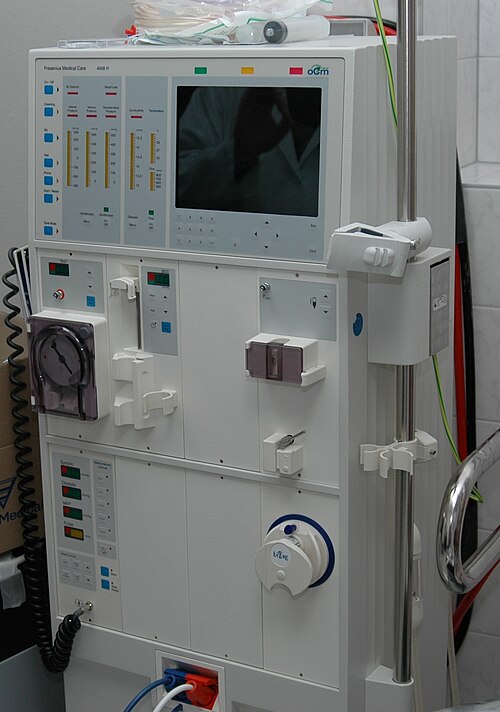
Scribner shunt and long-term hemodialysis
The shunt let clinicians enter the bloodstream repeatedly without sacrificing a vessel each session, turning dialysis into ongoing maintenance therapy. It forced Seattle to create the first committee deciding who would receive treatment.
Key people
- Belding Scribner
- Nephrologist who designed the indwelling AV shunt for chronic dialysis
- Wayne Quinton
- Biomedical engineer who fabricated the Teflon shunt
- Clyde Shields
- First chronic dialysis patient, treated from 1960 until 1971
- James Cimino
- Co-developed the arteriovenous fistula, replacing the external Scribner shunt.
Source
In 1960, end-stage renal disease meant death, usually within weeks to months of reaching that stage. Hemodialysis had existed in rudimentary form since Willem Kolff's work in the 1940s, and it was effective at clearing uremic solutes in patients with acute renal failure who were expected to recover. The obstacle to chronic use was vascular access: each session required cannulating an artery and a vein, and after a few sessions the available peripheral vessels were exhausted. Patients had a finite number of accessible blood vessels, and once those were used up, dialysis could not continue. Long-term dialysis was impossible without a lasting way into the circulation.
Belding Scribner, a nephrologist at the University of Washington in Seattle, and Wayne Quinton, a biomedical engineer, with the surgeon David Dillard, solved the access problem by designing a shunt that could remain implanted between sessions. Their device, introduced in 1960, used thin Teflon tubes placed in an artery and a vein and joined outside the skin by a U-shaped connector, so that blood kept flowing through the loop. At each dialysis session the loop was interrupted and connected to the artificial kidney; afterward it was reconnected and blood continued circulating through the shunt, preventing clotting. The first patient, Clyde Shields, a 39-year-old with chronic glomerulonephritis, began dialysis on March 9, 1960, and lived 11 more years before dying of heart disease.
The Scribner shunt turned end-stage renal disease from a uniformly fatal condition into a chronic one that could be managed for years, provided the patient had access to a machine and a trained team. That proviso immediately created a crisis. Far more patients in the Seattle area qualified medically for maintenance dialysis than could be treated. At the Seattle Artificial Kidney Center at Swedish Hospital, an admissions committee of lay volunteers was appointed to decide who would receive treatment; it became known as the God Committee and was one of the first ethics committees in the Western world.
Doctors first screened candidates on medical grounds, and children and people over 45 were excluded. The lay committee, made up of a lawyer, a priest, a housewife, a state official, a bank clerk, a trade unionist and a surgeon, then weighed age, sex, marital status, income, net worth, emotional stability, education, occupation and social respectability. The theologian Paul Ramsey argued that choosing who lives by social worth denied the equal worth of every person, and later analyses found that the committee chose mostly white men. In October 1972, after a patient named Shep Glazer was dialyzed in front of the House Ways and Means Committee, Congress gave Americans with kidney failure Medicare coverage for dialysis and transplantation, and President Nixon signed it into law.
Technical advances followed the Scribner shunt rapidly. The arteriovenous fistula, described by Brescia and Cimino in 1966, joined artery and vein surgically to create a permanent high-flow access point without an external component, reducing the infection and clotting problems of the external shunt, and prosthetic bridge grafts followed soon after. Henry Tenckhoff's permanently implanted peritoneal catheter of 1968 made long-term peritoneal dialysis practical, and dialysis moved into patients' homes. Shields himself dialyzed overnight, first in hospital and then at home.
Keep exploring
 Read next · built on
Kolff's rotating drum artificial kidney (1943)
Kolff's dialyzer could clear the blood in acute kidney failure, and Scribner's shunt let it be used for years. The Kolff entry shows how sixteen patients died before his machine saved its first survivor.
Read this moment
Read next · built on
Kolff's rotating drum artificial kidney (1943)
Kolff's dialyzer could clear the blood in acute kidney failure, and Scribner's shunt let it be used for years. The Kolff entry shows how sixteen patients died before his machine saved its first survivor.
Read this moment
 Today on The Clinical Times
Florida dengue outbreak appears to be largest in continental U.S. in decades
Florida has reported more than 250 locally acquired dengue cases this year, with most in Hillsborough County, according to state health officials.
Read today’s top stories
Today on The Clinical Times
Florida dengue outbreak appears to be largest in continental U.S. in decades
Florida has reported more than 250 locally acquired dengue cases this year, with most in Hillsborough County, according to state health officials.
Read today’s top stories
All 526 moments in the history of medicine. This one is in chapter 6, Trials, scanners and rights
Connected moments
How this moment links to others in the history of medicine, and what you will find in each.
-
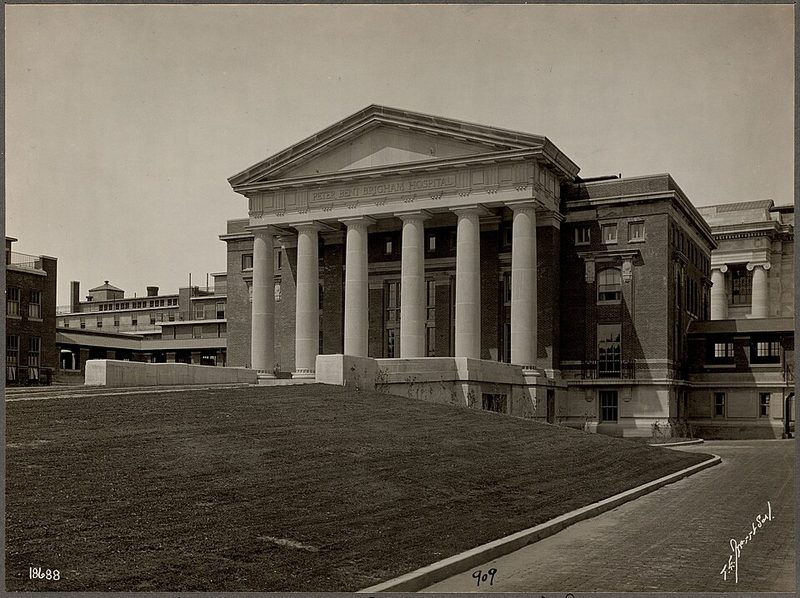 Same disease or problem1954First Successful Kidney TransplantBoth answered kidney failure, dialysis by replacing the kidney's work and transplant by replacing the organ. The Herrick twins' transplant shows how identical twins sidestepped rejection and opened the clinical field.Read this moment
-
 Same disease or problem1984The National Organ Transplant ActSeattle's lay committee chose who got scarce dialysis, and the 1984 law built a national system for allocating scarce organs. It shows how organ sales were banned and a single waiting list and matching network created.Read this moment
-
 Same disease or problem1965Medicare and Medicaid ActSeattle rationed dialysis by committee until Congress extended Medicare to kidney failure in 1972. The Medicare entry shows how the 1965 law created health insurance for older Americans and Medicaid for people with low income.Read this moment