Neurology & Psychiatry
1967
L-DOPA for Parkinson disease (Cotzias)
Cotzias gave high oral doses of DL-DOPA to patients and saw marked, lasting reduction in rigidity and tremor, confirming that replacing brain dopamine treats Parkinson disease. It made levodopa standard therapy.

Key people
- George Cotzias
- Physician and pharmacologist at Brookhaven National Laboratory who established high-dose oral levodopa as effective Parkinson therapy.
- Arvid Carlsson
- Pharmacologist who showed in animal models that DOPA could reverse the motor effects of dopamine depletion.
- Oleh Hornykiewicz
- Neurochemist who measured dopamine depletion in Parkinson postmortem brains.
Source
In the years before 1967, Parkinson disease had no treatment capable of producing meaningful, sustained motor improvement. Anticholinergic drugs and surgical thalamotomy offered modest benefit for tremor in selected patients, but rigidity and akinesia progressed regardless. The problem was not a lack of understanding of the underlying neurology; by the early 1960s, Oleh Hornykiewicz in Vienna had measured near-total dopamine depletion in the striata of postmortem Parkinson brains, and the Swedish pharmacologist Arvid Carlsson had shown in 1957 that DOPA could reverse the immobility caused by the dopamine-depleting drug reserpine in animals.
The gap was clinical translation. After Hornykiewicz persuaded Walther Birkmayer in Vienna to inject L-DOPA into patients in 1961, improvements appeared but did not last, and many later trials found little or no benefit. George Cotzias, a pharmacologist at Brookhaven National Laboratory on Long Island, worked from a different theory: he believed Parkinson disease resulted from loss of the pigment neuromelanin in the substantia nigra and tried to restore it with pigment precursors, one of which was DL-DOPA. He gave it by mouth and raised the dose slowly, far beyond earlier doses.
Cotzias published his 1967 results in the New England Journal of Medicine, reporting dramatic reversal of rigidity, tremor, and akinesia in patients with Parkinson disease, at extremely high doses and with considerable hematologic side effects. The improvements lasted as long as dosing continued. Slow titration was what made the difference: raising the dose gradually got enough drug into the brain while limiting nausea and vomiting.
The initial compound, DL-DOPA, contained both the active L-isomer and the non-physiological D-isomer, which was blamed for blood disorders. Cotzias quickly switched to the purified L-isomer, levodopa, and got the same benefit at half the dose without the blood problems; in 28 patients treated for up to two years, improvement was rated marked in 10 and dramatic in 10. Melvin Yahr confirmed the effect in a double-blind controlled trial. The further addition of a peripheral decarboxylase inhibitor such as carbidopa, which reduces conversion of levodopa to dopamine outside the brain, lowered the effective dose and reduced nausea substantially. The carbidopa-levodopa combination, introduced commercially in 1975, remains the most effective symptomatic treatment for Parkinson disease available.
Arvid Carlsson shared the Nobel Prize in Physiology or Medicine in 2000 with Paul Greengard and Eric Kandel for discoveries about signal transduction in the nervous system; his share rested on establishing dopamine as a brain transmitter. The long-term complications of levodopa therapy, including motor fluctuations and dyskinesias, which Cotzias and Yahr had already seen, drove subsequent research into dopamine agonists, monoamine oxidase inhibitors, and deep brain stimulation, none of which has displaced levodopa from the center of Parkinson management.
Keep exploring
 Read next · same disease or problem
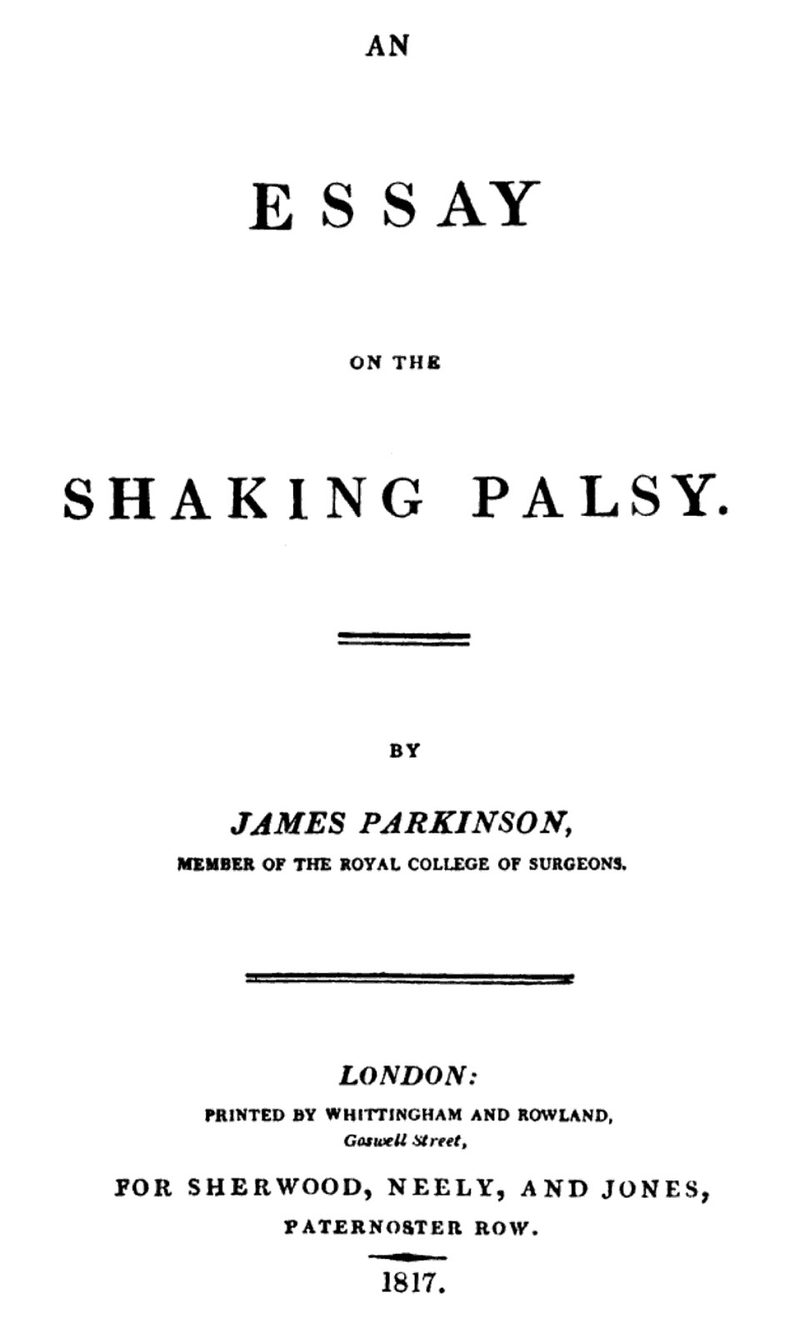
Parkinson's Essay on the Shaking Palsy (1817)
Cotzias gave the first lasting treatment for the disease James Parkinson described 150 years earlier. Parkinson's essay shows six men with tremor at rest and a hurried walk, and his case that they shared one disease.
Read this moment
Read next · same disease or problem
Parkinson's Essay on the Shaking Palsy (1817)
Cotzias gave the first lasting treatment for the disease James Parkinson described 150 years earlier. Parkinson's essay shows six men with tremor at rest and a hurried walk, and his case that they shared one disease.
Read this moment
 Today on The Clinical Times
Florida dengue outbreak appears to be largest in continental U.S. in decades
Florida has reported more than 250 locally acquired dengue cases this year, with most in Hillsborough County, according to state health officials.
Read today’s top stories
Today on The Clinical Times
Florida dengue outbreak appears to be largest in continental U.S. in decades
Florida has reported more than 250 locally acquired dengue cases this year, with most in Hillsborough County, according to state health officials.
Read today’s top stories
All 526 moments in the history of medicine. This one is in chapter 6, Trials, scanners and rights
Connected moments
How this moment links to others in the history of medicine, and what you will find in each.
-
 Same person1952Chlorpromazine in psychosis (Delay & Deniker)Arvid Carlsson, whose animal work showed DOPA could reverse dopamine loss, also appears in the chlorpromazine story as the man who proved dopamine is a brain transmitter. That entry shows the first antipsychotic calming psychosis in 1952.Read this moment
-
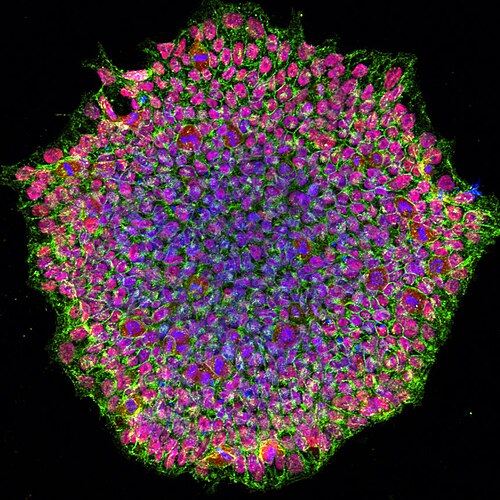 Same disease or problem2006Induced Pluripotent Stem Cells (iPSCs)Levodopa replaces the missing dopamine, while stem cell work aims to replace the lost cells themselves. The iPSC entry shows a 2025 Kyoto trial giving Parkinson patients dopamine cells grown from reprogrammed stem cells.Read this moment