Neurology & Psychiatry
1949
Cade's lithium for mania
Cade gave lithium to 10 manic patients and all of them improved, reviving a drug used only sporadically in the 19th century as a specific treatment for mania. Lithium is still a first-line treatment for bipolar disorder and lowers the risk of suicide.
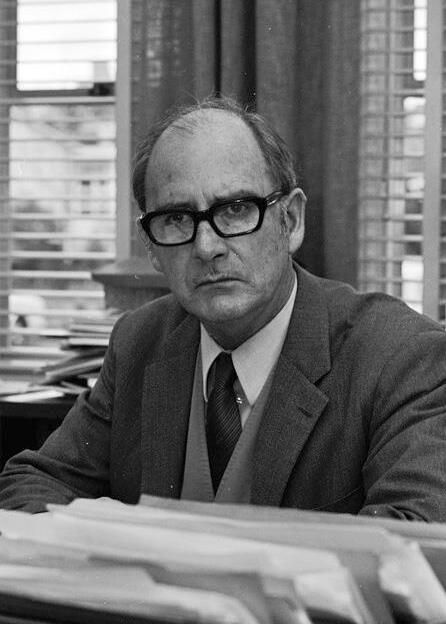
Key people
- John Cade
- Melbourne psychiatrist whose 1949 report showed that lithium controlled mania
- Mogens Schou
- Danish psychiatrist who conducted controlled trials confirming lithium's efficacy
Source
In 1948, John Cade was working as a psychiatrist at the Bundoora Repatriation Mental Hospital, a veterans' institution near Melbourne, with a makeshift laboratory in an unused kitchen and no research funding. He suspected that mania came from an excess of some normal body substance, by analogy with an overactive thyroid, and he looked for it by injecting urine from manic patients into guinea pigs. Urea turned out to be the lethal component. To test whether uric acid made urea more toxic, he needed a soluble form of uric acid and used lithium urate. The lithium seemed to protect the animals, and after lithium carbonate alone Cade described them as "extremely lethargic" for an hour or two.
Later researchers could reproduce that lethargy only with toxic doses, so the guinea pigs may simply have been poisoned. Cade took lithium citrate and carbonate himself for two weeks from early February 1948 to judge a safe dose, then tried it in his most difficult patients. His first subject, W.B., had been ill for 30 years and confined to the hospital in unrelenting mania for the past five. He responded well and was discharged, but he stopped taking lithium, was readmitted with severe mania six months later, and returned to normal within two weeks of restarting it.
The September 1949 paper in the Medical Journal of Australia reported that all 10 manic patients improved, five of them enough to go home to their families. Cade also gave lithium to 6 patients with schizophrenia and 3 with chronic depression, and the drug did little for depression or for the core symptoms of schizophrenia. The effect seemed specific to mania, though how lithium works remains incompletely understood.
The path to acceptance was slow and was nearly derailed by a separate accident. In 1948 lithium chloride went on sale in the United States as a table-salt substitute for people on low-sodium diets, and by 1949 poisonings, some fatal, had been reported. Cade later recalled that by March 1949 lithium had been all but banished as a treatment in the United States, and the FDA did not approve it for mania until 1970. Mogens Schou, a Danish psychiatrist with manic-depressive illness in his family, and his colleague Poul Christian Baastrup ran the first randomized trials of the drug in psychiatry. Their 1954 study, alternating two weeks of lithium with two of placebo, confirmed Cade's findings, and measuring blood lithium levels made safe dosing possible.
Studies in later decades found that lithium lowers the risk of suicide and suicide attempts in mood disorders, and it prevents suicide better than other mood stabilizers or antidepressants. Its mechanism is still debated, with research on inositol signaling, glycogen synthase kinase-3, and neuroprotective pathways. It is still a first-line treatment for bipolar disorder, and lithium carbonate is on the World Health Organization's list of essential medicines.
Keep exploring
 Read next · same disease or problem
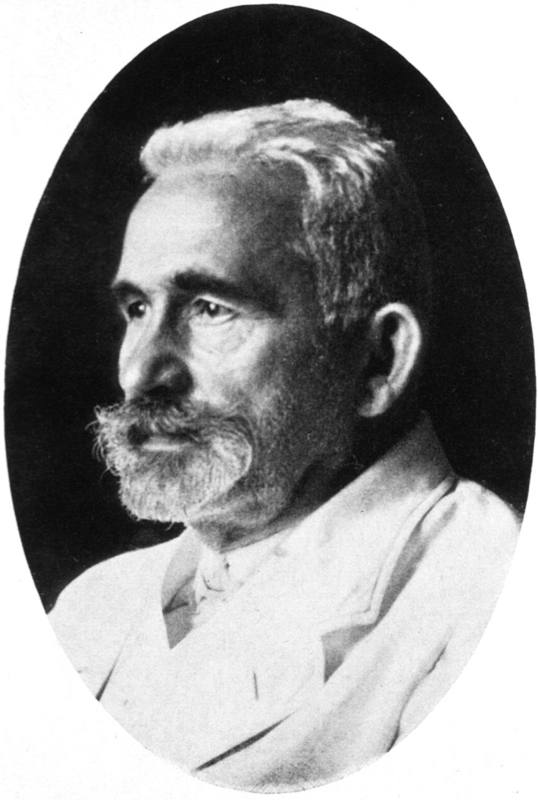
Kraepelin's classification of mental illness (1899)
Kraepelin defined manic depressive insanity, and Cade found a drug that calmed its mania. Kraepelin's story shows how he divided the major psychoses by their course.
Read this moment
Read next · same disease or problem
Kraepelin's classification of mental illness (1899)
Kraepelin defined manic depressive insanity, and Cade found a drug that calmed its mania. Kraepelin's story shows how he divided the major psychoses by their course.
Read this moment
 Today on The Clinical Times
Florida dengue outbreak appears to be largest in continental U.S. in decades
Florida has reported more than 250 locally acquired dengue cases this year, with most in Hillsborough County, according to state health officials.
Read today’s top stories
Today on The Clinical Times
Florida dengue outbreak appears to be largest in continental U.S. in decades
Florida has reported more than 250 locally acquired dengue cases this year, with most in Hillsborough County, according to state health officials.
Read today’s top stories
All 526 moments in the history of medicine. This one is in chapter 5, Cures and codes
Connected moments
How this moment links to others in the history of medicine, and what you will find in each.
-
 Same disease or problem1952Chlorpromazine in psychosis (Delay & Deniker)Lithium for mania in 1949 and chlorpromazine for psychosis in 1952 were among the first drugs aimed at specific mental illnesses. The chlorpromazine story shows delusions easing without heavy sedation.Read this moment
-
 Same disease or problem1958Imipramine, the first tricyclic antidepressant (Kuhn)Cade found lithium did little for depression, and within a decade imipramine became one of the first drugs made for it. Kuhn's story shows the first tricyclic antidepressant.Read this moment