Critical & Organ Care
1943
Kolff's rotating drum artificial kidney
Kolff's rotating drum dialyzer was the first machine to clear blood toxins well enough to pull a patient through acute renal failure, first succeeding in 1945. Sixteen patients died before that first survivor.
Key people
- Willem Kolff
- Dutch internist who designed and built the first functional dialysis machine
- John Merrill
- Boston nephrologist who adapted the Kolff dialyzer for clinical use at Brigham Hospital
- Belding Scribner
- Seattle physician who developed the permanent arteriovenous shunt enabling chronic dialysis
- Wayne Quinton
- Engineer who co-designed the Teflon-silicone shunt with Scribner
Source
By early 1943, with German forces occupying the Netherlands, Willem Kolff had built a dialysis machine at the small hospital in Kampen from whatever materials wartime allowed: a bathtub, cellophane sausage casing, a sewing machine motor, a rotating water seal from a Model T Ford, and aluminium from a crashed plane. He wrapped the cellophane tubing around a horizontal rotating drum, set it turning in a bath of dialysate solution, and ran a patient's blood through it. The cellophane let urea and other small molecules diffuse out of the blood while keeping proteins in.
The clinical results were initially discouraging. Kolff's first 16 patients all died. The first, a 29-year-old domestic servant named Janny Schrijver, was dialyzed on March 17, 1943. On September 11, 1945, Sofia Schafstadt, a woman in a uremic coma, was connected to the drum. After 11.5 hours of dialysis, which cleaned about 80 liters of blood, she regained consciousness. She was the first patient anywhere to survive uremic coma from acute kidney failure because of dialysis; she was also a Nazi sympathizer, and Kolff was criticized for treating her.
After the war Kolff gave away the five machines he had built, one of them to Mount Sinai Hospital in New York, and in 1950 he emigrated to the United States. At Peter Bent Brigham Hospital in Boston, George Thorn and John Merrill heard Kolff lecture, and the engineer Edward Olsen built an improved version from his blueprints around 1948. Dialysis was also used during the Korean War. The machine could support patients through temporary renal failure, but it offered nothing to patients whose kidneys would never recover. A second limitation was vascular access: each session required surgical cutdown, and veins were exhausted after a few treatments.
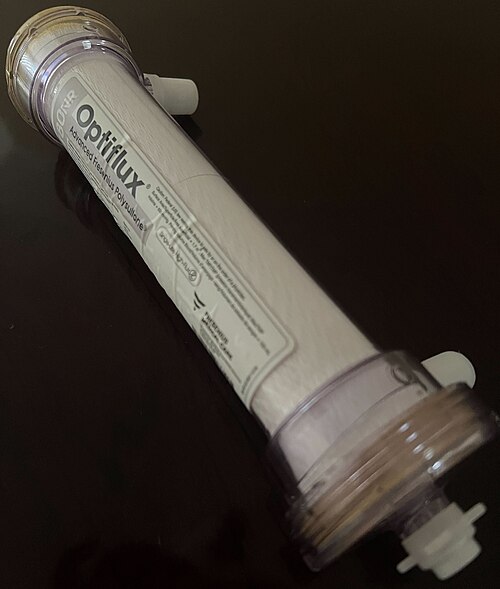
The access problem was solved by Belding Scribner and Wayne Quinton at the University of Washington, who in 1960 described a Teflon-silicone arteriovenous shunt that could be left in place for long periods. With it, dialysis could be repeated for years in patients whose kidneys had failed for good. By the mid-1960s, outpatient dialysis centers were operating in Seattle and spreading across the United States.
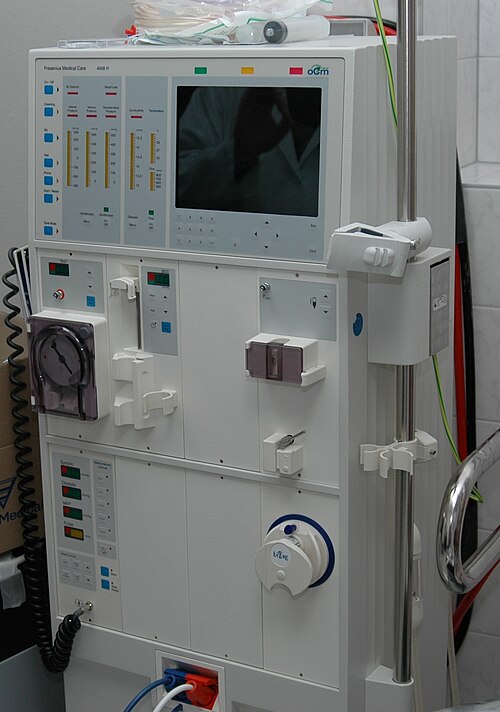
Kolff later led the team in Utah that produced the first implantable fully artificial heart, which carried the name of his student Robert Jarvik and was first implanted in a patient in 1982. His membrane oxygenator is still used in heart-lung machines during open-heart surgery. His 1943 drum design is the mechanical ancestor of the hollow-fiber dialyzers used in dialysis units today.
Keep exploring
 Read next · led to
Scribner shunt and long-term hemodialysis (1960)
Kolff's machine could not help patients whose kidneys would never recover, until Scribner and Quinton's shunt allowed dialysis for years. Their story shows Seattle forming the first committee to decide who would be treated.
Read this moment
Read next · led to
Scribner shunt and long-term hemodialysis (1960)
Kolff's machine could not help patients whose kidneys would never recover, until Scribner and Quinton's shunt allowed dialysis for years. Their story shows Seattle forming the first committee to decide who would be treated.
Read this moment
 Today on The Clinical Times
Florida dengue outbreak appears to be largest in continental U.S. in decades
Florida has reported more than 250 locally acquired dengue cases this year, with most in Hillsborough County, according to state health officials.
Read today’s top stories
Today on The Clinical Times
Florida dengue outbreak appears to be largest in continental U.S. in decades
Florida has reported more than 250 locally acquired dengue cases this year, with most in Hillsborough County, according to state health officials.
Read today’s top stories
All 526 moments in the history of medicine. This one is in chapter 5, Cures and codes
Connected moments
How this moment links to others in the history of medicine, and what you will find in each.
-
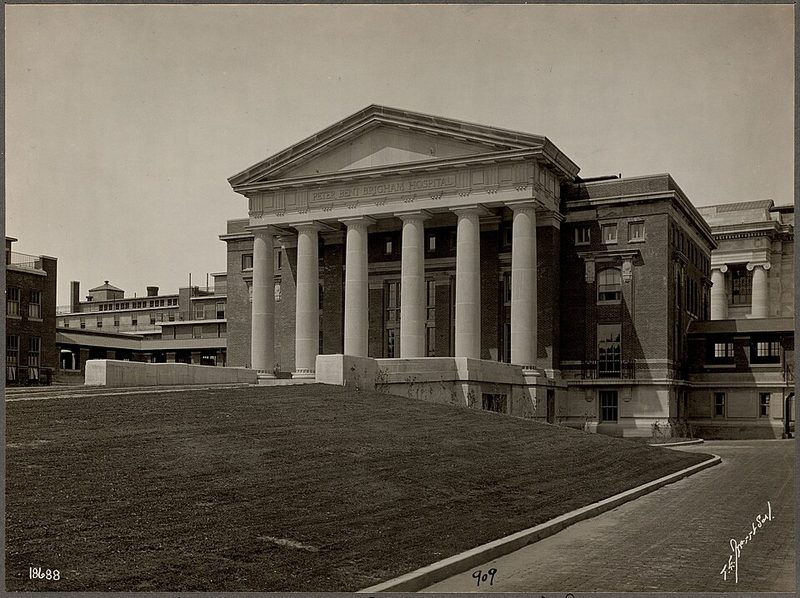 Same person1954First Successful Kidney TransplantJohn Merrill, who took up Kolff's machine in Boston, stabilized the first lasting kidney transplant patient with dialysis before surgery. That story shows identical twins making transplantation work.Read this moment
-
 Built on1937Heparin as an injectable anticoagulantDialysis circuits needed heparin to keep blood from clotting. The heparin story shows how the drug was purified in Toronto and Stockholm.Read this moment