Genetics & Molecular
1953
Molecular Structure of Nucleic Acids: The DNA Double Helix
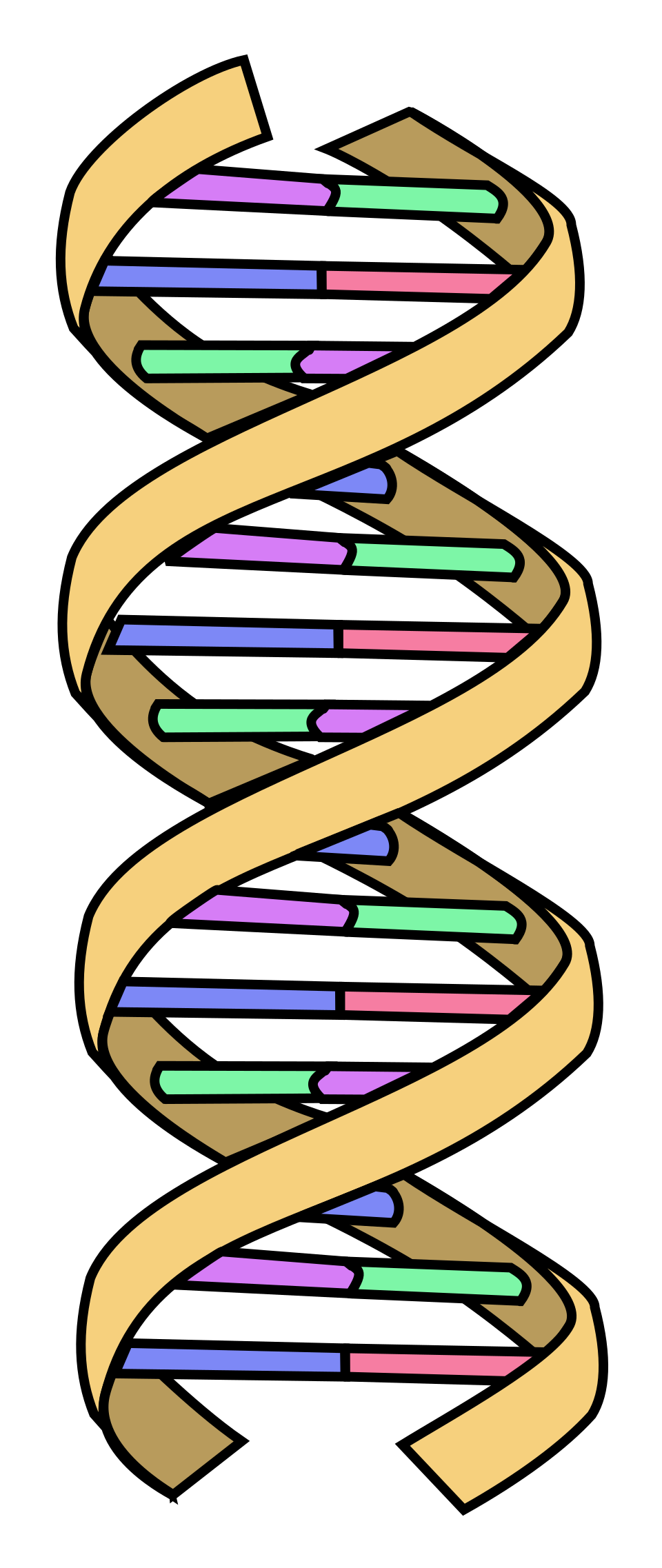
The two-strand model, with A-T and G-C base pairs, explained how DNA stores genetic information and copies itself, since each strand can act as a template for the other. Crick, Watson and Wilkins shared the 1962 Nobel Prize for the work.
Key people
- James Watson
- Co-wrote the double helix paper; Nobel Prize 1962
- Francis Crick
- Co-wrote the double helix paper; Nobel Prize 1962
- Rosalind Franklin
- X-ray crystallographer whose diffraction data informed the model
- Maurice Wilkins
- Provided X-ray data and shared the 1962 Nobel Prize
- Erwin Chargaff
- Biochemist whose 1950 base ratios (A equals T, G equals C) guided the model
Source
By early 1953, several laboratories were competing to determine the structure of deoxyribonucleic acid. Linus Pauling at Caltech had proposed a triple-helix model, later shown to be incorrect. At Cambridge, James Watson, a 24-year-old American biologist, and Francis Crick, a physicist-turned-structural biologist, were building physical models using known bond angles and Erwin Chargaff's 1950 finding that DNA contains equal amounts of adenine and thymine, and of guanine and cytosine.
Two pieces of evidence came from X-ray diffraction work at King's College London. In May 1952 Rosalind Franklin and her graduate student Raymond Gosling had taken a very clear photograph of the B form of DNA, labeled 51, and Franklin had concluded that the phosphate backbone lay on the outside of the molecule. Gosling gave the photograph to Maurice Wilkins, who showed it to Watson without Franklin's knowledge, and Max Perutz passed Watson and Crick a Medical Research Council report with her unpublished measurements. They built these data into their model and published a one-page letter in Nature on April 25, 1953. The same issue carried papers from Wilkins's group and from Franklin and Gosling.
Because each strand was the complement of the other, the sequence of one strand specified the other entirely. Watson and Crick ended their letter by noting that "it has not escaped our notice" that the pairing suggested a possible copying mechanism for the genetic material. Each strand could act as a template for a new complementary strand, producing two identical double helices from one.
Watson, Crick, and Wilkins shared the Nobel Prize in Physiology or Medicine in 1962. Franklin had died of ovarian cancer in London on April 16, 1958, at age 37; only two Nobel Prizes had ever been awarded posthumously, and a formal ban followed in 1974. None of the three laureates credited her contribution at the time. Her role became widely known after Watson caricatured her in his 1968 memoir, The Double Helix.
The model set off a decade of rapid discovery. In 1961 Crick, Sydney Brenner, and colleagues reported that the genetic code is read in groups of three bases, and that August Marshall Nirenberg announced in Moscow that he and Heinrich Matthaei had cracked the first word of the code. By the late 1960s, the mechanisms of transcription and translation were broadly understood, and recombinant DNA methods followed in the 1970s.
Keep exploring
 Read next · led to
Human Genome Project Completion (2003)
Fifty years after the double helix, the public consortium declared the human genome essentially finished. That story shows 2.85 billion letters of human DNA read.
Read this moment
Read next · led to
Human Genome Project Completion (2003)
Fifty years after the double helix, the public consortium declared the human genome essentially finished. That story shows 2.85 billion letters of human DNA read.
Read this moment
 Today on The Clinical Times
Florida dengue outbreak appears to be largest in continental U.S. in decades
Florida has reported more than 250 locally acquired dengue cases this year, with most in Hillsborough County, according to state health officials.
Read today’s top stories
Today on The Clinical Times
Florida dengue outbreak appears to be largest in continental U.S. in decades
Florida has reported more than 250 locally acquired dengue cases this year, with most in Hillsborough County, according to state health officials.
Read today’s top stories
All 526 moments in the history of medicine. This one is in chapter 5, Cures and codes
Connected moments
How this moment links to others in the history of medicine, and what you will find in each.
-
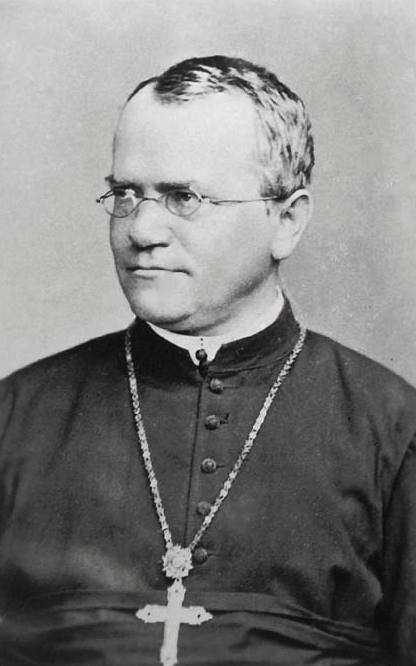 Same disease or problem1866Mendel's experiments on plant hybridsMendel found discrete units of inheritance, and the double helix showed what they are made of and how they copy. Mendel's story shows the three to one ratio in peas.Read this moment
-
 Same disease or problem1955Sanger's Sequencing of InsulinThe double helix showed genes are an exact order of bases, and Sanger showed proteins are an exact order of amino acids. His story shows insulin's full sequence read over ten years.Read this moment