Cardiology
1953
First Successful Open-Heart Surgery Using the Heart-Lung Machine
On May 6, 1953, Gibbon's heart-lung machine kept an 18-year-old woman alive while he closed an atrial septal defect, the first successful open-heart operation using a heart-lung machine.
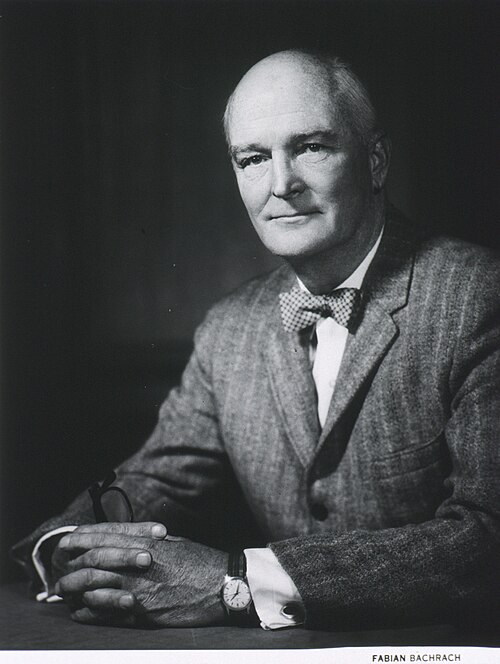
Key people
- John Gibbon
- Surgeon who designed the heart-lung machine and performed the first successful case
- Mary Hopkinson Gibbon
- Co-developer of the pump-oxygenator apparatus alongside her husband
- John Kirklin
- Led the Mayo Clinic series that made cardiopulmonary bypass reproducible
- Cecelia Bavolek
- First patient to survive open-heart surgery with the heart-lung machine
Source
Before 1953, surgeons who tried to repair defects inside the heart had very little time. Several atrial septal defects had been closed by cooling the patient and briefly stopping blood flow into the heart, but longer repairs were out of reach. John Gibbon, a 26-year-old research fellow at Massachusetts General Hospital, had conceived of an external machine to take over heart and lung function in 1931, after watching a patient die of a massive pulmonary embolus that surgeons could not remove in time.
Working with his wife, Mary Hopkinson Gibbon, he built pump-oxygenator prototypes from 1934, and by 1942 cats were surviving after bypass on them. From 1950 IBM supported the building of a larger machine for his work at Jefferson Medical College in Philadelphia. Others failed first: in April 1951 Clarence Dennis attempted bypass on a 6-year-old girl, who died. On May 6, 1953, Cecelia Bavolek, an 18-year-old woman with a large atrial septal defect, was connected to Gibbon's Model II machine while he closed the defect. Problems with the bypass circuit nearly caused a disaster, and quick action by the team saved her. She recovered.
Gibbon lost three of his four patients with congenital heart defects in this period, and he stopped using the machine for heart surgery. The machine itself, however, had shown that the idea worked.
John Kirklin and the team at Mayo Clinic took up a modified Gibbon-type machine in 1955 and made cardiopulmonary bypass reproducible in other hands and at other institutions. In Minneapolis, C. Walton Lillehei had in 1954 begun repairing heart defects with controlled cross-circulation, using a parent as the living oxygenator. Within five years, surgical correction of tetralogy of Fallot, mitral valve disease, and other structural cardiac conditions became technically feasible.
The early record shows how hard the start was: Lillehei's review of open-heart operations using mechanical bypass at six centers from 1951 to 1955 found that 17 of 18 patients had died. Gibbon's screen oxygenator gave way to Richard DeWall's bubble oxygenator of 1956 and later to membrane oxygenators. Coronary artery bypass grafting, valve replacement, and repair of complex congenital heart disease all came to depend on the heart-lung machine.
Keep exploring
 Read next · built on
Heparin as an injectable anticoagulant (1937)
Heparin made possible the heart lung bypass circuit Gibbon used for open heart surgery. The heparin story shows how purified heparin first reached patients in Toronto and Stockholm.
Read this moment
Read next · built on
Heparin as an injectable anticoagulant (1937)
Heparin made possible the heart lung bypass circuit Gibbon used for open heart surgery. The heparin story shows how purified heparin first reached patients in Toronto and Stockholm.
Read this moment
 Today on The Clinical Times
Florida dengue outbreak appears to be largest in continental U.S. in decades
Florida has reported more than 250 locally acquired dengue cases this year, with most in Hillsborough County, according to state health officials.
Read today’s top stories
Today on The Clinical Times
Florida dengue outbreak appears to be largest in continental U.S. in decades
Florida has reported more than 250 locally acquired dengue cases this year, with most in Hillsborough County, according to state health officials.
Read today’s top stories
All 526 moments in the history of medicine. This one is in chapter 5, Cures and codes
Connected moments
How this moment links to others in the history of medicine, and what you will find in each.
-
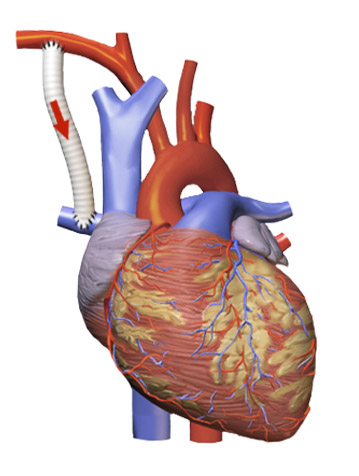 Built on1944The Blalock-Taussig Shunt (first "blue baby" operation)The success of the blue baby shunt encouraged surgeons to go further, into the heart itself. The Blalock Taussig story shows Vivien Thomas guiding the first operation in 1944.Read this moment
-
 Led to1967First Human Heart TransplantBarnard kept the donor heart supplied with blood from a heart lung machine before transplanting it. That story shows the first human heart transplant in Cape Town in 1967.Read this moment