Cardiology
1980
Implantable cardioverter-defibrillator first human implantation (Mirowski)
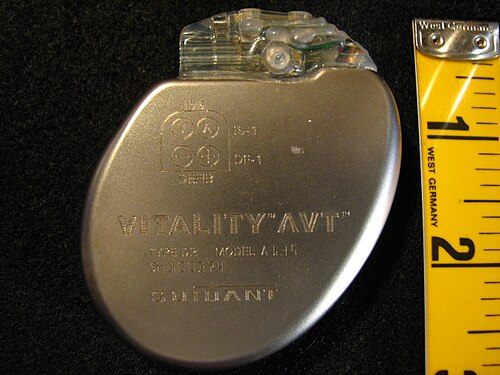
Mirowski's team implanted the first automatic defibrillator in February 1980 at Johns Hopkins, then reported in NEJM that the device sensed and shocked lethal ventricular arrhythmias in patients. ICDs now prevent sudden cardiac death.
Key people
- Michel Mirowski
- Cardiologist who conceived and developed the implantable defibrillator over two decades
- Morton Mower
- Co-inventor of the ICD and Mirowski's primary collaborator
- Levi Watkins Jr.
- Johns Hopkins surgeon who performed the first human ICD implantation
- Bernard Lown
- Harvard cardiologist whose public skepticism Mirowski worked against to develop the device
Source
Sudden cardiac death from ventricular fibrillation usually struck outside hospital, before any resuscitation was possible. Antiarrhythmic drugs could suppress some ectopic activity but did not reliably prevent fibrillation, and their own proarrhythmic effects sometimes made outcomes worse. Michel Mirowski, a cardiologist who had lost his mentor to sudden arrhythmic death, became convinced that an implanted device that could sense and stop the arrhythmia would reach patients in time, and that shocking from inside the heart would need less energy and a smaller capacitor.
Mirowski began device development at Sinai Hospital in Baltimore, where he worked from 1968, with Morton Mower, his primary collaborator. The work faced skepticism from prominent figures in electrophysiology: in a 1972 editorial, Bernard Lown and his co-author judged the device impractical and likely to fail. Mirowski and Mower continued anyway; they had a first prototype by 1972 and gradually miniaturized the sensing and capacitor components. The device was built with industry support from Medrad and Intec Systems of Pittsburgh.
The first human implantation was performed on February 4, 1980, at Johns Hopkins Hospital. The operation was performed by Levi Watkins Jr., a Johns Hopkins cardiac surgeon. The patient was a 57-year-old woman with recurrent ventricular fibrillation long after a myocardial infarction. One electrode coil went into the superior vena cava, a patch electrode was sewn over the cardiac apex through a left thoracotomy, and the generator sat in an abdominal pouch; early devices weighed about 280 grams. The first three implantations were reported in the New England Journal of Medicine in August 1980.
The FDA approved the device for the US market in 1985, the year Cardiac Pacemakers Inc. bought its maker, Intec Systems. At first, implantation required a thoracotomy, which limited it to patients fit for open-chest surgery. The Endotak system, introduced in 1988, allowed a fully transvenous system with the generator in the chest wall, with no thoracotomy. Later devices added programmable therapies such as antitachycardia pacing, first shown to stop ventricular tachycardia in 1987.
The scope of benefit expanded as randomized trial data accumulated. MADIT, reported in 1996, randomized 196 patients with prior myocardial infarction, an ejection fraction of 35 percent or less and inducible ventricular tachycardia, and found 54 percent lower mortality with the device. MADIT-II, in 2002, showed benefit in patients with an ejection fraction of 30 percent or less after infarction. SCD-HeFT in 2005, with 2,521 patients, extended the benefit to heart failure of both ischemic and nonischemic causes. Guidelines now recommend an ICD for patients with an ejection fraction of 35 percent or less despite optimal medical therapy who have a reasonable expected survival.
Keep exploring
 Read next · same disease or problem
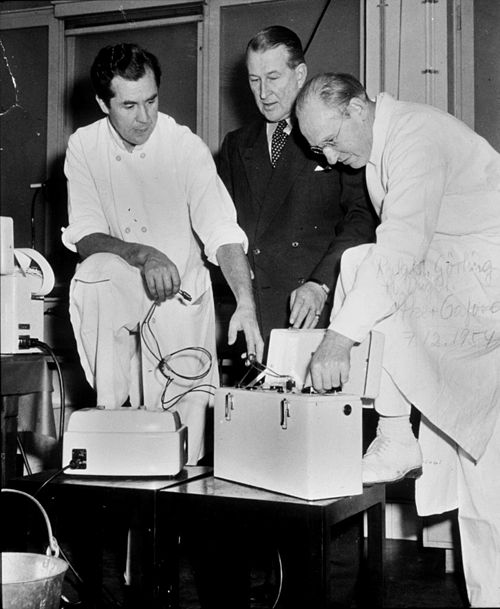
First implantation of a permanent cardiac pacemaker (Senning and Elmqvist) (1958)
Both implanted an electronic device to correct a dangerous heart rhythm, the pacemaker for a slow heart and the ICD for fibrillation. The pacemaker entry shows Arne Larsson living 43 years with 22 devices.
Read this moment
Read next · same disease or problem
First implantation of a permanent cardiac pacemaker (Senning and Elmqvist) (1958)
Both implanted an electronic device to correct a dangerous heart rhythm, the pacemaker for a slow heart and the ICD for fibrillation. The pacemaker entry shows Arne Larsson living 43 years with 22 devices.
Read this moment
 Today on The Clinical Times
Florida dengue outbreak appears to be largest in continental U.S. in decades
Florida has reported more than 250 locally acquired dengue cases this year, with most in Hillsborough County, according to state health officials.
Read today’s top stories
Today on The Clinical Times
Florida dengue outbreak appears to be largest in continental U.S. in decades
Florida has reported more than 250 locally acquired dengue cases this year, with most in Hillsborough County, according to state health officials.
Read today’s top stories
All 526 moments in the history of medicine. This one is in chapter 6, Trials, scanners and rights
Connected moments
How this moment links to others in the history of medicine, and what you will find in each.
-
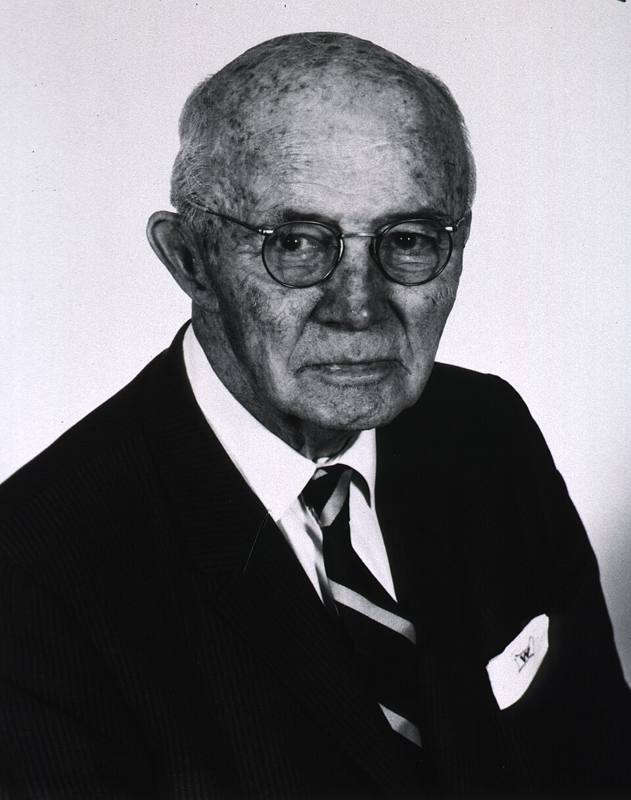 Same disease or problem1960Closed-chest cardiac massageBoth fought sudden cardiac death, CPR by rescuers' hands and the ICD from inside the chest. The CPR entry shows how compressing the closed chest replaced opening it.Read this moment
-
 Same disease or problem2019DAPA-HF (Dapagliflozin in heart failure with reduced ejection fraction)ICDs are now recommended for heart failure with a low ejection fraction, the patients DAPA-HF treated with a drug. That entry shows dapagliflozin cutting worsening heart failure and cardiovascular death.Read this moment