Surgery & Anesthesia
1944
The Blalock-Taussig Shunt (first "blue baby" operation)
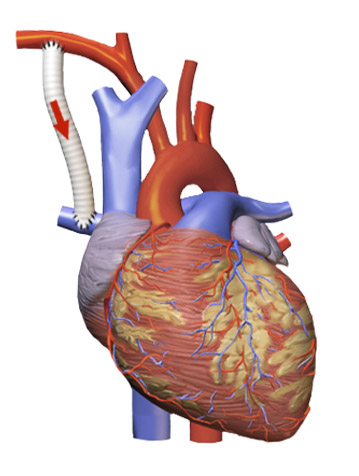
The first operation to relieve cyanosis in "blue babies." By rerouting a subclavian artery to the lungs, it improved the color and breathing of infants with tetralogy of Fallot, and Johns Hopkins soon became the center for the procedure.
Key people
- Alfred Blalock
- Chief of surgery at Johns Hopkins; performed the first shunt operations
- Helen Taussig
- Cardiologist who conceived the surgical strategy based on her clinical observations
- Vivien Thomas
- Surgical technician who developed and refined the operative technique in animal models
Source
Before November 1944, a diagnosis of tetralogy of Fallot in an infant had no surgical answer. The infants were cyanotic, growth-restricted, and frequently died before school age; the heart itself was considered untouchable by most surgeons of the era. Helen Taussig, who ran the pediatric cardiac clinic at Johns Hopkins and had become expert at examining hearts by touch and fluoroscopy despite partial deafness, noticed something the textbooks had not stressed: infants with Fallot's tetralogy who also had a patent ductus arteriosus survived longer and appeared less blue. The ductus was funneling extra blood toward the lungs.
Taussig first asked Robert Gross of Boston, who in 1938 had performed the first successful ligation of a patent ductus, to build an artificial ductus; he declined. She then brought the idea to Alfred Blalock, the chief of surgery at Hopkins, who insisted on an animal model first. The technical preparation was carried out largely by Vivien Thomas, a Black surgical technician who had worked with Blalock since his Vanderbilt years. Thomas operated on almost 200 dogs, first producing cyanosis and then relieving it by joining the subclavian artery to the pulmonary artery.
On November 29, 1944, Blalock joined the left subclavian artery to the left pulmonary artery in a 15-month-old girl, Eileen Saxon, who weighed about 4.5 kg; Thomas stood beside him and guided the operation. Her cyanosis improved and she went home two weeks later, but it returned after two months, and a second shunt on the right side failed. Blalock and Taussig reported three successful cases in JAMA in May 1945, and reports of the operation spread quickly through medical and popular channels.
The shunt did not correct the underlying anatomy; it was palliation, not cure. Its success encouraged surgeons to go further. In 1954 C. Walton Lillehei performed the first complete intracardiac repair of tetralogy of Fallot, using controlled cross-circulation with a parent as the living oxygenator, and in 1955 John Kirklin began repairing it with a Gibbon-type heart-lung machine.
Vivien Thomas received no credit in the original publication. His contribution was widely known within Hopkins but not publicly acknowledged for decades. In 1976 Johns Hopkins awarded him an honorary doctorate, and it later hung his portrait; in 2003 a surgeon proposed renaming the operation the Blalock-Taussig-Thomas shunt. The modified shunt, using a synthetic tube graft, is still used as staged palliation for several forms of cyanotic congenital heart disease.
Keep exploring
 Read next · led to
First Successful Open-Heart Surgery Using the Heart-Lung Machine (1953)
The blue baby shunt was palliation, and its success encouraged surgeons to go further, into the heart itself. Gibbon's story shows the heart lung machine that made open heart surgery possible.
Read this moment
Read next · led to
First Successful Open-Heart Surgery Using the Heart-Lung Machine (1953)
The blue baby shunt was palliation, and its success encouraged surgeons to go further, into the heart itself. Gibbon's story shows the heart lung machine that made open heart surgery possible.
Read this moment
 Today on The Clinical Times
Florida dengue outbreak appears to be largest in continental U.S. in decades
Florida has reported more than 250 locally acquired dengue cases this year, with most in Hillsborough County, according to state health officials.
Read today’s top stories
Today on The Clinical Times
Florida dengue outbreak appears to be largest in continental U.S. in decades
Florida has reported more than 250 locally acquired dengue cases this year, with most in Hillsborough County, according to state health officials.
Read today’s top stories
All 526 moments in the history of medicine. This one is in chapter 5, Cures and codes
Connected moments
How this moment links to others in the history of medicine, and what you will find in each.
-
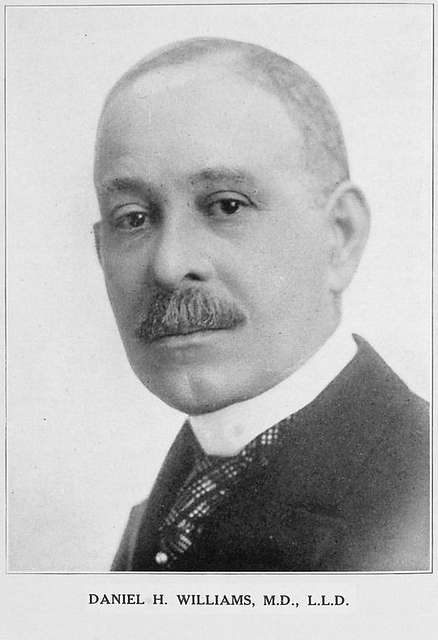 Same disease or problem1893Daniel Hale Williams and Provident HospitalVivien Thomas, a Black surgical technician, worked out the blue baby operation, and Williams, a Black surgeon, had operated on the sac around a heart in 1893. Williams's story shows the hospital he founded so Black doctors and nurses could train.Read this moment
-
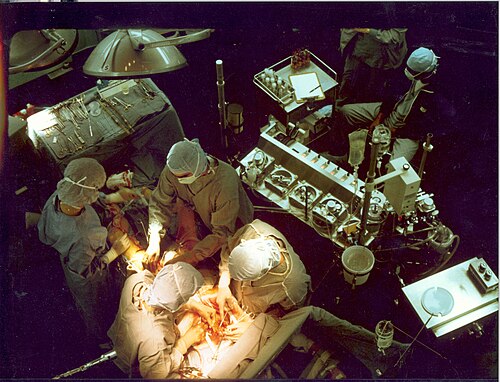 Same disease or problem1968Coronary Artery Bypass Grafting (CABG)Both rerouted blood with a new channel, the shunt sending more blood to a child's lungs and bypass grafts carrying blood around blocked coronary arteries. Favaloro's story shows bypass surgery made routine.Read this moment