Infectious Disease
1928
Fleming's discovery of penicillin
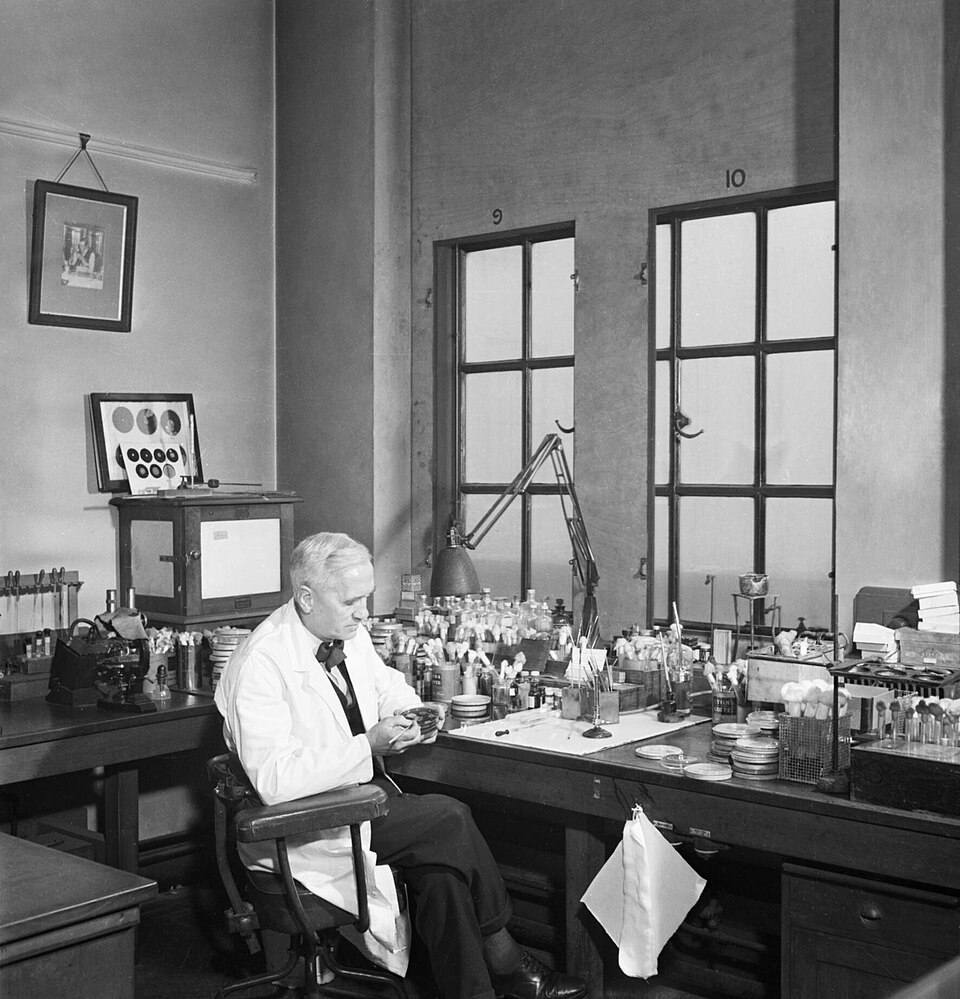
Fleming noticed mold-contaminated plates clearing staphylococci and traced it to a filterable substance he called penicillin. The finding sat largely unused until Florey and Chain purified it for clinical use in the 1940s.
Key people
- Alexander Fleming
- Bacteriologist who observed and named penicillin
- Howard Florey
- Pathologist who led the Oxford purification and animal trials
- Ernst Boris Chain
- Biochemist who isolated and characterized the active compound
Source
In the 1920s, bacterial infections killed patients who had survived surgery, childbirth, and war wounds. Streptococcal sepsis, pneumococcal pneumonia, and staphylococcal bacteremia had no reliable treatment beyond supportive care and, in some cases, antiseptic wound management. Alexander Fleming, a bacteriologist at St Mary's Hospital in London, had been interested for years in naturally occurring antibacterial substances. In 1921 he had described lysozyme, a bacteria-dissolving enzyme found in tissues and secretions such as nasal mucus. The contaminated plate he returned to in September 1928 fit into a line of inquiry he had already been pursuing.
Fleming found a Petri dish he had left before a holiday covered with Staphylococcus colonies except for a clear halo surrounding an uninvited Penicillium mold. He identified the mold, confirmed that a diffusible substance in its culture fluid was lethal to a range of gram-positive bacteria, and named the substance penicillin. His 1929 paper in the British Journal of Experimental Pathology documented these findings, and he suggested using it as a local antiseptic. The problem was concentration: the broth produced only tiny amounts of active material, and Fleming could neither purify it nor maintain potency through successive preparation steps. After several years of effort he largely set the work aside.
For most of the 1930s the compound sat in the literature. Howard Florey, an Australian-born pathologist who headed the Sir William Dunn School of Pathology at Oxford, and Ernst Boris Chain, a German-Jewish biochemist who had left Nazi Germany in 1933, took up the purification problem in 1939. Chain reviewed Fleming's paper and recognized that the stability issue might be soluble with modern biochemical techniques. By 1940 the team had a partially purified preparation. In May 1940, in an experiment run by Norman Heatley, eight mice were given a lethal dose of streptococci; four were then treated with penicillin and four were left untreated. Seventeen hours after infection the four untreated mice were dead, while all four treated mice were alive.
Human trials began in 1941 with material grown in Florey's department, first in old bedpans and then in ceramic vessels the team designed. Their first patient treated for infection, a policeman at the Radcliffe Infirmary with severe staphylococcal and streptococcal infection, improved over five days of injections; the supply ran out even though penicillin was recovered from his urine, and he relapsed and died. In 1941 Florey and Heatley went to the United States, not yet at war, to find manufacturers, and eventually 15 drug companies in Britain and the United States produced penicillin. By September 1943 American stocks met the needs of the Allied armed forces.
Fleming, Florey, and Chain shared the Nobel Prize in Physiology or Medicine in 1945. Popular accounts centered on Fleming's chance observation, although more than a decade of further work passed before a patient was treated. After the war, by 1946, penicillin was widely available on prescription.
Keep exploring
 Read next · same disease or problem
Prontosil and the Sulfonamide Drugs (1935)
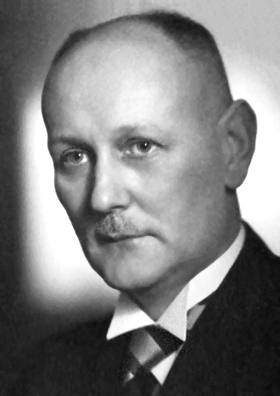
While penicillin sat unused in the 1930s, Prontosil gave doctors their first effective drugs against many bacterial infections. Domagk's story shows a red dye that saved his own daughter from a streptococcal infection.
Read this moment
Read next · same disease or problem
Prontosil and the Sulfonamide Drugs (1935)
While penicillin sat unused in the 1930s, Prontosil gave doctors their first effective drugs against many bacterial infections. Domagk's story shows a red dye that saved his own daughter from a streptococcal infection.
Read this moment
 Today on The Clinical Times
Florida dengue outbreak appears to be largest in continental U.S. in decades
Florida has reported more than 250 locally acquired dengue cases this year, with most in Hillsborough County, according to state health officials.
Read today’s top stories
Today on The Clinical Times
Florida dengue outbreak appears to be largest in continental U.S. in decades
Florida has reported more than 250 locally acquired dengue cases this year, with most in Hillsborough County, according to state health officials.
Read today’s top stories
All 526 moments in the history of medicine. This one is in chapter 5, Cures and codes
Connected moments
How this moment links to others in the history of medicine, and what you will find in each.
- Same disease or problem2015WHO Global Action Plan on Antimicrobial ResistancePenicillin began the age of antibiotics, and by 2015 resistance to such drugs had become a global threat. The WHO plan shows 1.27 million deaths in 2019 attributed directly to resistant infections.Read this moment
-
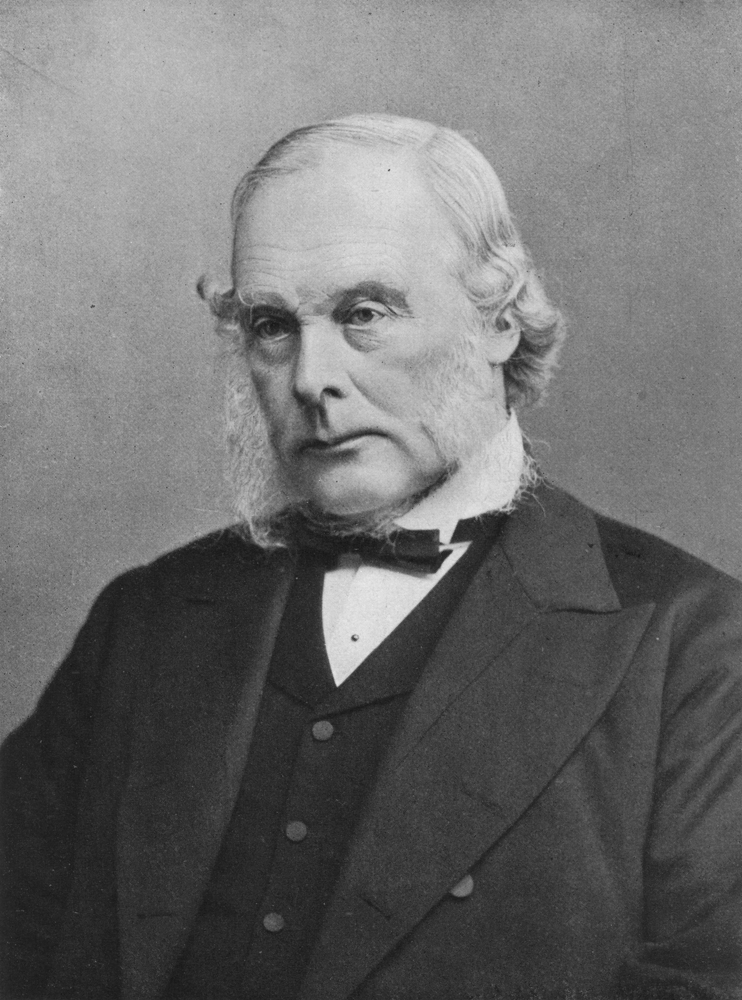 Same disease or problem1867Lister's antiseptic surgeryBefore penicillin, antiseptic wound care of the kind Lister began was one of the few defenses against infection. Lister's story shows carbolic acid cutting deaths after amputation from about 45 percent to 15 percent.Read this moment