Endocrinology
1922
Discovery of Insulin
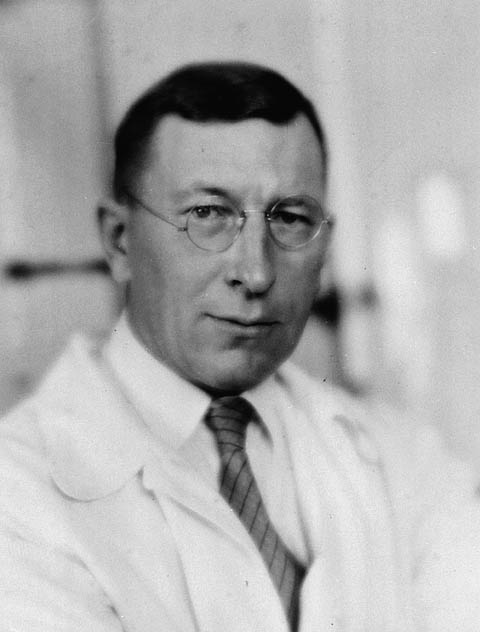
Before insulin, type 1 diabetes killed within months of diagnosis. Banting and Best's pancreatic extract turned it into a treatable condition; the work won the 1923 Nobel Prize for Banting and Macleod.
Key people
- Frederick Banting
- Surgeon whose concept of duct ligation led to the Toronto insulin experiments
- Charles Best
- Medical student who co-conducted the dog experiments with Banting in summer 1921
- James Collip
- Biochemist who purified the extract for the successful January 23, 1922 injection
- John Macleod
- Toronto physiology professor who provided the laboratory and shared the 1923 Nobel
- Leonard Thompson
- First human recipient of the Toronto extract, age 14, January 11 and 23, 1922
Source
Banting FG, Best CH. J Lab Clin Med. 1922 (opens in a new tab)
In 1920, type 1 diabetes was a death sentence measured in months. The standard treatment at Toronto General and elsewhere was the Allen starvation diet: caloric restriction severe enough to slow the catabolic process, which extended survival modestly at the cost of extreme wasting. Patients, often children, lived on several hundred calories per day. The underlying problem, loss of islet cell function and the resulting absence of a glucose-regulating hormone, had been theorized for decades, and researchers had attempted to extract that hormone from the pancreas without success. The likely obstacle was that the digestive enzymes of the pancreas destroyed the active material during extraction.
Frederick Banting, a surgeon in London, Ontario, read Moses Barron's paper on the islets and pancreatic duct blockage in October 1920 and proposed a solution: ligate the ducts to cause exocrine atrophy while preserving the islets, then extract from the residual tissue. He approached John Macleod, professor of physiology at the University of Toronto, who provided laboratory space and assigned Charles Best, a student, as his assistant. Beginning on May 17, 1921, Banting and Best worked through the summer on depancreatized dogs, producing an extract they called isletin that lowered blood and urine glucose.
The first human trial took place on January 11, 1922, when the extract was injected into Leonard Thompson, a 14-year-old boy at Toronto General. It lowered his blood glucose only a little, his urine still showed ketones, and he developed a sterile abscess at the injection site. Biochemist James Collip, who had joined the team, worked around the clock to purify the extract further. On January 23, Thompson received the new preparation; his blood sugar fell from 520 mg/dL to 120 mg/dL by the next day, and his ketonuria cleared. He lived another 13 years and died in 1935, aged 27.
By February 1922 six more patients in Toronto had been treated, and in April the group renamed the extract insulin. Banting, Best and Collip patented the method and sold the rights to the University of Toronto for one dollar. Eli Lilly signed a one-year exclusive agreement with the university in May 1922, achieved large-scale purified production that autumn using isoelectric precipitation, and in 1923 began selling Iletin, the first commercial insulin.
Banting and Macleod received the Nobel Prize in Physiology or Medicine in 1923. Banting was furious that Macleod had been included and Best left out, and at first refused the prize. He accepted, publicly credited Best, and gave him half his prize money; Macleod shared his with Collip.
Keep exploring
 Read next · same person
Heparin as an injectable anticoagulant (1937)
Charles Best, Banting's student assistant on insulin, later led the Toronto group that purified heparin. That story shows purified heparin letting surgeons treat patients with blood clots.
Read this moment
Read next · same person
Heparin as an injectable anticoagulant (1937)
Charles Best, Banting's student assistant on insulin, later led the Toronto group that purified heparin. That story shows purified heparin letting surgeons treat patients with blood clots.
Read this moment
 Today on The Clinical Times
Florida dengue outbreak appears to be largest in continental U.S. in decades
Florida has reported more than 250 locally acquired dengue cases this year, with most in Hillsborough County, according to state health officials.
Read today’s top stories
Today on The Clinical Times
Florida dengue outbreak appears to be largest in continental U.S. in decades
Florida has reported more than 250 locally acquired dengue cases this year, with most in Hillsborough County, according to state health officials.
Read today’s top stories
All 526 moments in the history of medicine. This one is in chapter 5, Cures and codes
Connected moments
How this moment links to others in the history of medicine, and what you will find in each.
- Same disease or problem1776Dobson's experiments on diabetic urineDobson showed that diabetic sugar is in the blood, and insulin finally brought it down. Dobson's story shows diabetic urine evaporated to a cake that tasted like brown sugar.Read this moment
-
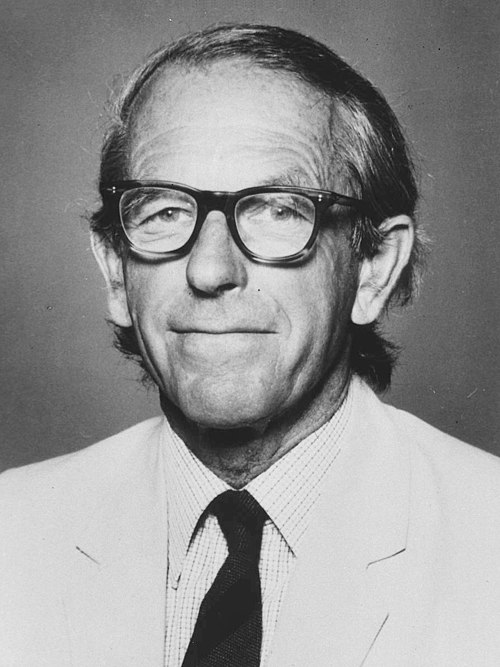 Led to1955Sanger's Sequencing of InsulinInsulin became the first protein whose full sequence was read, by Frederick Sanger in 1955. His story shows that a protein has one defined order of amino acids.Read this moment
-
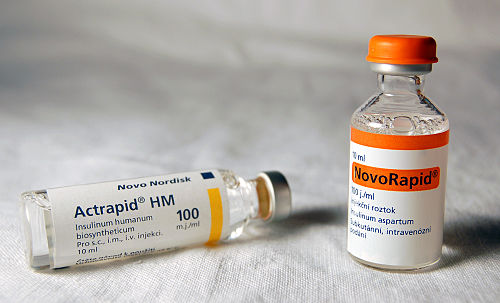 Led to1982Recombinant Human Insulin (Humulin) ApprovalLilly began selling insulin from animal pancreas in 1923, and in 1982 it won approval for human insulin made by bacteria. The Humulin story shows the first commercial product of recombinant DNA.Read this moment