Critical & Organ Care
1916
Rous and Turner's citrate-glucose method for storing red blood cells
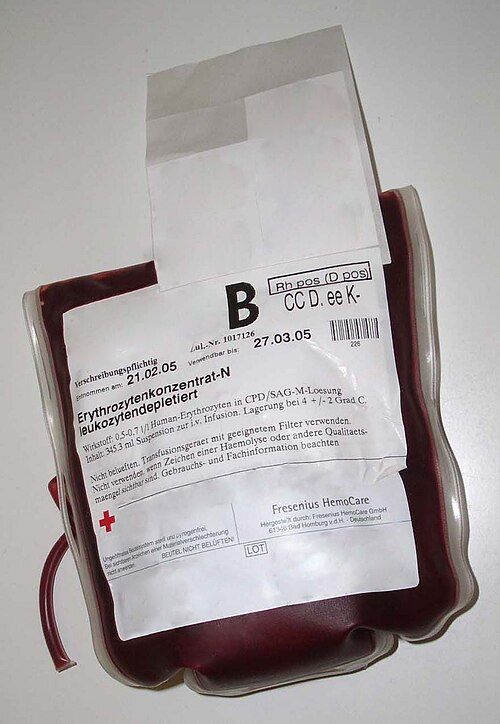
Citrate plus dextrose kept donor red cells intact for weeks, so blood could be collected ahead of need instead of run vein to vein. In 1917 Oswald Robertson used the method to store blood for wounded soldiers in France.
Key people
- Peyton Rous
- Rockefeller Institute pathologist who co-developed the citrate-glucose preservation solution
- J. R. Turner
- Co-author of the 1916 preservation paper with Rous
- Oswald Robertson
- Army physician who set up the first stored-blood depot on the Western Front in 1917
Source
Blood transfusion in 1915 usually needed a donor close at hand. Surgeons either joined the donor's vessel to the recipient's or gave blood mixed with sodium citrate soon after it was drawn; the citrate stopped clotting, but human red cells kept in citrated blood alone broke down within about a week. In high-volume casualty settings, particularly on the Western Front, this meant transfusion could not be prepared in advance of the wounded arriving.
Peyton Rous and J. R. Turner at the Rockefeller Institute in New York addressed the storage problem systematically. Their 1916 paper in the Journal of Experimental Medicine described a citrate and dextrose mixture: citrate prevented clotting, while the sugar protected the red cells. In three parts human blood, two parts 3.8 percent sodium citrate and five parts 5.4 percent dextrose, the red cells stayed intact for about four weeks, and experiments in the second part of the paper showed that preserved cells worked normally when returned to the body. Even so, most wartime transfusions used citrated blood given at once.
Oswald Robertson, an American doctor who had worked with Rous at the Rockefeller Institute, went to France in 1917 with the Harvard medical unit at Base Hospital No. 5. He used only group O donors, collected their blood into glass bottles with the Rous-Turner anticoagulant, kept it cold in ice chests for up to 28 days, and carried it to where the wounded were, sometimes giving it himself under fire. He published the results in the British Medical Journal in 1918 and is credited as the first person to set up a blood bank.
Civilian blood banking took root in the 1930s. In 1937 Bernard Fantus opened the first American civilian blood bank at Cook County Hospital in Chicago, storing whole blood in bottles in a refrigerator for up to 10 days. The approach spread rapidly during World War II, when large-scale blood programs operated on multiple fronts. The citrate-glucose principle was refined over subsequent decades into the anticoagulant-preservative solutions still used today, including citrate-phosphate-dextrose formulations.
Once blood could be stored, it could also be separated into components: packed red cells, plasma, and platelets, each with different indications and storage requirements. Rous received the Nobel Prize in Physiology or Medicine in 1966 for his discovery of tumor-inducing viruses, work he had begun in 1910 with a chicken sarcoma.
Keep exploring
 Read next · built on
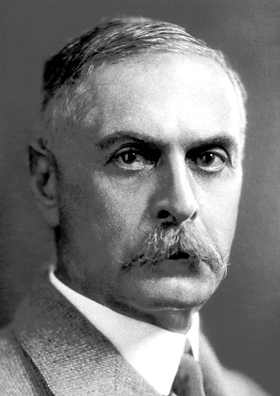
Discovery of the ABO Blood Groups (1901)
Robertson stored blood only from group O donors, using the blood groups Landsteiner had found. Landsteiner's story shows how grouping made the outcome of a transfusion predictable.
Read this moment
Read next · built on
Discovery of the ABO Blood Groups (1901)
Robertson stored blood only from group O donors, using the blood groups Landsteiner had found. Landsteiner's story shows how grouping made the outcome of a transfusion predictable.
Read this moment
 Today on The Clinical Times
Florida dengue outbreak appears to be largest in continental U.S. in decades
Florida has reported more than 250 locally acquired dengue cases this year, with most in Hillsborough County, according to state health officials.
Read today’s top stories
Today on The Clinical Times
Florida dengue outbreak appears to be largest in continental U.S. in decades
Florida has reported more than 250 locally acquired dengue cases this year, with most in Hillsborough County, according to state health officials.
Read today’s top stories
All 526 moments in the history of medicine. This one is in chapter 5, Cures and codes
Connected moments
How this moment links to others in the history of medicine, and what you will find in each.
- Same person1911Rous and the chicken sarcoma virusPeyton Rous turned to blood storage from cancer research, where he had shown a virus could cause a chicken tumor. That story shows the 1911 filtrate experiment that won him a Nobel Prize 55 years later.Read this moment
-
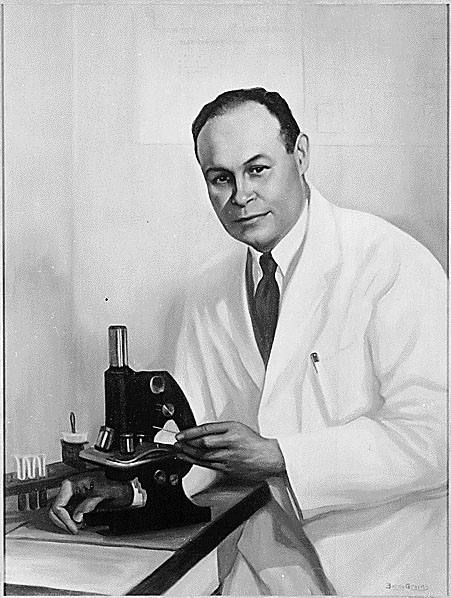 Same disease or problem1940Charles Drew and blood plasma bankingRous and Turner made it possible to store blood for weeks, and Drew organized banking of plasma on a large scale in 1940. His story shows Blood for Britain and his objection to blood being segregated by race.Read this moment