Foundational Discovery
1912
Funk's vitamine (vital amine) hypothesis
Funk named these dietary factors "vitamines" and argued that the lack of each one caused a distinct disease: beri-beri, scurvy, pellagra or rickets. The idea sent chemists looking for the individual factors.
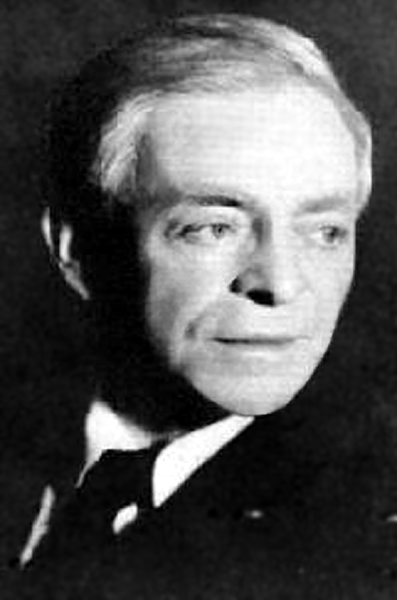
Key people
- Casimir Funk
- Biochemist who coined the term 'vitamine' and proposed the deficiency disease framework in 1912
- Frederick Gowland Hopkins
- Identified 'accessory food factors' independently; shared the 1929 Nobel with Eijkman
- Christiaan Eijkman
- Dutch physician whose beri-beri research in Java supplied the experimental evidence Funk built on
Source
By the early twentieth century, physicians had accumulated a puzzling set of diseases that resisted the dominant theory of illness: that pathogens caused disease, and that removing the pathogen would cure it. Beri-beri, scurvy, pellagra, and rickets were widespread, often epidemic, yet no responsible microorganism could be found. Christiaan Eijkman in Java had shown in the 1890s that chickens fed polished rice developed beri-beri-like paralysis that resolved when rice bran was restored to their diet, but for years he blamed a toxin in the grain that the bran counteracted. In 1901 his successor, Gerrit Grijns, concluded instead that rice and other foods contained a protective substance.
Casimir Funk, a Polish biochemist at the Lister Institute in London, turned these findings into a general theory in 1912. He had been isolating the active principle from rice bran that cured beri-beri in pigeons, and he succeeded in obtaining a nitrogen-containing crystalline substance. Drawing on Eijkman's work and on Frederick Gowland Hopkins's experiments showing that purified diets failed to sustain animal growth unless supplemented with small quantities of milk, Funk argued in the Journal of State Medicine that at least four dietary factors existed, each needed to prevent a specific disease: beri-beri, scurvy, pellagra, and rickets. He called them "vitamines," a contraction of vital amines.
The chemical assumption embedded in the name turned out to be wrong. Not all of these factors contain nitrogen or an amine group. In 1920 the British biochemist Jack Drummond proposed dropping the final "e" so that the name implied nothing about the chemistry, and he proposed naming the factors by letter. What survived was the idea that a disease could be caused by too little of a normal dietary constituent, with no toxin or infectious agent involved.
Laboratory effort then focused on isolating individual factors, characterizing their chemistry, and determining minimal requirements. Over the following three decades, vitamins A, B1, B2, C, D, E, and K were each isolated, their structures determined, and many synthesized. The anti-beri-beri factor itself, vitamin B1, was first isolated in pure form by the Dutch chemists Barend Jansen and Willem Donath in 1926.
Hopkins and Eijkman shared the 1929 Nobel Prize in Physiology or Medicine: Eijkman for discovering the antineuritic vitamin and Hopkins for discovering the growth-stimulating vitamins. Funk received no Nobel. In Britain, the Medical Research Council's 1919 report on the subject, led by Hopkins, preferred his term "accessory food factors" to Funk's "vitamines."
Keep exploring
 Read next · built on
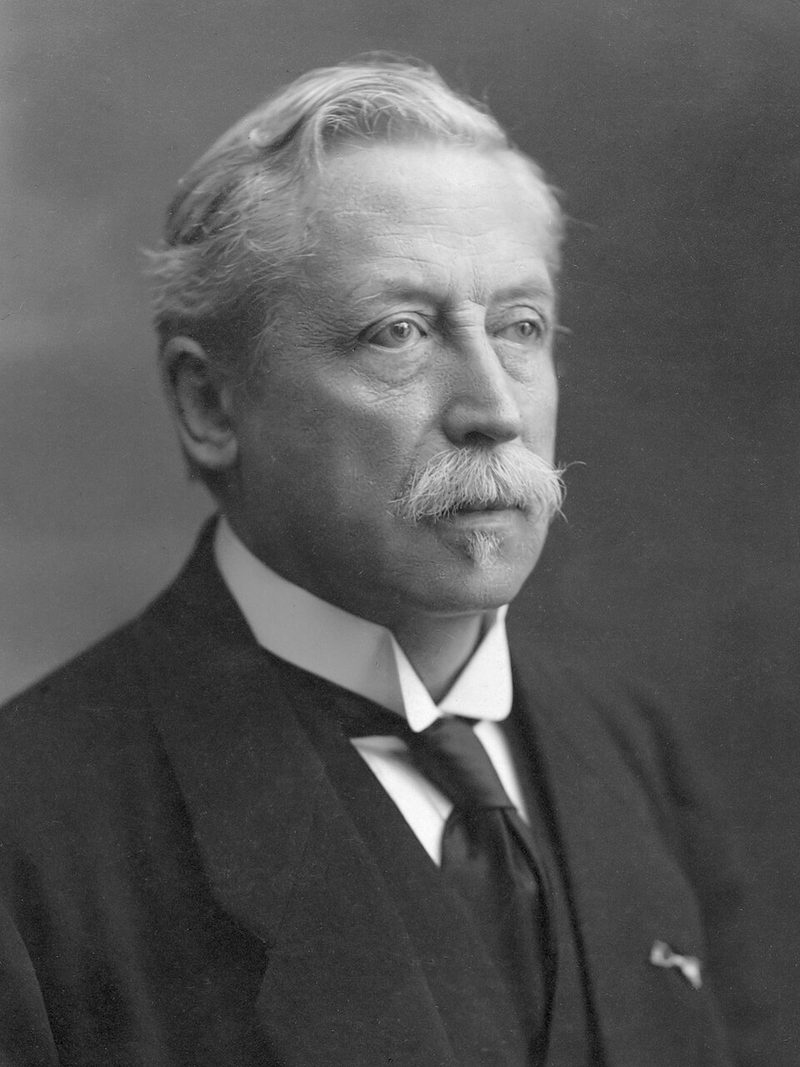
Eijkman's polished rice and beriberi (c. 1890)
Funk drew on Eijkman's chickens fed polished rice when he proposed the vitamine theory. Eijkman's story shows how a new cook's refusal to feed hospital rice to chickens solved a mystery.
Read this moment
Read next · built on
Eijkman's polished rice and beriberi (c. 1890)
Funk drew on Eijkman's chickens fed polished rice when he proposed the vitamine theory. Eijkman's story shows how a new cook's refusal to feed hospital rice to chickens solved a mystery.
Read this moment
 Today on The Clinical Times
Florida dengue outbreak appears to be largest in continental U.S. in decades
Florida has reported more than 250 locally acquired dengue cases this year, with most in Hillsborough County, according to state health officials.
Read today’s top stories
Today on The Clinical Times
Florida dengue outbreak appears to be largest in continental U.S. in decades
Florida has reported more than 250 locally acquired dengue cases this year, with most in Hillsborough County, according to state health officials.
Read today’s top stories
All 526 moments in the history of medicine. This one is in chapter 5, Cures and codes
Connected moments
How this moment links to others in the history of medicine, and what you will find in each.
-
 Led to1932Identification of vitamin C as the antiscorbutic factorFunk's idea sent chemists hunting for each factor, and in 1932 the factor that prevents scurvy was identified as ascorbic acid. That story shows two groups competing over the discovery of vitamin C.Read this moment
-
 Same disease or problem1914Goldberger's pellagra studiesFunk named pellagra among the diseases of deficiency, and Goldberger showed that it came from poor diet, not infection. His story shows prisoners pardoned for eating a restricted diet that gave them the disease.Read this moment