Surgery & Anesthesia
1846
The Ether Demonstration ("Ether Day")
A Boston dentist gave ether to a surgical patient before an audience at Massachusetts General Hospital. Once reported, the method spread fast: by the end of 1846 surgeons in Britain and France were operating under ether.
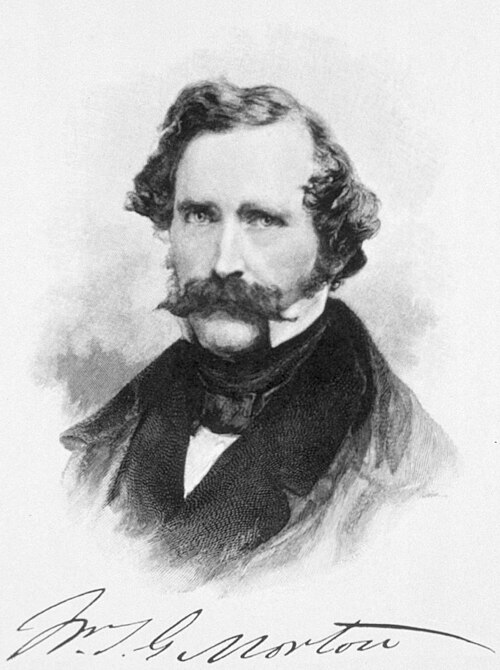
Key people
- William T. G. Morton
- Dentist who administered ether and organized the October 16 demonstration
- John Collins Warren
- Surgeon who performed the operation at Massachusetts General Hospital
- Henry Jacob Bigelow
- Surgeon who published the first account in the Boston Medical and Surgical Journal
- James Young Simpson
- Edinburgh obstetrician who used ether in childbirth in January 1847 and introduced chloroform that November
- Crawford Long
- Georgia physician who used ether surgically in 1842 but did not publish until 1849
Source
Boston Medical and Surgical Journal, 1846 (opens in a new tab)
Before October 1846, surgical pain was accepted as unavoidable. Patients were held down, gagged, or given alcohol, and the fastest surgeons were the most prized. Some surgeons had tried mesmerism. Crawford Long had used ether quietly in rural Georgia as early as 1842 but had not published his results. In October 1846 a Boston dentist, William T. G. Morton, was invited to demonstrate his ether method at an operation at Massachusetts General Hospital.
On the morning of October 16, 1846, Morton gave inhaled sulfuric ether to Edward Gilbert Abbott, a 21-year-old with a congenital vascular mass under his left jaw, in the hospital's surgical amphitheater. John Collins Warren, the hospital's senior surgeon, then tried to tie off the vessels feeding the mass. Abbott moved and cried out late in the operation, but afterward he said he had felt no pain. By tradition Warren told the assembled students and physicians, "Gentlemen! This is no humbug," though the line appears in no eyewitness account from 1846 and was first recorded in an 1859 biography of Morton, so its authenticity is doubtful. The room was the Ether Dome, which still stands at Massachusetts General Hospital.
Henry Jacob Bigelow, a young surgeon who witnessed the demonstration, published a report of four operations under ether at the hospital in the Boston Medical and Surgical Journal on November 18, 1846. By the end of December, surgeons in Britain and France had operated under ether. James Young Simpson, professor of midwifery in Edinburgh, first used ether in a difficult labor on January 19, 1847, and announced chloroform as a new anesthetic in November 1847. Within a year of the Boston demonstration, ether was in use in many countries.
Morton's priority claim set off an immediate and bitter dispute. Charles T. Jackson, a Boston chemist who had suggested ether to Morton, claimed credit for the discovery. Crawford Long published his Georgia cases in 1849, claiming precedence. Horace Wells, a Hartford dentist whose nitrous oxide demonstration in Boston had failed, also entered the dispute before his death in 1848. It consumed Morton for the rest of his life and was never officially resolved.
The Abbott operation itself was only a partial success. Warren's ligation did not shrink the mass, which was unchanged when Abbott left the hospital on December 7, and a 2022 review of his hospital record judged the anesthetic incomplete. Clearer proof came on November 7, when George Hayward amputated a girl's leg above the knee at the same hospital. She became insensible within about five minutes and afterward could not say whether the leg had been removed.
Keep exploring
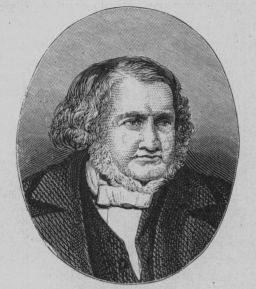 Read next · led to
Simpson's chloroform anesthesia (1847)
James Young Simpson first used ether in a difficult labor in January 1847 and announced chloroform that November. Simpson's story shows the dining room experiments that found chloroform and its spread into childbirth.
Read this moment
Read next · led to
Simpson's chloroform anesthesia (1847)
James Young Simpson first used ether in a difficult labor in January 1847 and announced chloroform that November. Simpson's story shows the dining room experiments that found chloroform and its spread into childbirth.
Read this moment
 Today on The Clinical Times
Florida dengue outbreak appears to be largest in continental U.S. in decades
Florida has reported more than 250 locally acquired dengue cases this year, with most in Hillsborough County, according to state health officials.
Read today’s top stories
Today on The Clinical Times
Florida dengue outbreak appears to be largest in continental U.S. in decades
Florida has reported more than 250 locally acquired dengue cases this year, with most in Hillsborough County, according to state health officials.
Read today’s top stories
All 526 moments in the history of medicine. This one is in chapter 4, Germs, numbers and clean water
Connected moments
How this moment links to others in the history of medicine, and what you will find in each.
-
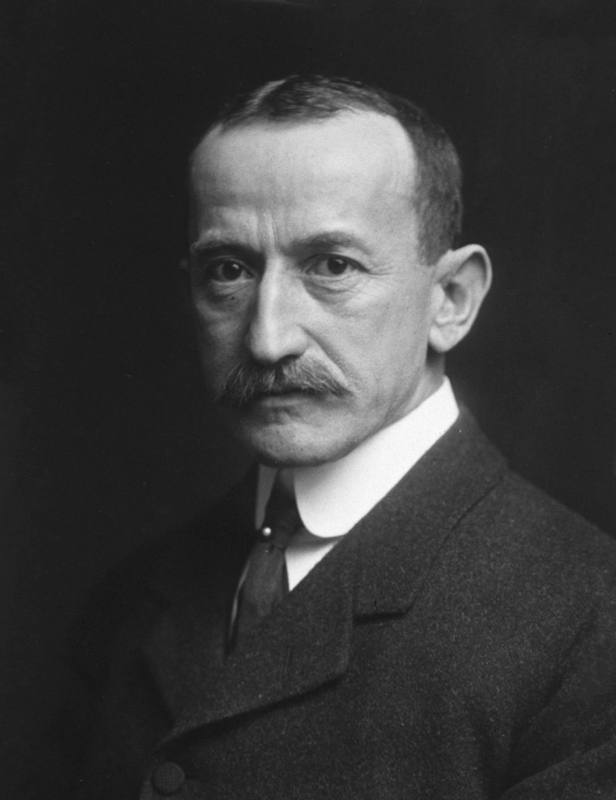 Same disease or problem1884Koller's cocaine local anesthesiaEther put the whole patient to sleep, and in 1884 Koller showed that cocaine drops could numb just one part of the body. His story shows local anesthesia spreading within weeks to eye surgery, nerve blocks and spinal anesthesia.Read this moment
-
 Same disease or problem1966National Halothane StudyHalothane later replaced ether, and fears that it killed patients through liver damage led to a study of 800,000 anesthetics. Its story shows how that study set a model for comparing surgical outcomes across hospitals.Read this moment