Infectious Disease · 2020
COVID-19 mRNA vaccine efficacy trials
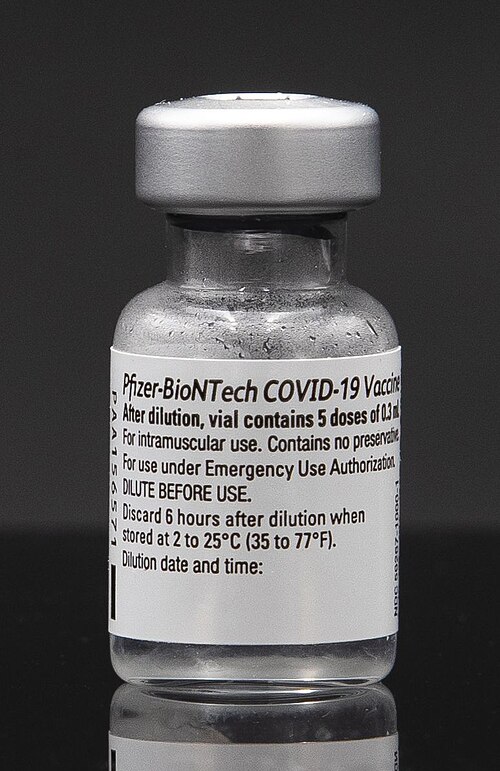
When the SARS-CoV-2 sequence was posted publicly in January 2020, two companies with mRNA vaccine platforms, BioNTech working with Pfizer and Moderna working with the National Institute of Allergy and Infectious Diseases, immediately began designing vaccine candidates encoding the viral spike protein. Neither had ever brought an mRNA vaccine through phase 3. The platform's critical advantage was speed: mRNA does not require cell culture, viral attenuation, or recombinant protein production. Given the sequence of the target antigen, a vaccine candidate could be designed and initial batches manufactured within weeks.
The BNT162b2 phase 3 trial enrolled 43,548 participants and reported 95% efficacy against symptomatic COVID-19, with 8 confirmed cases among 21,720 vaccine recipients and 162 among 21,728 placebo recipients. Moderna's mRNA-1273 trial, reported weeks later, enrolled approximately 30,000 participants and showed 94.1% efficacy by a nearly identical primary endpoint. Both vaccines used lipid nanoparticles to deliver modified mRNA encoding the spike protein stabilized in its prefusion conformation, a design contributed by Barney Graham and Jason McLellan at the NIH Vaccine Research Center. Katalin Kariko's modified nucleoside technology, developed with Drew Weissman at the University of Pennsylvania and licensed by both companies, was essential for allowing repeated dosing without excessive innate immune activation.
Both companies had pre-positioned manufacturing capacity before efficacy data were available, investing in production infrastructure on the basis of animal-model immunogenicity data and phase 1 safety signals. That decision, funded in part by Operation Warp Speed in the United States and Biomedical Advanced Research and Development Authority contracts, compressed the timeline from sequence to emergency authorization to under a year. The FDA authorized BNT162b2 on December 11, 2020, and mRNA-1273 on December 18, 2020.
Enrollment during active pandemic transmission was both a logistical challenge and an advantage: high background infection rates allowed event accrual far faster than would have been possible in a low-transmission environment, and both trials completed their primary analyses within months of full enrollment. The overlapping phase 1/2/3 trial designs, running safety and dose-finding studies in parallel with efficacy enrollment rather than sequentially, also shortened the calendar without compromising the integrity of the primary endpoints.
Together, the two trials constituted the first proof that mRNA vaccines can achieve efficacy against an infectious disease comparable to or exceeding the best conventional vaccines, at population scale and in a novel pathogen context. The platform's speed advantage over protein-subunit and viral-vector vaccines, demonstrated in real time during a global emergency, became a permanent argument in subsequent discussions about pandemic preparedness investment. Programs for influenza, RSV, and Nipah virus vaccines using the same platform architecture were already in development by 2021, and the first mRNA influenza vaccine approvals followed in subsequent years.
Key People
- Katalin Kariko — Modified mRNA pioneer whose work enabled both vaccines
- Barney Graham — NIH vaccine researcher; designed stabilized prefusion spike protein antigen
- Stephane Bancel — Moderna CEO; oversaw mRNA-1273 development and manufacturing
- Drew Weissman — Penn immunologist; co-developed modified nucleoside mRNA with Kariko
- Jason McLellan — Structural biologist; co-designed the prefusion-stabilized spike protein
N Engl J Med. 2020;383(27):2603-2615
Related landmarks
- 2020 · BNT162b2 mRNA COVID-19 Vaccine (Pfizer-BioNTech) (Infectious Disease)
- 2020 · RECOVERY Trial: Dexamethasone for COVID-19 (Infectious Disease)
- 2017 · Ervebo (rVSV-ZEBOV) Ebola Vaccine: Ebola Ça Suffit! Ring Vaccination Trial (Infectious Disease)
- 2025 · Gepotidacin (Blujepa), first new oral antibiotic class in decades (Infectious Disease)