Cardiology
2017
FOURIER (Evolocumab / PCSK9 inhibition) and the PCSK9 era
In 27,564 statin-treated patients, adding evolocumab cut median LDL to 30 mg/dL and lowered cardiovascular events by 15%, showing benefit well below prior targets and bringing PCSK9 inhibitors into practice.
Key people
- Marc Sabatine
- Principal investigator of FOURIER
- Robert Giugliano
- Co-investigator; contributed to trial design and primary analysis
- Helen Hobbs
- Geneticist who identified PCSK9 loss-of-function mutations in human cohorts
- Jonathan Cohen
- Characterized PCSK9 variants and their cardiovascular phenotype
Source
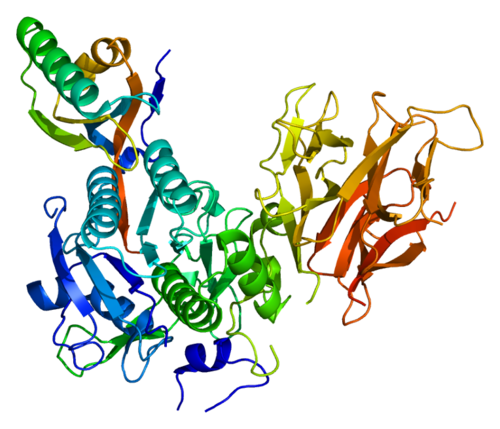
The discovery that loss-of-function mutations in PCSK9 conferred lifelong low LDL levels and markedly reduced coronary disease risk established the target before the drug existed. Carriers of inactivating PCSK9 mutations first identified in the Dallas Heart Study had LDL levels 28% lower than noncarriers and, in a separate cohort followed for 15 years, an 88% lower risk of coronary heart disease. Statins remained the primary tool for LDL lowering, but even maximally dosed statins typically reduced LDL by 50 to 60%, leaving many high-risk patients well above guideline targets. The human genetics data suggested that deeper, sustained reductions would be safe and beneficial.
FOURIER enrolled 27,564 patients with established atherosclerotic cardiovascular disease who were already on statin therapy and had LDL at or above 70 mg/dL. Marc Sabatine of Harvard Medical School and Brigham and Women's Hospital was principal investigator; Robert Giugliano was co-investigator and led the primary analysis. Participants were randomized to subcutaneous evolocumab every two or four weeks, or matching placebo. Over a median follow-up of 2.2 years, evolocumab reduced median LDL from 92 mg/dL at baseline to 30 mg/dL, a level previously unreached in a large outcome trial. The primary composite endpoint fell by 15%.
The most contested finding was that cardiovascular death did not differ significantly between groups. Whether 2.2 years of follow-up was long enough to reveal a mortality signal remained an open question, since atherosclerosis regression and plaque stabilization take years. The companion ODYSSEY OUTCOMES trial, reported at the 2018 ACC meeting, randomized 18,924 post-acute coronary syndrome patients to alirocumab and did show a reduction in all-cause mortality, partially resolving the concern. In FOURIER, secondary endpoint analyses showed that the relative risk reduction for MI and stroke grew over time, consistent with a delayed but accumulating atherosclerotic benefit.
Separately, the data reinforced that no floor existed in the LDL-cardiovascular risk relationship at levels tested in clinical trials. Participants in FOURIER who achieved LDL below 20 mg/dL had lower event rates than those in the 20 to 30 mg/dL range, with no apparent increase in adverse effects including neurocognitive dysfunction, hemorrhagic stroke, or new-onset diabetes. That finding directly challenged the notion of a lower threshold for safe LDL reduction, a question that had been prominent since earlier observational analyses suggested possible harm at very low levels.
PCSK9 inhibitors entered ACC/AHA and European Society of Cardiology guidelines as add-on therapy for very high-risk patients who remain above LDL targets despite maximally tolerated statin and ezetimibe. Uptake was initially limited by cost, with annual prices exceeding $14,000 in the United States, though manufacturer rebates and insurer negotiations brought effective costs down substantially by 2020. A small-interfering RNA agent, inclisiran, subsequently entered trials and practice as a twice-yearly subcutaneous alternative, silencing PCSK9 production in the liver rather than blocking the protein directly with an antibody.
Keep exploring
 Read next · built on
4S (Scandinavian Simvastatin Survival Study) (1994)
FOURIER added evolocumab to statins, whose life-saving value 4S had proved. The 4S entry shows simvastatin cutting deaths by 30 percent in coronary patients.
Read this moment
Read next · built on
4S (Scandinavian Simvastatin Survival Study) (1994)
FOURIER added evolocumab to statins, whose life-saving value 4S had proved. The 4S entry shows simvastatin cutting deaths by 30 percent in coronary patients.
Read this moment
 Today on The Clinical Times
Florida dengue outbreak appears to be largest in continental U.S. in decades
Florida has reported more than 250 locally acquired dengue cases this year, with most in Hillsborough County, according to state health officials.
Read today’s top stories
Today on The Clinical Times
Florida dengue outbreak appears to be largest in continental U.S. in decades
Florida has reported more than 250 locally acquired dengue cases this year, with most in Hillsborough County, according to state health officials.
Read today’s top stories
All 526 moments in the history of medicine. This one is in chapter 7, Genes and pandemics
Connected moments
How this moment links to others in the history of medicine, and what you will find in each.
-
 Same disease or problem2002Heart Protection Study (HPS)HPS showed benefit when LDL was already low, and FOURIER pushed it lower still with no floor in sight. The HPS entry shows simvastatin helping high-risk patients regardless of cholesterol.Read this moment
-
 Same disease or problem1973Brown, Goldstein and the LDL receptorBoth began with inherited differences in LDL, familial high cholesterol for Brown and Goldstein and protective PCSK9 mutations for FOURIER. Their entry shows the LDL receptor discovered in patients' skin cells.Read this moment
-
 Same disease or problem1987FDA approval of lovastatin, the first statin (HMG-CoA reductase inhibitor)Statins opened the era of drug LDL lowering, and PCSK9 antibodies added to it where statins fell short. The lovastatin entry shows the first statin approved in 1987.Read this moment