Cardiology
2015
SPRINT (Systolic Blood Pressure Intervention Trial)
In 9,361 high-risk non-diabetic adults, a systolic target below 120 mm Hg, compared with below 140, cut major cardiovascular events about 25% and all-cause death about 27%. The result drove the lower thresholds in the 2017 ACC/AHA guidelines.
Key people
- Paul Whelton
- Chair of SPRINT steering committee; helped draft 2017 ACC/AHA guidelines
- Jackson Wright
- First author of the 2015 SPRINT report
- Lawrence Fine
- Co-author of the 2015 SPRINT report
- William Cushman
- Co-author of the 2015 SPRINT report
Source
The 140/90 mmHg threshold had governed hypertension management for most of three decades. JNC 7 in 2003 reinforced it as the standard target for most adults, with a lower 130/80 goal for diabetics and patients with chronic kidney disease. Observational data had long suggested that cardiovascular risk continued to rise above 115 mmHg systolic without any clear inflection point, but randomized trials had not confirmed that targeting below 140 added benefit in broad populations. The ACCORD-BP trial, published in 2010, found no advantage of intensive control below 120 mmHg in diabetics, cooling enthusiasm for lower targets.
SPRINT was designed to test the question in a different population: adults aged 50 and older with elevated cardiovascular risk but without diabetes or prior stroke. The National Heart, Lung, and Blood Institute funded the trial across 102 clinical sites in the United States and Puerto Rico. Paul Whelton of Tulane University chaired the steering committee. Among the 9,361 participants randomized, half targeted systolic pressure below 120 mmHg (intensive arm) and half below 140 mmHg (standard arm). The intervention was stopped early in 2015, after a median follow-up of 3.26 years, because the intensive group had a 25% lower rate of major cardiovascular events (hazard ratio 0.75) and 27% lower all-cause mortality (hazard ratio 0.73). At one year, mean systolic pressure was 121.4 mm Hg in the intensive group and 136.2 mm Hg in the standard group.
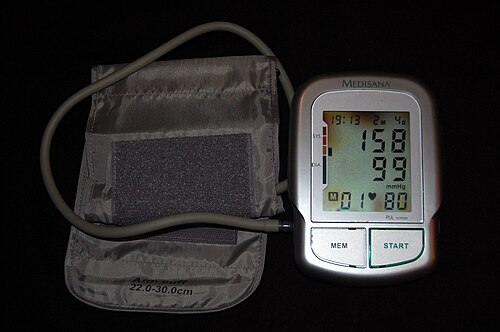
The results drew debate over how blood pressure had been measured. SPRINT used an automated office device after a rest period, at many sites with the patient left alone in the room, and readings taken that way tend to run lower than routine clinic measurements. The trial's 120 mm Hg target may therefore correspond to a higher reading in ordinary practice, which made direct comparison with other trials difficult.
A second limitation was the exclusion of people with diabetes, the population ACCORD-BP had studied, and of people with prior stroke. SPRINT's population was older, with a mean age of 68, and nearly 30% had chronic kidney disease at baseline. Serious adverse events of hypotension, syncope, electrolyte abnormalities and acute kidney injury, though not injurious falls, were more frequent in the intensive arm.
Despite those caveats, the 2017 ACC/AHA hypertension guidelines drew on SPRINT in setting a new 130/80 threshold, replacing the old 140/90 standard for most adults; Paul Whelton was first author of the guideline. Jackson Wright was first author of the SPRINT report. The guideline change reclassified tens of millions of Americans as hypertensive and generated ongoing controversy about whether widespread treatment at lower thresholds would translate to the same risk-benefit profile seen in the controlled trial.
Keep exploring
 Read next · same disease or problem
ACCORD (2008)
ACCORD's blood pressure arm found no gain from very low targets in diabetics, which SPRINT's result in people without diabetes challenged. The ACCORD entry shows its glucose arm halted for excess deaths.
Read this moment
Read next · same disease or problem
ACCORD (2008)
ACCORD's blood pressure arm found no gain from very low targets in diabetics, which SPRINT's result in people without diabetes challenged. The ACCORD entry shows its glucose arm halted for excess deaths.
Read this moment
 Today on The Clinical Times
Florida dengue outbreak appears to be largest in continental U.S. in decades
Florida has reported more than 250 locally acquired dengue cases this year, with most in Hillsborough County, according to state health officials.
Read today’s top stories
Today on The Clinical Times
Florida dengue outbreak appears to be largest in continental U.S. in decades
Florida has reported more than 250 locally acquired dengue cases this year, with most in Hillsborough County, according to state health officials.
Read today’s top stories
All 526 moments in the history of medicine. This one is in chapter 7, Genes and pandemics
Connected moments
How this moment links to others in the history of medicine, and what you will find in each.
- Built on1967VA Cooperative Study of antihypertensive treatmentThe VA trial first proved that treating high blood pressure prevents harm, and SPRINT asked how low to go. The VA entry shows 27 serious complications on placebo against 2 on treatment.Read this moment
-
 Same disease or problem1896Riva-Rocci's cuff sphygmomanometerSPRINT drew debate over how blood pressure was measured, since its automated readings ran lower than routine ones. Riva-Rocci's entry shows the arm cuff that became the standard way to measure.Read this moment
-
 Same disease or problem2000HOPE (Heart Outcomes Prevention Evaluation)HOPE raised the question of how much benefit comes from lowering blood pressure, and SPRINT tested lower targets directly. The HOPE entry shows ramipril protecting high-risk patients.Read this moment