Cardiology
2003
Primary PCI versus thrombolysis for acute STEMI (Keeley meta-analysis of 23 trials)
Pooling 23 trials in 7,739 STEMI patients, primary angioplasty beat thrombolysis on short-term death (7% vs 9%), reinfarction, and stroke. The benefit held even when patients had to be transferred to another hospital for the procedure.
Key people
- Ellen Keeley
- University of Texas Southwestern Medical Center, Dallas; first author of the 2003 meta-analysis
- Judith Boura
- Co-author of the 2003 meta-analysis
- Cindy Grines
- Senior author of the 2003 meta-analysis
Source
Through the 1980s and 1990s, thrombolytic therapy with agents like streptokinase and tissue plasminogen activator had changed the care of acute STEMI, reducing mortality and limiting infarct size compared with conservative management. Primary percutaneous coronary intervention, opening the culprit artery mechanically, was available at catheterization-capable hospitals but required equipment, staffing, and activation infrastructure that most centers did not have around the clock. Individual trials comparing the two strategies had shown trends favoring PCI, but most were too small to demonstrate a mortality benefit with confidence, and no single trial settled the question.
Ellen Keeley of the University of Texas Southwestern Medical Center in Dallas, with Judith Boura and Cindy Grines, pooled the published results of 23 randomized trials that had compared primary PCI with thrombolytic therapy in 7,739 STEMI patients. The meta-analysis, published in the Lancet in early 2003, found short-term mortality of 7% with PCI versus 9% with thrombolytics. Non-fatal reinfarction occurred in 3% of PCI patients compared with 7% of the thrombolytic group; stroke in 1% versus 2%. The advantage held whether the comparison drug was streptokinase, used in 8 trials, or a fibrin-specific agent, used in 15.
The pooled sample size gave the analysis statistical power that no individual trial could match, and the consistency across different thrombolytic comparators answered the objection that the control arm varied. The authors ran every analysis with and without the SHOCK trial of patients in cardiogenic shock, and looked separately at trials in which patients were transferred to another hospital for angioplasty, which bore on whether the benefit survived the delay. It did, and it persisted in long-term follow-up.
Cardiology guidelines came to prefer primary PCI for STEMI wherever it could be delivered within an acceptable time window, and by 2006 they recommended a door-to-balloon time of 90 minutes or less, a target few hospitals then met. Door-to-balloon time became a quality measure that hospitals reported to the Centers for Medicare and Medicaid Services, and the national median fell from 96 minutes in 2005 to 64 minutes in 2010. Regional transfer protocols developed to move STEMI patients from non-PCI hospitals to catheterization centers became standard in most developed health systems.
States and regions built spoke-and-hub networks with direct-transfer agreements, pre-hospital ECG programs, and cath lab activation by emergency medical services before patient arrival. A 2006 survey of 365 hospitals found that activating the catheterization laboratory while the patient was still en route cut door-to-balloon time by an average of 15.4 minutes, and a single call to a central page operator cut it by 13.8 minutes.
Keep exploring
 Read next · same disease or problem
GISSI-1 (Effectiveness of intravenous thrombolytic treatment in acute myocardial infarction) (1986)
Thrombolysis proved itself in GISSI-1, and the Keeley analysis showed opening the artery mechanically did better. The GISSI-1 entry shows streptokinase cutting heart attack deaths.
Read this moment
Read next · same disease or problem
GISSI-1 (Effectiveness of intravenous thrombolytic treatment in acute myocardial infarction) (1986)
Thrombolysis proved itself in GISSI-1, and the Keeley analysis showed opening the artery mechanically did better. The GISSI-1 entry shows streptokinase cutting heart attack deaths.
Read this moment
 Today on The Clinical Times
Florida dengue outbreak appears to be largest in continental U.S. in decades
Florida has reported more than 250 locally acquired dengue cases this year, with most in Hillsborough County, according to state health officials.
Read today’s top stories
Today on The Clinical Times
Florida dengue outbreak appears to be largest in continental U.S. in decades
Florida has reported more than 250 locally acquired dengue cases this year, with most in Hillsborough County, according to state health officials.
Read today’s top stories
All 526 moments in the history of medicine. This one is in chapter 7, Genes and pandemics
Connected moments
How this moment links to others in the history of medicine, and what you will find in each.
- Built on1977Grüntzig's coronary balloon angioplastyPrimary angioplasty uses the balloon technique Grüntzig first used in 1977. His entry shows a coronary artery widened in an awake patient in Zurich.Read this moment
-
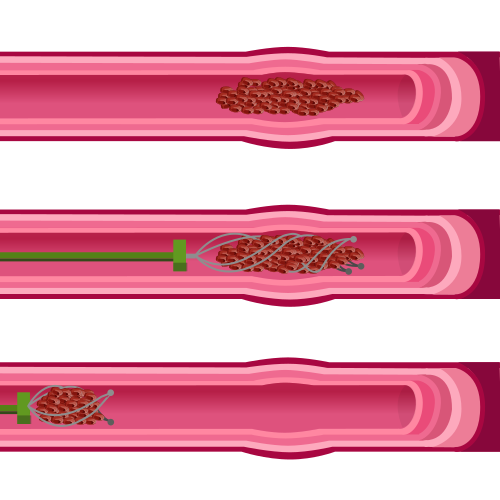 Same disease or problem2015Endovascular thrombectomy trials (MR CLEAN and HERMES)In both the heart and the brain, opening the blocked vessel mechanically proved better than drugs alone. The MR CLEAN entry shows clot removal reducing disability after large-vessel stroke.Read this moment
-
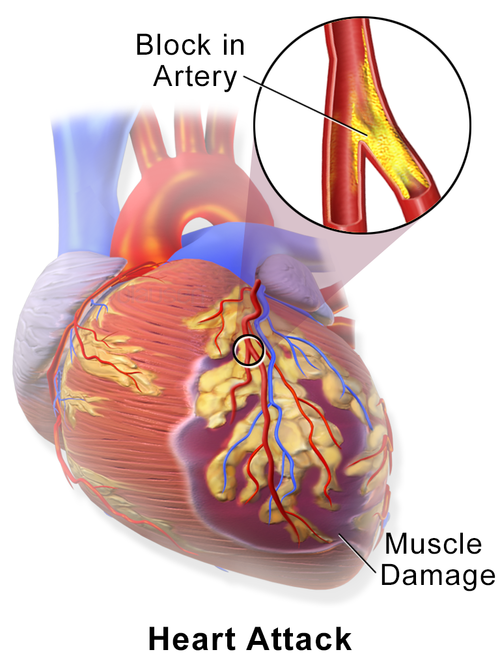 Same disease or problem1976Large simple trials and trial overviews (Peto and colleagues)Keeley answered the question by pooling 23 trials too small to settle it alone, the overview approach the Oxford group championed. The 1976 entry shows the case for combining all relevant trials.Read this moment