Endocrinology
2016
LEADER
First trial to show a GLP-1 receptor agonist lowers cardiovascular events in high-risk type 2 diabetics. Liraglutide cut the composite endpoint and cardiovascular death, moving the class into diabetes guidelines for patients with heart disease.

Key people
- Steven Marso
- First author; designed and ran the LEADER outcomes trial
- John Buse
- Senior investigator; helped translate results into guideline recommendations
- Steven Nissen
- LEADER co-investigator; his 2007 rosiglitazone meta-analysis led to the FDA's 2008 safety mandate
- Michael Nauck
- GLP-1 pharmacology expert; contributed to mechanistic interpretation
Source
In 2008, the FDA issued guidance requiring all manufacturers of new glucose-lowering drugs to demonstrate cardiovascular safety before and after approval. The requirement followed evidence that rosiglitazone, a widely used thiazolidinedione, increased myocardial infarction risk. What regulators asked for was non-inferiority, not superiority. The assumption embedded in the requirement was that newer agents would at best do no harm. The GLP-1 receptor agonist class, which had been introduced for its incretin-based glucose lowering and modest weight loss, had not been expected to improve cardiovascular outcomes.
LEADER enrolled 9,340 adults with type 2 diabetes and high cardiovascular risk across 410 sites in 32 countries. Participants were randomized to once-daily subcutaneous liraglutide 1.8 mg or matching placebo and followed for a median of 3.8 years. Steven Marso of the HCA Midwest Health Heart and Vascular Institute was the first author, and John Buse of the University of North Carolina was a senior investigator. The primary endpoint, a three-point MACE composite of cardiovascular death, nonfatal myocardial infarction, and nonfatal stroke, was reduced by 13% in the liraglutide arm. Cardiovascular death alone fell by 22%.
The trial achieved superiority, not just non-inferiority, separating it clearly from the neutral results of saxagliptin in SAVOR-TIMI 53 and alogliptin in EXAMINE. An earlier GLP-1 trial, ELIXA with lixisenatide, had been neutral, making LEADER's positive result class-specific rather than universal. The benefit signal for liraglutide appeared driven primarily by the atherosclerotic component, cardiovascular death and MI, rather than heart failure hospitalization, a contrast with EMPA-REG OUTCOME, published the year before.
Debate about mechanism centered on whether liraglutide's benefit reflected direct cardiac effects, the drug's anti-inflammatory properties, weight loss, blood pressure reduction, or favorable effects on lipids and renal function. The drug produced modest but consistent reductions in systolic pressure, HbA1c, body weight, and albuminuria across the trial population. Parsing which of those effects drove the mortality reduction proved difficult, as liraglutide affected all of them simultaneously.
The American Diabetes Association responded by revising its Standards of Medical Care algorithm in subsequent years, listing liraglutide and other agents with proven cardiovascular benefit as preferred second-line therapy for patients with established atherosclerotic cardiovascular disease, independent of their glucose-lowering effect. That positioning, based on outcomes data rather than HbA1c reduction, represented a change in how diabetes medications were categorized and selected. Later trials of semaglutide, dulaglutide, and albiglutide extended the cardiovascular benefit further across the GLP-1 class, though results were not uniform.
Keep exploring
 Read next · same disease or problem
EMPA-REG OUTCOME (2015)
A year after EMPA-REG, LEADER showed a second drug class cutting cardiovascular death in type 2 diabetes, through a different pattern of benefit. The EMPA-REG entry shows heart failure hospitalization falling by 35 percent.
Read this moment
Read next · same disease or problem
EMPA-REG OUTCOME (2015)
A year after EMPA-REG, LEADER showed a second drug class cutting cardiovascular death in type 2 diabetes, through a different pattern of benefit. The EMPA-REG entry shows heart failure hospitalization falling by 35 percent.
Read this moment
 Today on The Clinical Times
Florida dengue outbreak appears to be largest in continental U.S. in decades
Florida has reported more than 250 locally acquired dengue cases this year, with most in Hillsborough County, according to state health officials.
Read today’s top stories
Today on The Clinical Times
Florida dengue outbreak appears to be largest in continental U.S. in decades
Florida has reported more than 250 locally acquired dengue cases this year, with most in Hillsborough County, according to state health officials.
Read today’s top stories
All 526 moments in the history of medicine. This one is in chapter 7, Genes and pandemics
Connected moments
How this moment links to others in the history of medicine, and what you will find in each.
-
 Same disease or problem2023SELECT (Semaglutide Cardiovascular Outcomes in Obesity)LEADER proved a GLP-1 drug protects the heart in diabetes, and SELECT showed the same for people with obesity but no diabetes. The SELECT entry shows cardiovascular events cut by 20 percent.Read this moment
-
 Same disease or problem2021STEP 1 (Semaglutide for Obesity)GLP-1 drugs began as diabetes treatments with modest weight loss, and STEP-1 showed large weight loss in people without diabetes. The STEP-1 entry shows about 15 percent average weight loss.Read this moment
-
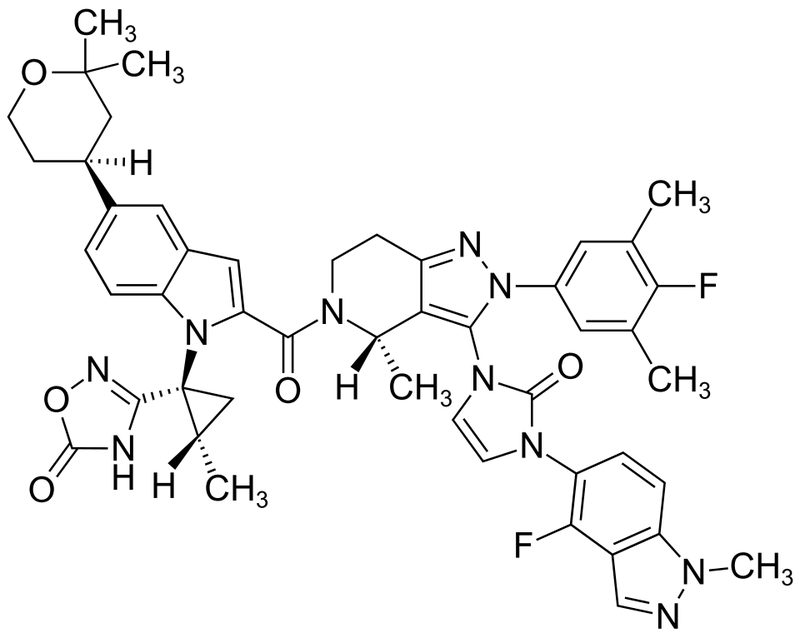 Same disease or problem2026Orforglipron, a small-molecule GLP-1 pillLiraglutide was a daily injection, and orforglipron brought the GLP-1 approach to a pill. The orforglipron entry shows a small molecule approved for obesity in 2026.Read this moment