Reproductive Health
1997
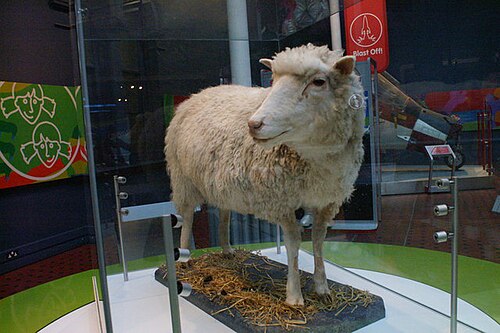
Dolly the Cloned Sheep
Wilmut's team cloned a sheep from an adult mammary cell, showing that the nucleus of an adult cell could still direct the development of a whole animal. Dolly also set off a public argument over human cloning.
Key people
- Ian Wilmut
- Lead researcher at the Roslin Institute who directed the cloning experiment
- Keith Campbell
- Cell biologist and first author of the 1996 paper on Megan and Morag that introduced the serum-starvation method
- Angelika Schnieke
- Co-author of the Dolly paper and lead author of the 1997 report on Polly, a cloned lamb carrying a human clotting-factor gene
- Alexander Kind
- Co-author of the 1997 Nature paper reporting Dolly
Source
The prevailing view in developmental biology through most of the twentieth century held that cellular differentiation was a one-way process. Once a cell committed to becoming a mammary epithelial cell, its nucleus was thought to be permanently altered, with the genes needed to build a whole animal switched off or lost. In 1962 John Gurdon had put the nucleus of a mature intestinal cell into a frog egg and obtained a normal tadpole, but no mammal had been cloned from an adult cell. Ian Wilmut's team at the Roslin Institute near Edinburgh set out to test that assumption using sheep.
The approach depended on a method Keith Campbell had used in 1996 to clone the lambs Megan and Morag from cultured embryo cells: starving donor cells of serum so they became quiescent before nuclear transfer, which the group suggested might modify the chromatin and help reprogramming. Nuclei from mammary gland cells of a six-year-old Finn Dorset ewe were transferred into enucleated Scottish Blackface oocytes. Of 277 reconstructed embryos, one produced a live lamb. Dolly was born on July 5, 1996, at the Roslin Institute. Her birth was not made public until late February 1997, and the Nature paper appeared on February 27.
The paper concluded only that the adult cell's differentiation had not involved irreversible changes to the genetic material needed for development to term. If an adult nucleus still held everything needed to build a whole animal, the changes that come with specialization could be reversed, at least under the right conditions. A year after Dolly's birth, Angelika Schnieke and colleagues produced Polly, a cloned lamb carrying the human gene for clotting factor IX.
The public and political response was rapid and intense. On February 24, 1997, the day the news was reported in the United States, President Clinton asked the National Bioethics Advisory Commission to report within 90 days, and a week later he barred federal funding for attempts to clone human beings. Scientists working on the basic biology found themselves fielding questions about therapeutic and reproductive cloning in humans, which the Roslin researchers had not pursued. In June the commission advised keeping the moratorium and passing a federal law against creating children this way.
Dolly was diagnosed with arthritis in 2001 and later developed lung tumors caused by JSRV, a retrovirus that had infected other Roslin sheep in the same outbreak; she was put to sleep on February 14, 2003, at the age of six. Her telomeres were shorter than those of normal sheep of the same age, which fed talk of premature aging, but a 2016 study of 13 cloned sheep aged 7 to 9, four of them from Dolly's cell line, found no obvious long-term harm from cloning. In 2006 Shinya Yamanaka's group turned mouse embryonic and adult fibroblasts into pluripotent stem cells with four factors, and in 2012 Yamanaka shared the Nobel Prize in Physiology or Medicine with John Gurdon.
Keep exploring
 Read next · same disease or problem
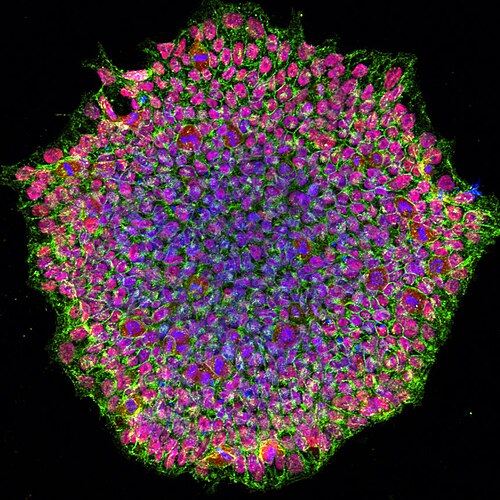
Induced Pluripotent Stem Cells (iPSCs) (2006)
Dolly showed an adult cell's nucleus could be reprogrammed, and Yamanaka later did it with four genes and no egg. The iPSC entry shows patient-matched stem cells made without embryos.
Read this moment
Read next · same disease or problem
Induced Pluripotent Stem Cells (iPSCs) (2006)
Dolly showed an adult cell's nucleus could be reprogrammed, and Yamanaka later did it with four genes and no egg. The iPSC entry shows patient-matched stem cells made without embryos.
Read this moment
 Today on The Clinical Times
Florida dengue outbreak appears to be largest in continental U.S. in decades
Florida has reported more than 250 locally acquired dengue cases this year, with most in Hillsborough County, according to state health officials.
Read today’s top stories
Today on The Clinical Times
Florida dengue outbreak appears to be largest in continental U.S. in decades
Florida has reported more than 250 locally acquired dengue cases this year, with most in Hillsborough County, according to state health officials.
Read today’s top stories
All 526 moments in the history of medicine. This one is in chapter 6, Trials, scanners and rights
Connected moments
How this moment links to others in the history of medicine, and what you will find in each.
-
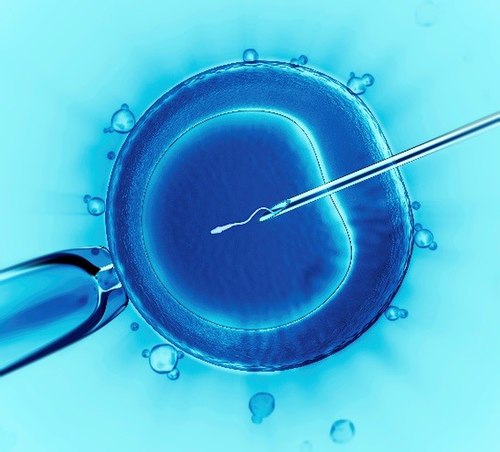 Same disease or problem1978Birth of Louise Brown: First Baby Conceived by In Vitro FertilizationBoth created new life from cells handled in the laboratory, and both set off public argument over where to stop. The IVF entry shows the birth of Louise Brown after years of failed attempts.Read this moment
-
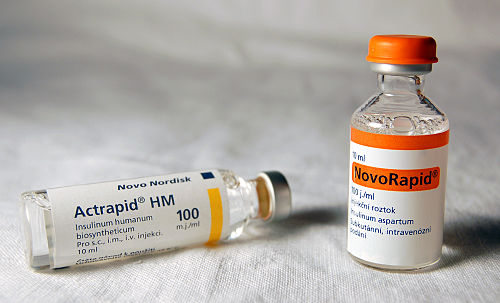 Same disease or problem1978Recombinant Human Insulin (synthesis of the gene)Dolly's team followed with Polly, a cloned lamb carrying a human clotting factor gene, much as bacteria had been made to produce human insulin. The 1978 entry shows synthetic insulin genes put to work in bacteria.Read this moment