Reproductive Health
2002
Magpie Trial: Magnesium Sulfate for Pre-eclampsia
Across 10,141 women in 33 countries, magnesium sulfate cut the risk of eclampsia by 58% with no clear short-term harm to mother or baby. WHO now names it the primary treatment for preventing seizures in pre-eclampsia.

Key people
- Lelia Duley
- Led the Magpie Trial from its co-ordinating centre in Oxford
- Douglas Altman
- Statistician, Centre for Statistics in Medicine, Oxford; Magpie writing committee
- A. Metin Gulmezoglu
- Co-author with Duley of the Cochrane reviews of magnesium sulfate for pre-eclampsia and eclampsia
Source
For decades, obstetricians disagreed about which drug should be used against eclamptic seizures. North American units favored magnesium sulfate on the strength of clinical experience, with little trial evidence behind it, while much of Europe and the developing world used phenytoin or diazepam. In 1995 the Collaborative Eclampsia Trial of 1,687 women showed that, once a woman had fitted, magnesium sulfate cut recurrent convulsions by 52% compared with diazepam and by 67% compared with phenytoin. Whether it should be given to women with pre-eclampsia, before any seizure, had not been tested against placebo on a large scale. Pre-eclampsia complicates 2 to 8% of pregnancies and accounts for about a tenth of maternal deaths.
The Magpie Trial, coordinated from Oxford under Lelia Duley, randomized 10,141 women with pre-eclampsia at 175 hospitals across 33 countries to intravenous magnesium sulfate or placebo. Recruitment ran from 1998 to 2001 at hospitals in sub-Saharan Africa, South Asia, Latin America and higher-income countries. Douglas Altman of the Centre for Statistics in Medicine in Oxford was on the writing committee.
Eclampsia occurred in 0.8% of women given magnesium sulfate and 1.9% of those given placebo, a relative reduction of 58%, or 11 fewer women with eclampsia per 1,000 treated. Maternal mortality was lower in the treatment arm, though the trial was not large enough to achieve statistical significance for that endpoint. There was no clear difference in the risk of the baby dying, and side effects were reported by 24% of women given magnesium sulfate and 5% of those given placebo.
The results appeared in the Lancet in June 2002. WHO guidance came to recommend magnesium sulfate over other anticonvulsants, and its fact sheet on pre-eclampsia now calls it the primary treatment for preventing seizures. In the United Kingdom, a national survey in 2005 and 2006 found that 99% of women with eclampsia were treated with magnesium sulfate.
Because the trial had been conducted in low-resource facilities alongside tertiary centers, it answered the practical objection that magnesium sulfate required intensive monitoring beyond what rural hospitals could provide. The same UK survey found eclampsia had fallen to 2.7 cases per 10,000 births, significantly fewer than in 1992. Magnesium sulfate has been on the WHO Model List of Essential Medicines for eclampsia and severe pre-eclampsia since 1995, but WHO reports that its use is still limited in many low-resource settings.
Keep exploring
 Read next · same disease or problem
ASPRE Trial: Aspirin for Prevention of Preterm Pre-eclampsia (2017)
Magpie prevented seizures in women with pre-eclampsia, and ASPRE tried to prevent pre-eclampsia itself. The ASPRE entry shows early aspirin cutting preterm pre-eclampsia from 4.3 to 1.6 percent.
Read this moment
Read next · same disease or problem
ASPRE Trial: Aspirin for Prevention of Preterm Pre-eclampsia (2017)
Magpie prevented seizures in women with pre-eclampsia, and ASPRE tried to prevent pre-eclampsia itself. The ASPRE entry shows early aspirin cutting preterm pre-eclampsia from 4.3 to 1.6 percent.
Read this moment
 Today on The Clinical Times
Florida dengue outbreak appears to be largest in continental U.S. in decades
Florida has reported more than 250 locally acquired dengue cases this year, with most in Hillsborough County, according to state health officials.
Read today’s top stories
Today on The Clinical Times
Florida dengue outbreak appears to be largest in continental U.S. in decades
Florida has reported more than 250 locally acquired dengue cases this year, with most in Hillsborough County, according to state health officials.
Read today’s top stories
All 526 moments in the history of medicine. This one is in chapter 7, Genes and pandemics
Connected moments
How this moment links to others in the history of medicine, and what you will find in each.
-
 Built on1995Collaborative Eclampsia Trial: Magnesium Sulfate for EclampsiaThe 1995 trial proved magnesium sulfate best once seizures had begun, and Magpie tested whether it could prevent them. The 1995 entry shows magnesium beating diazepam and phenytoin for eclampsia.Read this moment
-
 Same disease or problem2017WOMAN Trial: Tranexamic Acid for Postpartum HemorrhageBoth were huge international trials that tested a cheap drug against a leading cause of maternal death. The WOMAN entry shows tranexamic acid reducing death from bleeding after childbirth.Read this moment
-
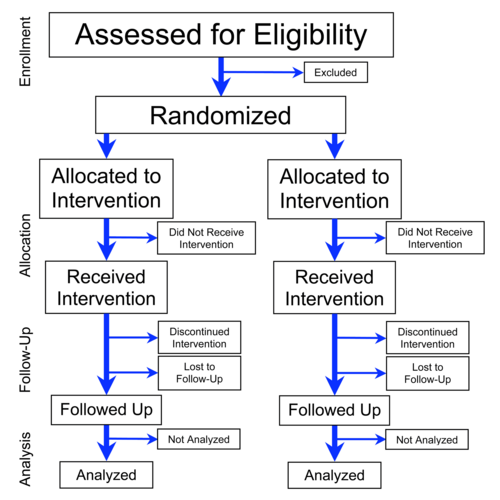 Same person1996CONSORT StatementDouglas Altman, a statistician on Magpie's writing committee, also co-wrote later versions of the CONSORT rules for reporting trials. The CONSORT entry shows the checklist that journals came to require.Read this moment