Reproductive Health
1992
Czeizel & Dudas: Folic Acid Prevents First-Occurrence Neural Tube Defects
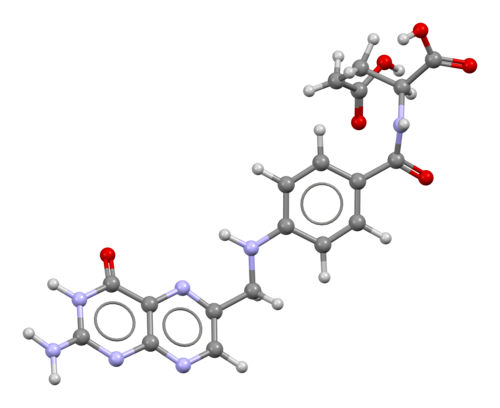
A randomized trial in Hungarian women planning a pregnancy found no neural tube defects among those given a folic acid-containing multivitamin, against six in those given trace elements. With the 1991 MRC recurrence trial, it set the case for supplementation and food fortification.
Key people
- Andrew Czeizel
- Hungarian geneticist who led the randomized primary-prevention trial
- Istvan Dudas
- Co-investigator on the Budapest folic acid trial
- Nicholas Wald
- Led the 1991 MRC recurrence trial that preceded Czeizel's primary prevention trial
Source
After the MRC Vitamin Study reported in 1991 that periconceptional folic acid reduced recurrence of neural tube defects in women with a previously affected pregnancy, a gap remained. Recurrence was rare enough that secondary prevention addressed only a small fraction of all NTD cases. Most were first occurrences, in women who had no warning from a prior pregnancy and no specific reason to take supplementary folate. Whether folic acid could prevent these first-occurrence defects had never been tested in a properly controlled trial.
Andrew Czeizel, a Hungarian geneticist working in Budapest, and his co-investigator Istvan Dudas designed a randomized trial specifically for this group. Women planning a pregnancy, in most cases their first, were randomly assigned to a daily tablet containing 12 vitamins, including 0.8 mg of folic acid, plus minerals and trace elements, or to a trace-element tablet of copper, manganese, zinc and a very low dose of vitamin C. They took it for at least a month before conception and until at least the second missed menstrual period, covering the weeks when the neural tube closes.
Pregnancy was confirmed in 4,753 women, and outcomes were known for 2,104 in the vitamin group and 2,052 in the trace-element group. There were no neural tube defects in the vitamin group and six in the trace-element group (P = 0.029). Congenital malformations overall were also less common with the vitamins (13.3 against 22.9 per 1,000), although cleft lip and palate were not reduced.
The Czeizel and Dudas paper appeared in the New England Journal of Medicine in December 1992. Together with the MRC recurrence trial, it gave regulators the two-sided evidence base they needed: folic acid prevented NTDs both in women at elevated recurrence risk and in the general population of women entering their first pregnancy. What the two trials supplied was clinical proof; exactly how folate protects the closing neural tube was not understood.
Following recommendations from the CDC and the US Public Health Service that dated to 1992, the United States mandated folic acid fortification of enriched grain products in 1998. Surveillance data after fortification showed the prevalence of spina bifida and anencephaly in the United States fell by 28 percent overall, with about 1,326 affected births averted each year. Other countries adopted similar fortification programs in the following decades.
Keep exploring
 Read next · same disease or problem
Gregg's discovery of congenital rubella (1941)
Both concern birth defects arising in early pregnancy, one prevented by a vitamin and one caused by an infection. Gregg's entry shows how babies with cataracts led him to rubella in their mothers.
Read this moment
Read next · same disease or problem
Gregg's discovery of congenital rubella (1941)
Both concern birth defects arising in early pregnancy, one prevented by a vitamin and one caused by an infection. Gregg's entry shows how babies with cataracts led him to rubella in their mothers.
Read this moment
 Today on The Clinical Times
Florida dengue outbreak appears to be largest in continental U.S. in decades
Florida has reported more than 250 locally acquired dengue cases this year, with most in Hillsborough County, according to state health officials.
Read today’s top stories
Today on The Clinical Times
Florida dengue outbreak appears to be largest in continental U.S. in decades
Florida has reported more than 250 locally acquired dengue cases this year, with most in Hillsborough County, according to state health officials.
Read today’s top stories
All 526 moments in the history of medicine. This one is in chapter 6, Trials, scanners and rights
Connected moments
How this moment links to others in the history of medicine, and what you will find in each.
-
 Built on1991MRC Vitamin Study: Folic Acid Prevents Neural Tube Defect RecurrenceThe MRC trial had proved folic acid prevents repeat neural tube defects, leaving first occurrences untested. The MRC entry shows a 72 percent lower recurrence risk in women given folic acid.Read this moment
- Same disease or problem1924Iodized salt and the prevention of goiterBoth led to fortifying a staple food for the whole population, grain with folic acid and salt with iodine. The iodized salt entry shows goiter falling sharply after 1924.Read this moment