Reproductive Health
1958
Diagnostic medical ultrasound for obstetrics and abdominal masses (Donald)
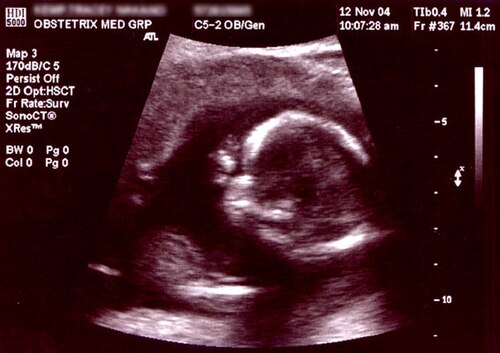
Donald, MacVicar, and Brown showed pulsed ultrasound could tell solid from cystic abdominal masses and image the fetus, giving obstetrics a diagnostic tool that used no ionizing radiation.
Key people
- Ian Donald
- Obstetrician who pioneered clinical ultrasound applications in Glasgow.
- Tom Brown
- Engineer who built the adapted ultrasound scanner Donald used.
- John MacVicar
- Co-author who contributed clinical cases and analysis to the 1958 Lancet paper.
- Stuart Campbell
- Donald's former registrar who in 1968 described measuring the fetal head with ultrasound and in 1972 reported diagnosing anencephaly at 17 weeks.
Source
When Ian Donald became Regius Professor of Midwifery at the University of Glasgow in 1954, the available tools for diagnosing abdominal masses were limited to clinical examination, plain radiography, and, where available, pneumoperitoneum contrast studies. None could distinguish a solid tumor from a fluid-filled cyst without invasive intervention, and none could safely image a pregnant uterus with any anatomical detail. Donald had become familiar with sonar while serving in the Royal Air Force, and he suspected that pulsed ultrasound, used in industry to find flaws in metal, might work in medicine.
In 1955 the husband of a grateful patient introduced Donald to the industrial firm Babcock and Wilcox, which used ultrasound to detect flaws in metal. On a follow-up visit he tried a flaw detector on uterine fibroids, an ovarian cyst and a large steak. His practical collaborator became Tom Brown, a young engineer at the instrument firm Kelvin and Hughes, who adapted two-dimensional scanning and built a bed-table scanner that touched the skin through a film of olive oil instead of a column of water. Donald, Brown and the registrar John MacVicar spent the next years scanning patients and learning to read the echoes. Their June 1958 paper in the Lancet covered the physics of the method, safety experiments, and scans of gynecological tumors, pregnancy and the fetus, including the first ultrasound image of a fetal head.
Pregnancy was not the team's first target. A nurse, Marjorie Marr, was the first to recognize the fetus, having taught herself to pick out echoes from the fetal skull. Donald satisfied himself about safety with experiments on kittens' brains at diagnostic intensities. Unlike X-ray pelvimetry, ultrasound used no ionizing radiation, could be repeated as often as clinically needed, and returned results immediately.
The 1958 images were crude: two-dimensional but static, built up slowly as the operator rocked the probe across the abdomen, and bistable, with no shades of gray. Gray-scale display came after Kossoff invented the scan converter in the late 1960s. Stuart Campbell, one of Donald's registrars, described in 1968 how to measure the fetal head with ultrasound, which made dating and growth charts possible, and in 1972 he and his colleagues reported diagnosing anencephaly at 17 weeks.
Standard antenatal ultrasound now covers gestational dating, placental localization, amniotic fluid assessment, and fetal anomaly screening at 18 to 20 weeks. Campbell, writing in 2013, dated every later development in obstetric and gynecologic sonography to the 1958 Lancet paper.
Keep exploring
 Read next · same disease or problem
Alice Stewart and prenatal X-rays (1956)
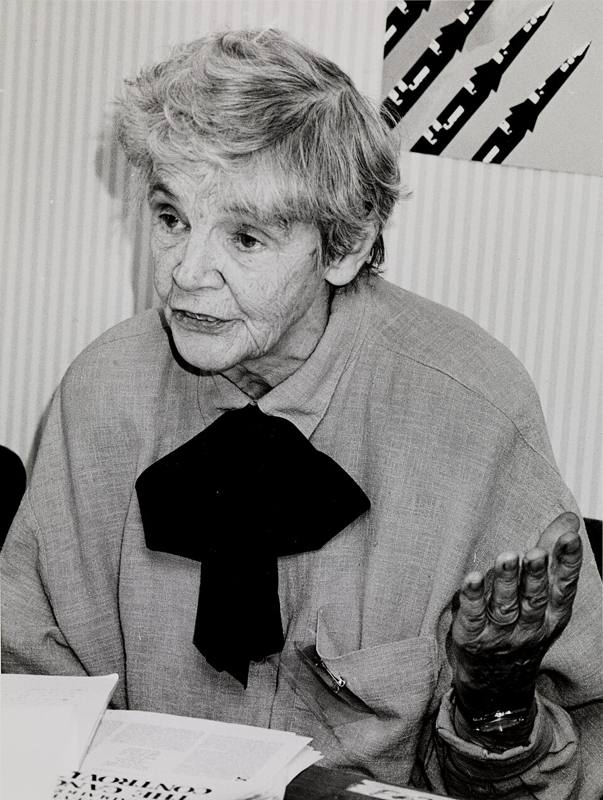
Stewart tied prenatal X-rays to childhood cancer, while Donald's ultrasound imaged the fetus without ionizing radiation. Her Oxford survey shows how that disputed finding led to far less X-raying in pregnancy.
Read this moment
Read next · same disease or problem
Alice Stewart and prenatal X-rays (1956)
Stewart tied prenatal X-rays to childhood cancer, while Donald's ultrasound imaged the fetus without ionizing radiation. Her Oxford survey shows how that disputed finding led to far less X-raying in pregnancy.
Read this moment
 Today on The Clinical Times
Florida dengue outbreak appears to be largest in continental U.S. in decades
Florida has reported more than 250 locally acquired dengue cases this year, with most in Hillsborough County, according to state health officials.
Read today’s top stories
Today on The Clinical Times
Florida dengue outbreak appears to be largest in continental U.S. in decades
Florida has reported more than 250 locally acquired dengue cases this year, with most in Hillsborough County, according to state health officials.
Read today’s top stories
All 526 moments in the history of medicine. This one is in chapter 5, Cures and codes
Connected moments
How this moment links to others in the history of medicine, and what you will find in each.
-
 Same disease or problem1973Lauterbur's NMR imaging (zeugmatography), origin of MRIUltrasound and MRI both look inside the body without ionizing radiation, one with echoes and one with magnetic fields. Lauterbur's entry shows how field gradients turned NMR signals into images and led to MRI.Read this moment
-
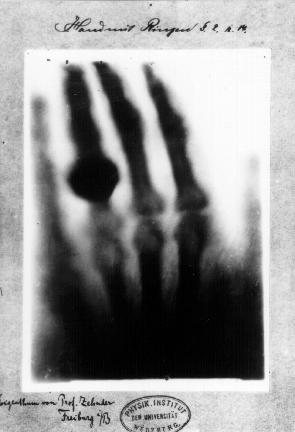 Same disease or problem1895Roentgen's discovery of X-raysX-rays first let doctors see inside a living patient, and ultrasound later did it without radiation. Roentgen's entry shows the 1895 discovery that started diagnostic radiology and won the first Nobel Prize in Physics.Read this moment