Foundational Discovery
1861
Pasteur's refutation of spontaneous generation
Pasteur boiled broth in swan-neck flasks: it stayed sterile while open to air but spoiled once airborne dust reached it. The result showed that microbes in the broth came from other microbes, and Joseph Lister later built antiseptic surgery on it.
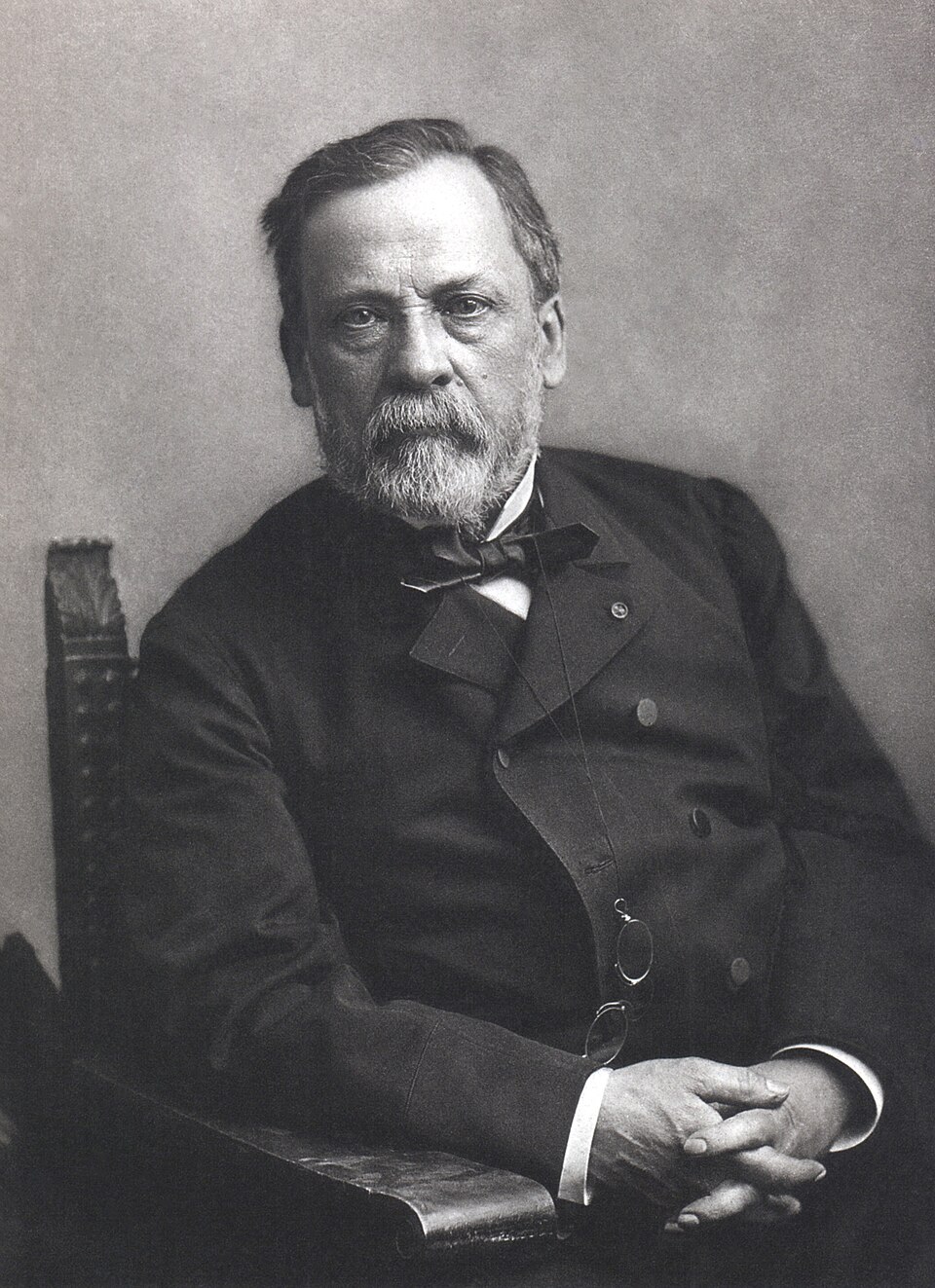
Key people
- Louis Pasteur
- French chemist who ran the swan-neck flask experiment disproving spontaneous generation
- Felix Pouchet
- French naturalist whose spontaneous generation claims Pasteur's experiments directly refuted
- Antoine-Jerome Balard
- Chemist who conceived the swan-neck flask experiment
- Joseph Lister
- Applied Pasteur's findings to surgery from 1865 and published his antiseptic method in 1867
Source
By the mid-nineteenth century, naturalists had argued for centuries over spontaneous generation, an idea that went back to Aristotle. The question mattered practically as well as philosophically: if microorganisms could arise from non-living matter, then sterilized food or surgical wounds might become contaminated regardless of precautions. Felix Pouchet, a French naturalist, had published new experiments in 1859 claiming to demonstrate spontaneous generation in carefully prepared broths, and in 1860 the Academie des Sciences offered its Alhumbert prize for experiments that could settle the matter. Louis Pasteur, then studying fermentation at the Ecole Normale Superieure in Paris, entered the contest.
The flask design came from the chemist Antoine-Jerome Balard, who had brought Pasteur into his laboratory at the Ecole Normale. Pasteur boiled broth in glass flasks fitted with long necks that he had drawn out and bent into S-shaped curves. Air could pass freely in and out of the flask, answering the objection that spontaneous generation required contact with air. But the curved neck caused airborne dust and microorganisms to settle in the bend before reaching the liquid. The broth remained clear and sterile indefinitely. When Pasteur broke the neck off a flask or tilted it so the trapped fluid in the bend flowed back into the broth, the liquid clouded within days as microbes grew.
He published the results in the Annales des Sciences Naturelles in 1861, and in December 1862 the Academie des Sciences awarded him the Alhumbert prize for the work. The experiments showed that microbial growth in the broth required microorganisms from outside, and that keeping those organisms out was enough to prevent putrefaction. The implication for medicine was direct: if microbes caused decomposition and, by extension, infection, then blocking their access to wounds or surgical fields should prevent sepsis.
In 1865 the Glasgow chemist Thomas Anderson pointed the surgeon Joseph Lister to Pasteur's work. Lister drew that conclusion and began applying carbolic acid to compound fractures at Glasgow Royal Infirmary the same year, publishing his results in 1867. Pasteur himself went on, in the 1870s and 1880s, to study anthrax and fowl cholera and to develop vaccines against fowl cholera, anthrax, swine erysipelas and rabies, in open rivalry with Robert Koch's German school.
Pouchet did not concede and went on defending spontaneous generation. Several of Pasteur's swan-neck flasks are displayed at the Pasteur Institute in Paris, and more than 150 years later the broth in them is still clear.
Keep exploring
 Read next · led to
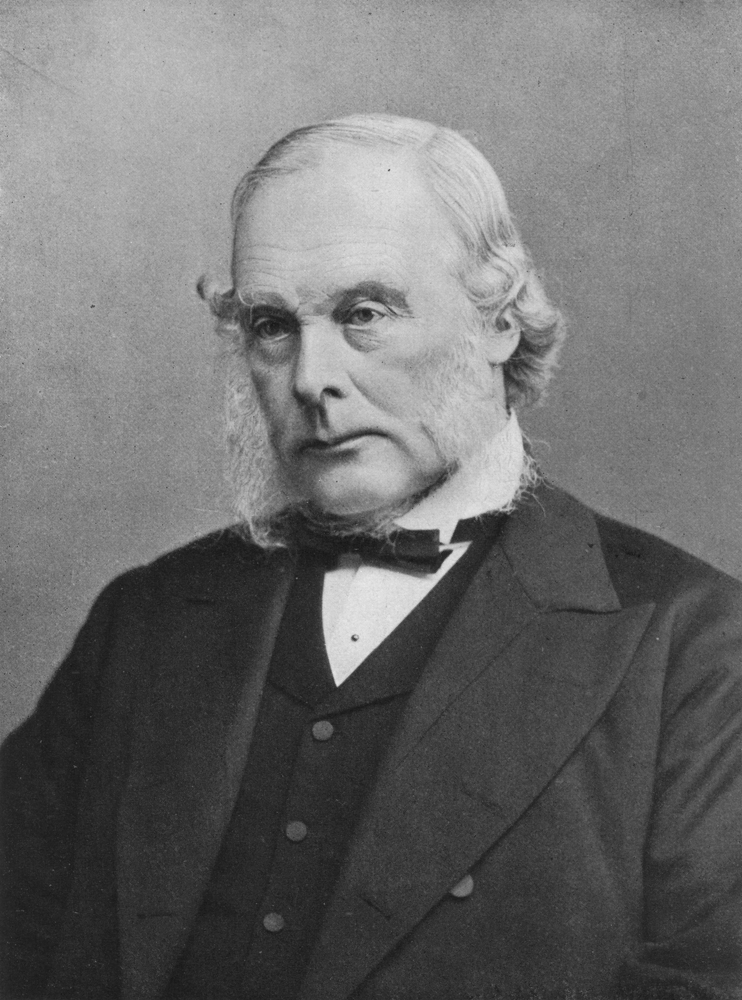
Lister's antiseptic surgery (1867)
A chemist pointed Joseph Lister to Pasteur's work in 1865, and Lister reasoned that killing germs before they reached a wound would prevent infection. His story shows carbolic acid cutting deaths after amputation from about 45 percent to 15 percent.
Read this moment
Read next · led to
Lister's antiseptic surgery (1867)
A chemist pointed Joseph Lister to Pasteur's work in 1865, and Lister reasoned that killing germs before they reached a wound would prevent infection. His story shows carbolic acid cutting deaths after amputation from about 45 percent to 15 percent.
Read this moment
 Today on The Clinical Times
Florida dengue outbreak appears to be largest in continental U.S. in decades
Florida has reported more than 250 locally acquired dengue cases this year, with most in Hillsborough County, according to state health officials.
Read today’s top stories
Today on The Clinical Times
Florida dengue outbreak appears to be largest in continental U.S. in decades
Florida has reported more than 250 locally acquired dengue cases this year, with most in Hillsborough County, according to state health officials.
Read today’s top stories
All 526 moments in the history of medicine. This one is in chapter 4, Germs, numbers and clean water
Connected moments
How this moment links to others in the history of medicine, and what you will find in each.
-
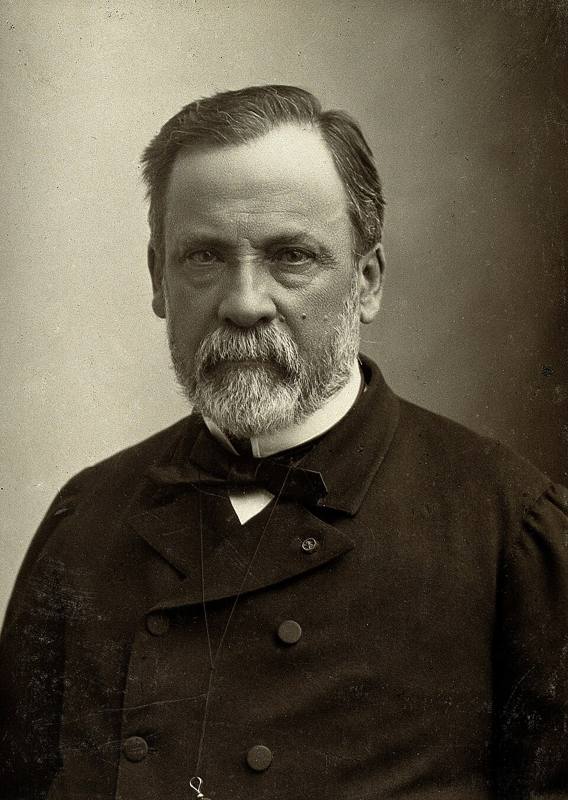 Same person1885Pasteur's rabies vaccinePasteur went on from germs in broth to vaccines, including one against rabies. That story shows a boy bitten 14 times by a rabid dog given 13 injections from Pasteur's laboratory, who never developed the disease.Read this moment
-
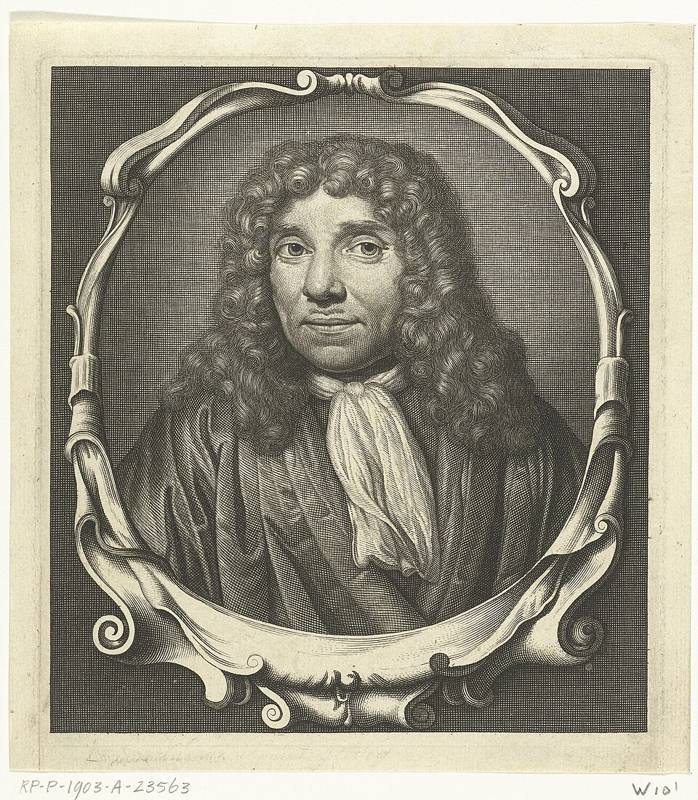 Same disease or problem1676Leeuwenhoek's AnimalculesLeeuwenhoek wondered whether his animalcules were present in the air, and Pasteur showed that airborne dust carried microbes into broth. Leeuwenhoek's story shows the first sighting of single celled life through homemade microscopes.Read this moment
-
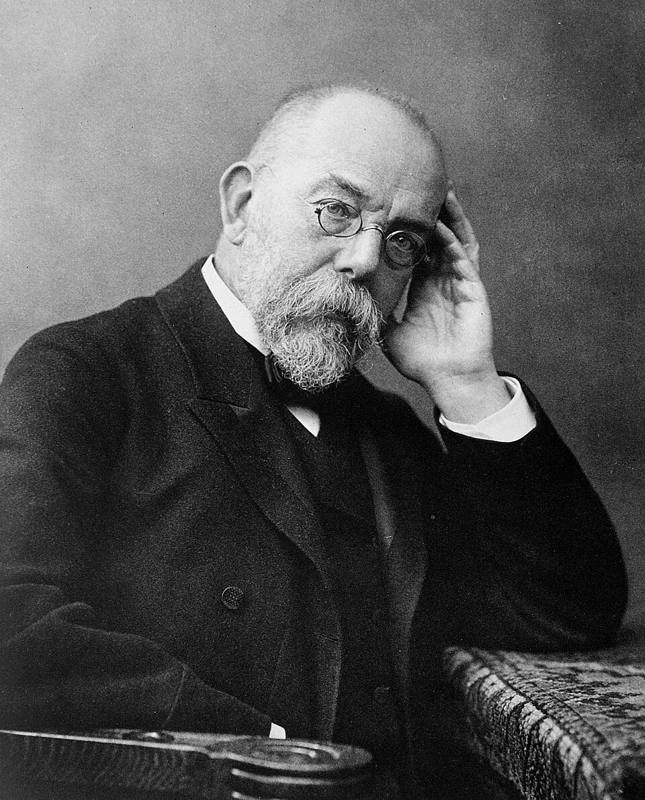 Same disease or problem1876Koch and the anthrax bacillusPasteur's school and Koch's German school competed to tie microbes to disease. Koch's story shows the anthrax bacillus grown in pure culture and proven to cause the disease by experiment.Read this moment