Research Methods & Ethics
1996
CONSORT Statement
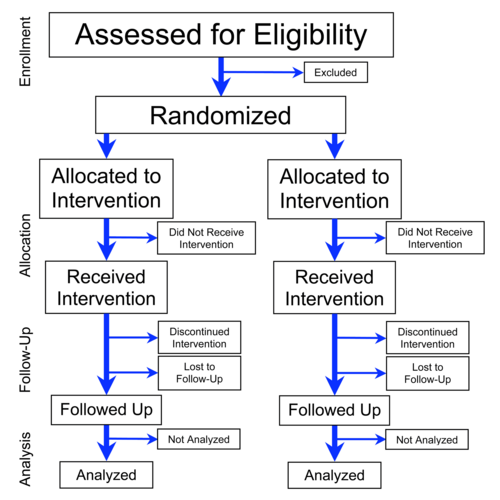
A 21-item checklist and participant flow diagram for reporting randomized trials. More than 400 journals backed it by 2010, and it was revised in 2001, 2010 and 2025.
Key people
- David Moher
- Ottawa methodologist who organized the first CONSORT statement with Drummond Rennie
- Douglas Altman
- Oxford medical statistician and co-author of the 2001 and 2010 revisions
- Kenneth Schulz
- Epidemiologist whose research on allocation concealment shaped CONSORT content
- Drummond Rennie
- JAMA deputy editor who organized the first CONSORT statement with David Moher
Source
By the mid-1990s, systematic reviewers attempting to pool randomized trial data kept running into the same problem: trial reports omitted critical information. Many did not say whether allocation was concealed, how many patients withdrew and why, or whether outcome assessors were blinded. Those details mattered: in 1995 Kenneth Schulz and colleagues analyzed 250 trials from 33 meta-analyses and found that odds ratios were exaggerated by 41 percent in trials with inadequately concealed allocation and by 17 percent in trials that were not double-blind.
Two groups had published separate proposals in 1994, the Standards of Reporting Trials statement and the recommendations of the Asilomar Working Group, and David Moher and Drummond Rennie of JAMA brought them together. The result, published in JAMA in August 1996, was the Consolidated Standards of Reporting Trials: a 21-item checklist of what a trial report should state, with a diagram of the flow of participants through the trial. Its 11 authors, with Colin Begg listed first, were trialists, statisticians, epidemiologists and editors. Douglas Altman, an Oxford statistician who was not among them, became a co-author of the 2001 and 2010 revisions.
The checklist asked for nothing a careful reader would not already want to know. What was new was enforcement by journals, which wrote CONSORT into their instructions to authors; some also asked for a completed checklist and flow diagram with each manuscript. The Canadian Medical Association Journal announced its endorsement in November 1996, and by 2010 more than 400 journals and the International Committee of Medical Journal Editors supported the statement.
A 2012 Cochrane review of 50 evaluations covering 16,604 trials found more complete reporting in endorsing journals for 25 of 27 items, five significantly: allocation concealment was adequately described in 45 percent of trials in endorsing journals and 22 percent elsewhere. The 2001 revision had 22 items and redrew the flow diagram around four stages: enrollment, allocation, follow-up and analysis. The 2010 revision expanded the checklist to 25 items and changed only one word of the diagram. CONSORT 2025, the current version, has 30 items, and extensions cover designs such as cluster-randomized and noninferiority trials.
Other fields borrowed the template. STARD for diagnostic accuracy studies appeared in 2003 and STROBE for observational studies in 2007, and the SPIRIT initiative, launched in 2007, applied the approach to trial protocols. In 2020 the SPIRIT and CONSORT executive groups merged to update both statements together, and CONSORT 2025 was published in five journals, among them the BMJ, JAMA and The Lancet.
Keep exploring
 Read next · same disease or problem
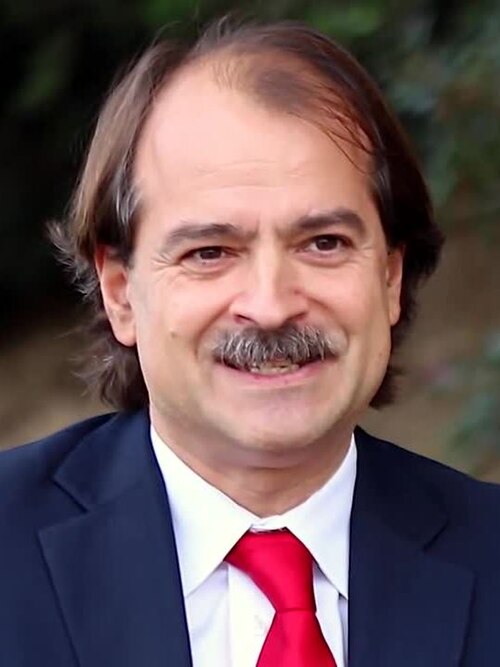
Ioannidis, "Why Most Published Research Findings Are False" (2005)
CONSORT attacked poorly reported trials that exaggerate effects, and Ioannidis showed why so many published findings may be false. His entry shows how small studies and flexible analyses lower the odds a claim is true.
Read this moment
Read next · same disease or problem
Ioannidis, "Why Most Published Research Findings Are False" (2005)
CONSORT attacked poorly reported trials that exaggerate effects, and Ioannidis showed why so many published findings may be false. His entry shows how small studies and flexible analyses lower the odds a claim is true.
Read this moment
 Today on The Clinical Times
Florida dengue outbreak appears to be largest in continental U.S. in decades
Florida has reported more than 250 locally acquired dengue cases this year, with most in Hillsborough County, according to state health officials.
Read today’s top stories
Today on The Clinical Times
Florida dengue outbreak appears to be largest in continental U.S. in decades
Florida has reported more than 250 locally acquired dengue cases this year, with most in Hillsborough County, according to state health officials.
Read today’s top stories
All 526 moments in the history of medicine. This one is in chapter 6, Trials, scanners and rights
Connected moments
How this moment links to others in the history of medicine, and what you will find in each.
-
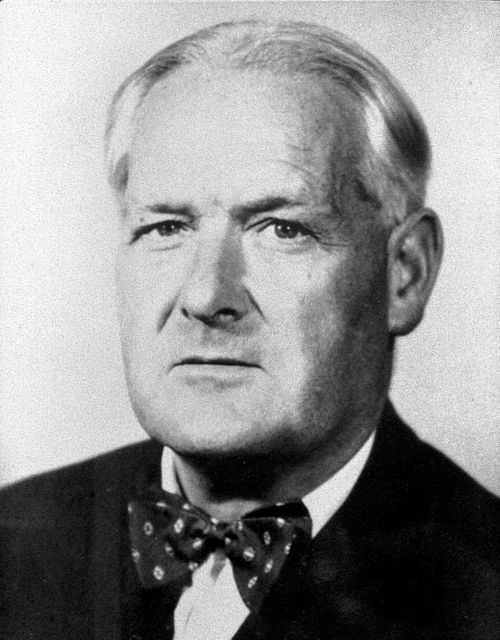 Built on1948MRC Streptomycin Trial for Pulmonary TuberculosisCONSORT asked trials to report whether allocation was concealed, the safeguard Bradford Hill built into the streptomycin trial. That entry shows random numbers used to assign 107 tuberculosis patients.Read this moment
-
 Same person1992Evidence-based medicine: a new approach to teaching the practice of medicineDrummond Rennie of JAMA helped build CONSORT and also helped run the guides that taught evidence-based medicine. The EBM entry shows the 1992 paper that defined the term.Read this moment
-
 Same disease or problem1993Founding of the Cochrane CollaborationCONSORT arose because systematic reviewers kept finding trial reports missing key details. The Cochrane entry shows the network that made systematic reviews routine across medicine.Read this moment