Oncology
2005
Early Breast Cancer Trialists' Collaborative Group (EBCTCG) overview of adjuvant tamoxifen
In trials comparing about five years of tamoxifen with none in some 15,000 women, the drug cut the yearly breast cancer death rate by 31% in ER-positive disease. The cumulative reduction in mortality at 15 years was more than twice that at 5 years.

Key people
- Richard Peto
- Oxford; co-founder, EBCTCG; statistical methodology
- Mitch Dowsett
- Royal Marsden Hospital; co-author of the 2011 EBCTCG tamoxifen analysis and first author of a 2010 meta-analysis of aromatase inhibitors versus tamoxifen
Source
Tamoxifen had been in clinical use for early breast cancer since the 1970s, and several randomized trials had confirmed that it reduced recurrence. What those individual trials could not do was quantify the long-term survival benefit with precision, particularly beyond five years, or reliably identify which subgroups gained and which did not. The Early Breast Cancer Trialists' Collaborative Group, founded at Oxford with Richard Peto as its statistical architect, existed specifically to answer questions of that kind by pooling raw patient-level data from every eligible trial rather than working from published summaries.
The 2005 Lancet overview assembled individual patient data from 194 randomized trials of adjuvant chemotherapy or hormonal therapy that had begun by 1995; its comparison of about five years of tamoxifen with none included about 15,000 women, followed for up to 15 years. In patients with estrogen receptor-positive tumors, five years of tamoxifen reduced the annual breast cancer death rate by 31% (standard error 3%). That proportionate reduction was largely the same whatever the patient's age, progesterone receptor status or use of chemotherapy, though the absolute gain varied with baseline risk.
The survival benefit kept accumulating for at least 15 years after diagnosis, well beyond the five-year treatment period. Earlier overviews had documented the five-year and ten-year gains; the 2005 data showed that annual breast cancer death rates, and tamoxifen's proportional reduction in them, were similar in years 0 to 4 and 5 to 14, so the cumulative reduction in mortality was more than twice as big at 15 years as at 5. In ER-negative tumors, tamoxifen offered no meaningful benefit, a result that reinforced receptor testing as a prerequisite before prescribing adjuvant endocrine therapy.
The overview also compared durations: five years of tamoxifen was significantly more effective than one to two years. Combining its estimates, the collaborators calculated that six months of anthracycline-based chemotherapy followed by five years of tamoxifen would roughly halve 15-year breast cancer mortality for a middle-aged woman with ER-positive disease. None of the trials used aromatase inhibitors, which Mitch Dowsett of the Royal Marsden Hospital and colleagues compared with tamoxifen in a 2010 meta-analysis.
The group used the same method, collecting and harmonizing raw data from research groups worldwide, for later overviews of radiotherapy (2005 and 2011), polychemotherapy (2012) and aromatase inhibitors (2015). Its 2011 update of the tamoxifen analysis, with 20 trials and 21,457 women, found breast cancer mortality reduced by about a third throughout the first 15 years in ER-positive disease and little or no effect in ER-negative disease.
Keep exploring
 Read next · built on
Large simple trials and trial overviews (Peto and colleagues) (1976)
The breast cancer overviews put into practice the Oxford case for pooling every relevant trial. The 1976 entry shows Peto's group arguing for large simple trials and overviews.
Read this moment
Read next · built on
Large simple trials and trial overviews (Peto and colleagues) (1976)
The breast cancer overviews put into practice the Oxford case for pooling every relevant trial. The 1976 entry shows Peto's group arguing for large simple trials and overviews.
Read this moment
 Today on The Clinical Times
Florida dengue outbreak appears to be largest in continental U.S. in decades
Florida has reported more than 250 locally acquired dengue cases this year, with most in Hillsborough County, according to state health officials.
Read today’s top stories
Today on The Clinical Times
Florida dengue outbreak appears to be largest in continental U.S. in decades
Florida has reported more than 250 locally acquired dengue cases this year, with most in Hillsborough County, according to state health officials.
Read today’s top stories
All 526 moments in the history of medicine. This one is in chapter 7, Genes and pandemics
Connected moments
How this moment links to others in the history of medicine, and what you will find in each.
-
 Same person1994Antiplatelet Trialists' Collaboration OverviewRichard Peto, statistical architect of the breast cancer overviews, also coordinated the pooling of antiplatelet trials. That entry shows aspirin-type drugs cutting vascular events by a quarter across 145 trials.Read this moment
-
 Same disease or problem1998NSABP P-1 Breast Cancer Prevention Trial (tamoxifen)The overview measured tamoxifen after breast cancer, and P-1 tested whether it could prevent the disease. The P-1 entry shows invasive breast cancer cut by about half in high-risk women.Read this moment
-
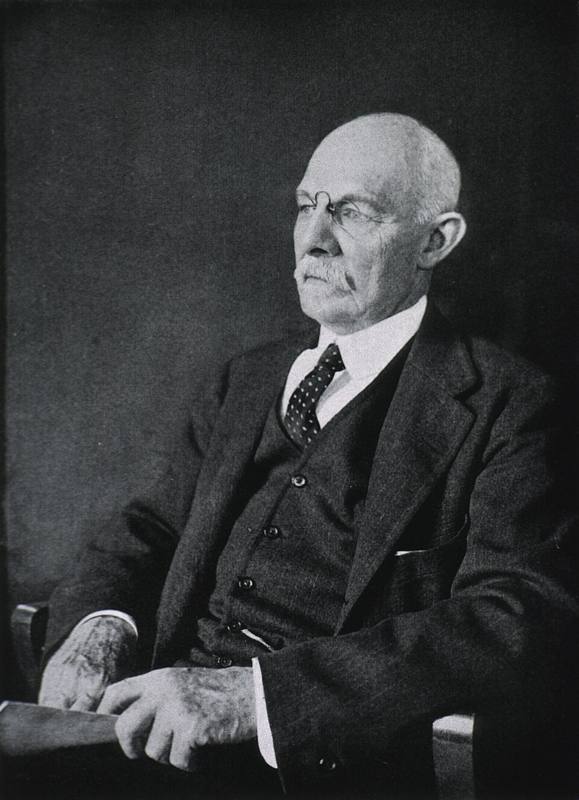 Same disease or problem1894Halsted's radical mastectomyBoth are milestones in treating early breast cancer, Halsted's radical surgery and the drug that cut deaths after it. Halsted's entry shows the operation that trials later replaced with smaller ones.Read this moment